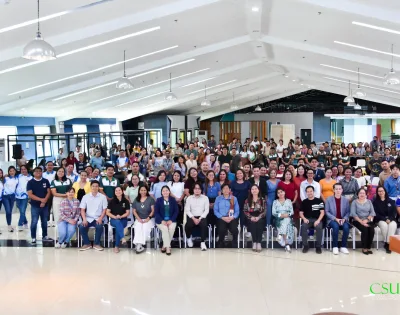


Caraga State University led two training-workshops on sustainable agriculture and green chemistry from July 16 to 18, 2025, reinforcing its strategic commitment to advancing applied research and digital innovation.
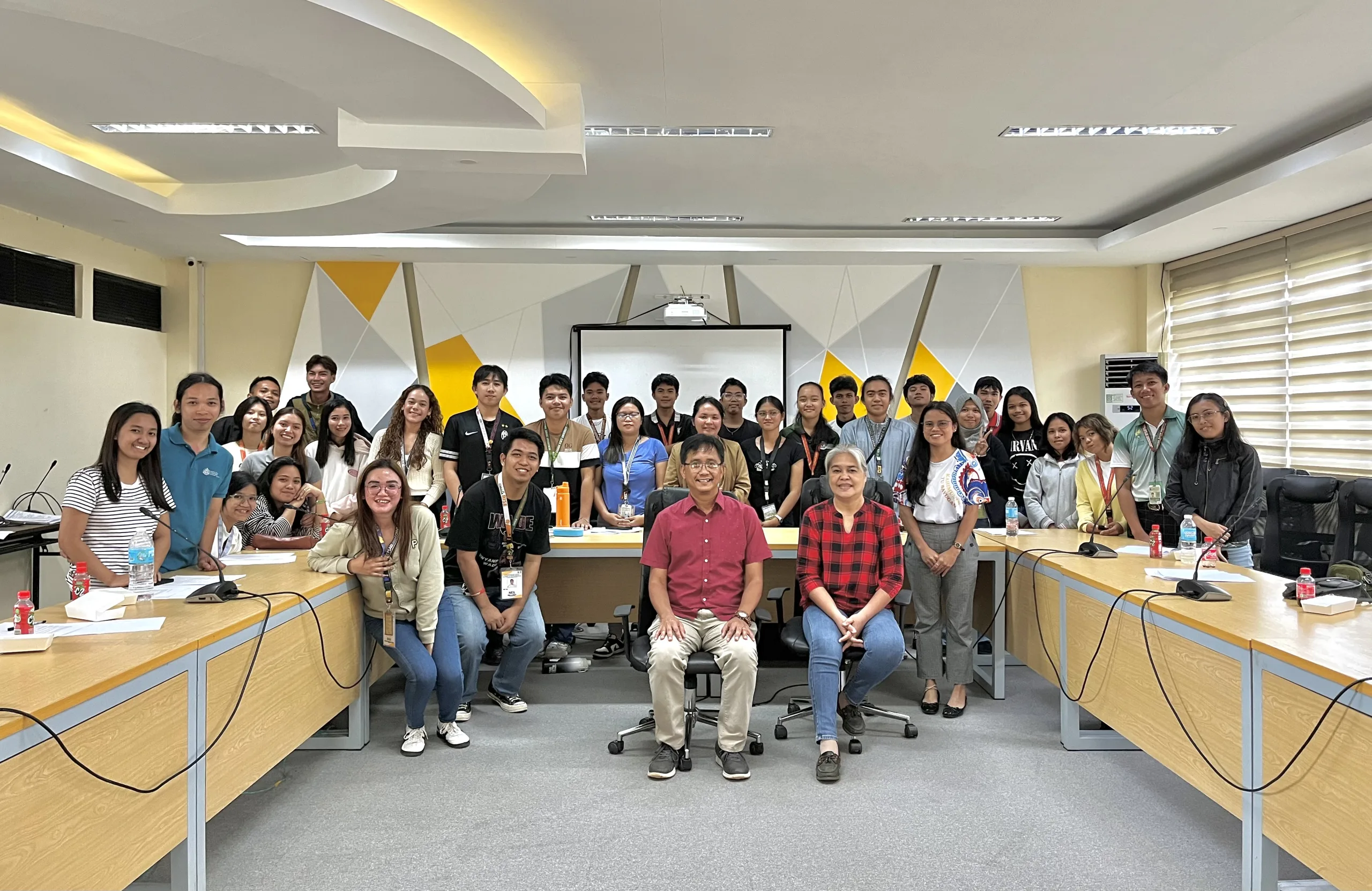
On July 16-17, CSU hosted the “Applied Life Cycle Assessment and OpenLCA Training for Sustainable Agriculture and Green Chemistry with Dr. Anthony Halog, a Balik Scientist and renowned international expert in sustainability science and circular economy. The session introduced foundational concepts in Life Cycle Assessment (LCA) and Material Flow Analysis (MFA), equipping participants with the analytical tools needed to evaluate and improve sustainability performance across agricultural and chemical systems.
It also featured hands-on sessions using OpenLCA and Brightway2 software, both prominent open-source software tools used for LCA, a methodology for evaluating the environmental impacts. It enabled participants to simulate product life cycles for key regional commodities such as corn, coconut, and urea.
On July 18, a follow-up workshop on the intersection of artificial intelligence, life cycle thinking, and digital solutions in circular economy applications was conducted by Dr. Halog, tailored for Environmental Science and Agricultural Economics students. It encouraged student engagement through scenario-based group activities, deepening their understanding of real-world sustainability challenges and opportunities.
Both workshops were designed with experiential learning at their core and aligned with CSU’s broader objective of embedding circular economy principles into research, instruction, and extension. They underscore CarSU’s role as a catalyst for sustainable development, equipping the stakeholders with technical proficiency and strategic mindset to lead in the transition toward greener and more resilient value chains across the region, relevant with SDGs No. 4 (Quality Education), No. 9 (Industry, innovation and Infrastructure), No. 12 (Responsible Consumption and Production), No. 13 (Climate Action), No. 17 (Partnerships for the Goals).