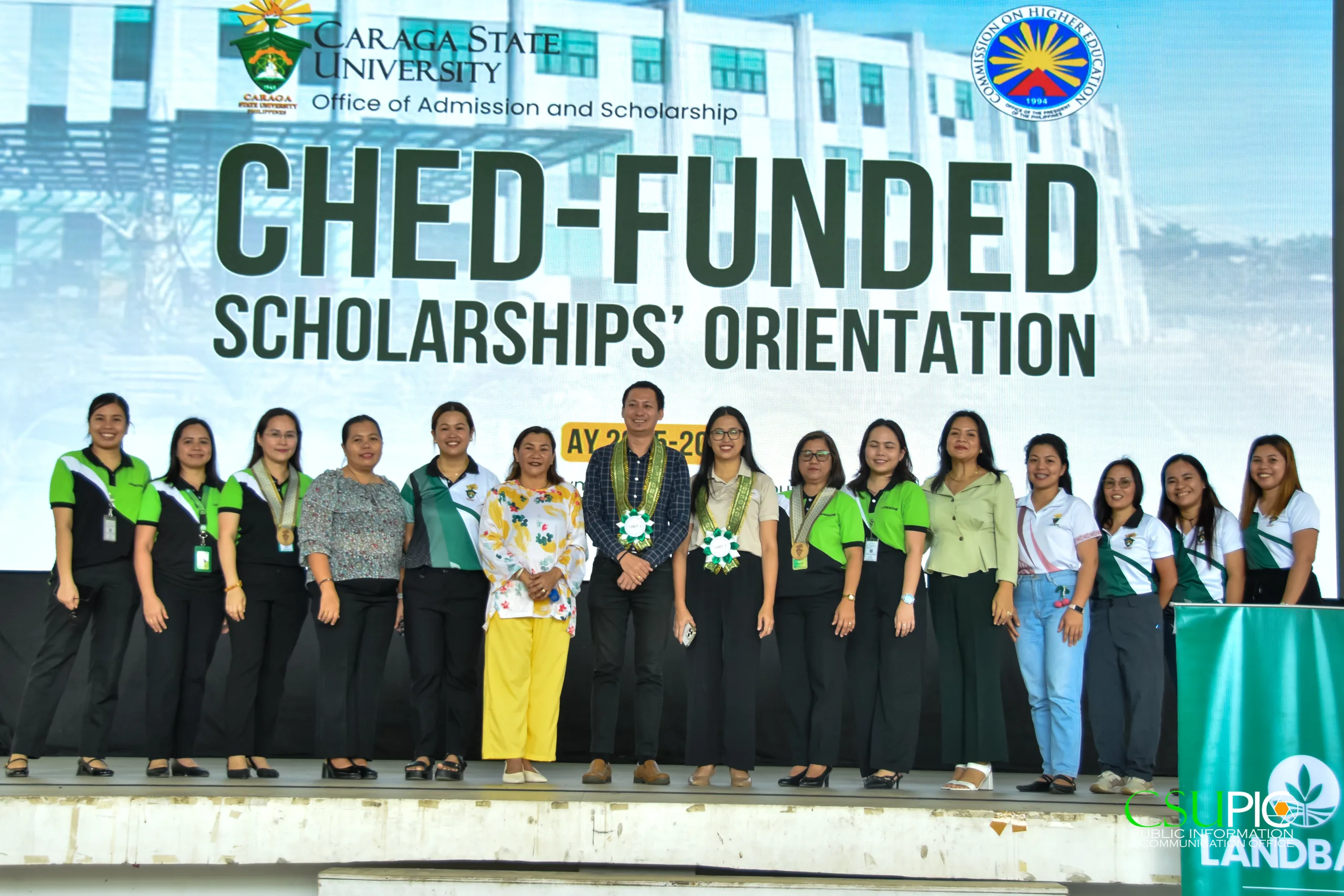
OAS conducts orientation to over 900 CHED-TES,TDP scholarship grantees
The Office of Admission and Scholarship (OAS), led by OAS Director Dr. Sheila Rae E....

Link: Number of Publications
6.2 Water consumption per person
Campus Water Supply and Monitoring System
Caraga State University (CSU) operates a centralized water supply system, ensuring reliable access to clean water across its academic, residential, and administrative facilities. The system utilizes a mechanical power pump that extracts groundwater daily to meet the campus’s total water requirements. The pumped water is stored in a cylindrical tank measuring 10 meters in height and 5 meters in radius, with a storage capacity of approximately 785 cubic meters.
From this storage tank, water is distributed through an extensive underground piping network that has served the campus for about two decades. The General Services Office (GSO) regularly oversees system maintenance, monitors pump performance, and tracks estimated discharge volumes to effectively manage water consumption.
Based on daily pumping operations, CSU’s estimated annual water volume reaches about 286,000 cubic meters under full operation. Accounting for periods of low attendance, holidays, and class suspensions, the adjusted annual consumption is approximately 258,000 cubic meters. These figures are based on inbound extracted water in 2024, monitored via tank operation and regular system inspections, which serve as the university’s baseline data for tracking consumption and planning efficiency.
Based on daily pumping operations, CSU’s estimated annual water volume reaches about 286,000 cubic meters under full operation. Accounting for periods of low attendance, holidays, and class suspensions, the adjusted annual consumption is approximately 258,000 cubic meters. These figures are based on pump activity logs and regular system inspections, which serve as the university’s baseline data for tracking consumption and planning efficiency.
Through consistent monitoring and maintenance, CSU demonstrates its commitment to sustainable water management, conservation, and accountability. This initiative supports SDG 6.2.1 (Water Consumption Tracking) by ensuring the responsible use of groundwater resources while sustaining the needs of its academic community.
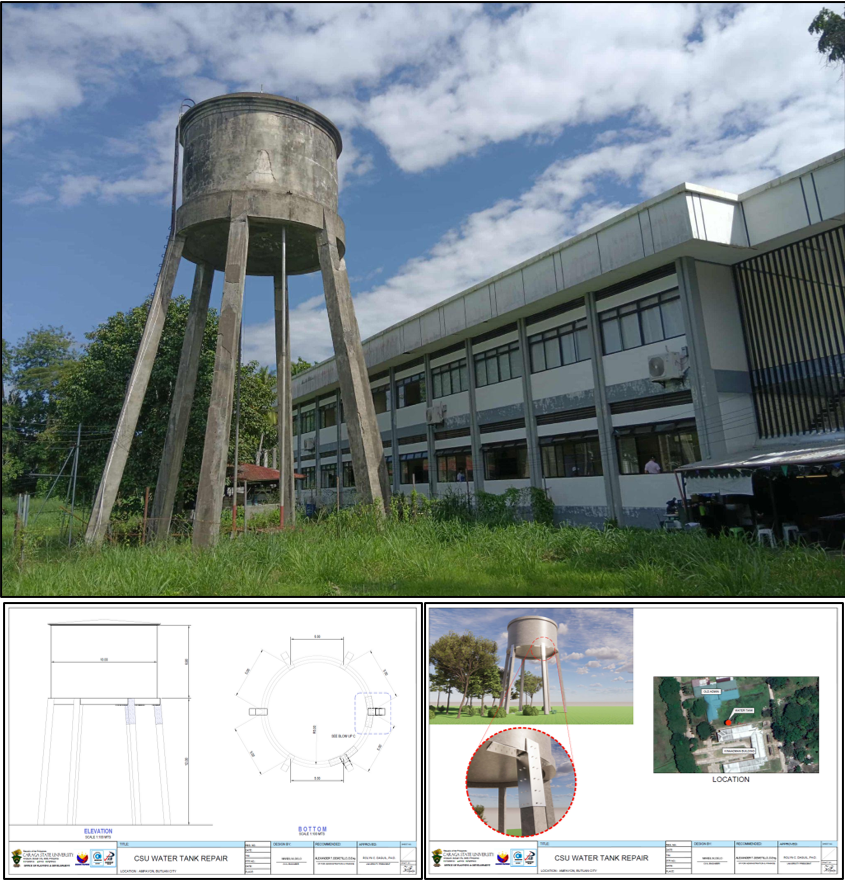
Figure 1. The cylindrical water tank serves as the main storage and distribution facility for Caraga State University’s water supply.
Link: Water tank plan,
For Fiscal Year 2024, Caraga State University (CSU) recorded a total adjusted annual water consumption of approximately 258,000 cubic meters, primarily sourced from the university’s storage tank system. This figure represents the institution’s total water extraction and usage across all academic, administrative, and support facilities within the campus.
To normalize this figure in accordance with the Times Higher Education (THE) Impact Rankings methodology, the computation of Full-Time Equivalent (FTE) persons was used. In line with THE Sustainability Impact Ratings 2026, CSU defines campus population as the combined full-time equivalent (FTE) of students and employees in 2024. The FTE student population was derived based on weighted enrollment across academic terms, while the total number of university employees was incorporated to represent the complete institutional community.
1. FTE Student Population (FY 2024)
Academic Term | Months Covered | Enrollment | Weighted (Months/12) | Equivalent FTE |
2nd Semester AY 2023–2024 | January–May 2024 | 10,290 | 5/12 | 4,287.5 |
Midterm AY 2023–2024 | June–July 2024 | 2,627 | 2/12 | 437.8 |
1st Semester AY 2024–2025 | August–December 2024 | 11,920 | 5/12 | 4,966.7 |
Total FTE Students | — | 24,837 | — | ≈ 9,692 |
2. Employee Population as of December 2024
Type of Employee | Number |
Plantilla Teaching | 342 |
Plantilla Non-Teaching | 112 |
Non-Permanent | 230 |
Total Employees | 684 |
3. Total FTE Persons

4. Water Consumption per Person

Thus, Caraga State University’s water consumption per person for FY 2024 is approximately 24.86 cubic meters per year.
This result indicates that CSU maintains an efficient level of water utilization relative to its total population, supported by its integrated water storage and management system. The university’s efforts to monitor, conserve, and optimize water use through storage facilities, regular maintenance, and awareness campaigns reflect its strong commitment to Sustainable Development Goal 6: Clean Water and Sanitation, specifically under Indicator 6.2.2 – Water Consumption per Person.
Link: 2024 Enrollment Data, Employee Population (as of December 2024)
Annual Water Use Relative to Student Enrollment
Caraga State University (CSU) maintains an operational groundwater supply system that provides potable water across all campus facilities through a centralized pumping and distribution network. Based on system monitoring records, the university’s estimated annual water consumption is approximately 258,000 cubic meters.
For the Academic Year 2023–2024, CSU recorded a total student enrollment of 24,837, distributed across three academic periods:
Enrollment Report Summary for the Year 2024 | |||
Semester | Academic Year | Months of the Year | Total Enrollment |
2023-2024 | Jan to May 2024 | 10,290 | |
2023-2024 | Jun to Jul 2024 | 2,627 | |
2024-2024 | Aug to Dec 2024 | 11,920 | |
Total | 24,837 | ||
Using these enrollment figures, the university’s average annual water consumption per student is approximately:

This translates to roughly 10,400 liters of water per student annually, or an average of 28 liters per student per day (based on a 365-day estimate).
These figures provide a measurable indicator of CSU’s water use efficiency and serve as a baseline for future conservation strategies. The Physical Plant and Facilities Management Office (PPFMO) tracks consumption through pump operation logs and maintenance reports, enabling the university to identify opportunities for improved water management and reduced wastage.
By correlating total water use with enrollment data, CSU demonstrates its commitment to transparent water consumption tracking, sustainable resource allocation, and alignment with SDG 6.2.2 – Water Consumption per Person. This data-driven approach supports institutional decision-making for water conservation, infrastructure planning, and environmental stewardship.
The university actively coordinates with local government and environmental agencies in managing water quality and wastewater concerns within and around its campus. In partnership with the Local Government Unit (LGU) of Ampayon and the Environmental Management Bureau (EMB) of the Department of Environment and Natural Resources (DENR), CSU has adopted an estero project within its premises through the Adopt-an-Estero/Water Body Program.
Spearheaded by the Pollution Control and Environmental Management Office (PCEMO), this initiative demonstrates CSU’s sustained commitment to environmental conservation and responsible wastewater management. Launched in celebration of Earth Day 2024 on April 22, the program aims to preserve and rehabilitate the Ampayon Creek, a vital waterway adjacent to the university.
Through this partnership, CSU promotes environmental awareness among students, faculty, and nearby communities, fostering shared responsibility in maintaining clean and sustainable waterways. The activity was led by PCEMO Head Vincent N. Cotoron, MSCM, with the participation of Head Executive Assistant EnP Carlo D. Dacera (representing DENR-EMB), Environment Committee Head Hon. Gerald Gozon of Barangay Ampayon, and the university’s top officials — University President Dr. Rolyn C. Daguil, Vice President for Administration and Finance Dr. Alexander T. Demetillo, and Vice President for Executive Operations Dr. Jeffrey T. Dellosa.
This initiative reinforces CSU’s role in advancing community-based water quality management, pollution prevention, and sustainable wastewater practices through collaboration, education, and environmental stewardship.
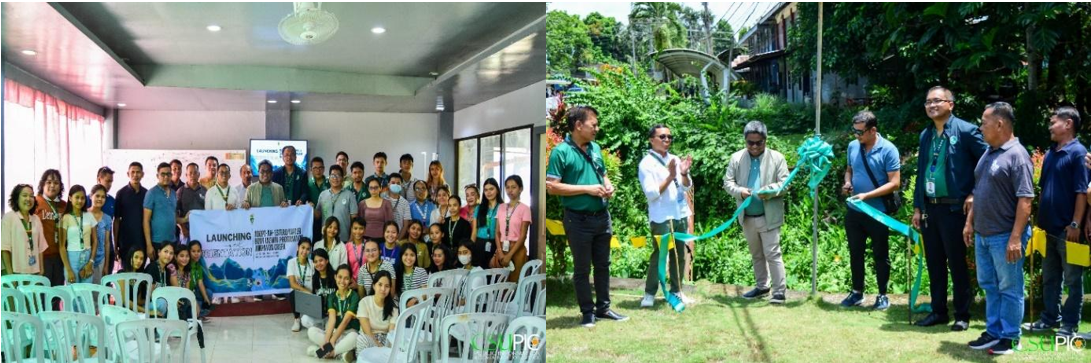
Figure 1. Launching of the Adopt-an-Estero/Water Body Program on Ampayon Creek. Source: CSU Pollution Control and Environmental Management Office (PCEMO) / Public Information and Communication Office (PICO)
Although detailed publicly available data on wastewater treatment infrastructure at Caraga State University (CSU) is limited, the university actively coordinates with local government and environmental agencies in managing water quality and wastewater concerns within and around its campus. In partnership with the Local Government Unit (LGU) of Ampayon and the Environmental Management Bureau (EMB) of the Department of Environment and Natural Resources (DENR), CSU has adopted an estero project within its premises through the Adopt-an-Estero/Water Body Program.
Spearheaded by the Pollution Control and Environmental Management Office (PCEMO), this initiative demonstrates CSU’s sustained commitment to environmental conservation and responsible wastewater management. Launched in celebration of Earth Day 2024 on April 22, the program aims to preserve and rehabilitate the Ampayon Creek, a vital waterway adjacent to the university.
Through this partnership, CSU promotes environmental awareness among students, faculty, and nearby communities, fostering shared responsibility in maintaining clean and sustainable waterways. The activity was led by PCEMO Head Vincent N. Cotoron, MSCM, with the participation of Head Executive Assistant EnP Carlo D. Dacera (representing DENR-EMB), Environment Committee Head Hon. Gerald Gozon of Barangay Ampayon, and the university’s top officials — University President Dr. Rolyn C. Daguil, Vice President for Administration and Finance Dr. Alexander T. Demetillo, and Vice President for Executive Operations Dr. Jeffrey T. Dellosa.
This initiative reinforces CSU’s role in advancing community-based water quality management, pollution prevention, and sustainable wastewater practices through collaboration, education, and environmental stewardship.
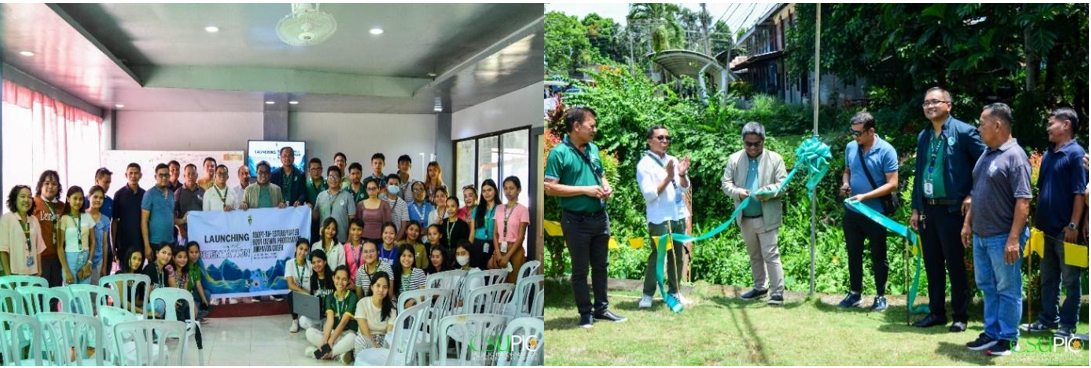
Figure 1. Launching of the Adopt-an-Estero/Water Body Program on Ampayon Creek. Source: CSU Pollution Control and Environmental Management Office (PCEMO) / Public Information and Communication Office (PICO)
Partnership for the Protection and Rehabilitation of Ampayon Creek
Caraga State University (CSU) continues to strengthen its commitment to environmental protection and pollution prevention through active partnerships with national and local agencies. On November 29, during the Adopt-an-Estero/Water Body Summit in Butuan City, CSU formalized its collaboration with the Department of Environment and Natural Resources – Environmental Management Bureau (DENR-EMB) and the Local Government Unit (LGU) of Ampayon for the long-term conservation and rehabilitation of the Ampayon Creek, a vital waterway that traverses the university campus and flows into the Agusan River.
The Memorandum of Agreement (MOA), signed by CSU President Dr. Rolyn C. Daguil and DENR-EMB OIC–Regional Director Engr. Dennis O. Celestial, MM, outlines joint environmental interventions designed to prevent the pollution and ecological degradation of the water system. The agreement highlights the development and implementation of a comprehensive action plan focused on reducing siltation, solid waste accumulation, and effluent discharge that threaten the creek’s ecological integrity.
Key interventions under the partnership include:
The partnership is jointly coordinated by CSU’s Pollution Control and Environmental Management Office (PCEMO), led by Mr. Vincent N. Cotoron, MSc, in close collaboration with the DENR-EMB and the Barangay Ampayon Environment Committee. Through these proactive measures, CSU contributes to the prevention of water system pollution and supports the sustainable management of urban waterways connected to the Agusan River Basin.
This initiative exemplifies CSU’s integrated approach to safeguarding water resources, combining infrastructure development, ecological restoration, and community-based management. It reinforces the university’s commitment to United Nations Sustainable Development Goal 6.3, which aims to improve water quality by reducing pollution, eliminating dumping, and minimizing the release of hazardous materials into the environment.
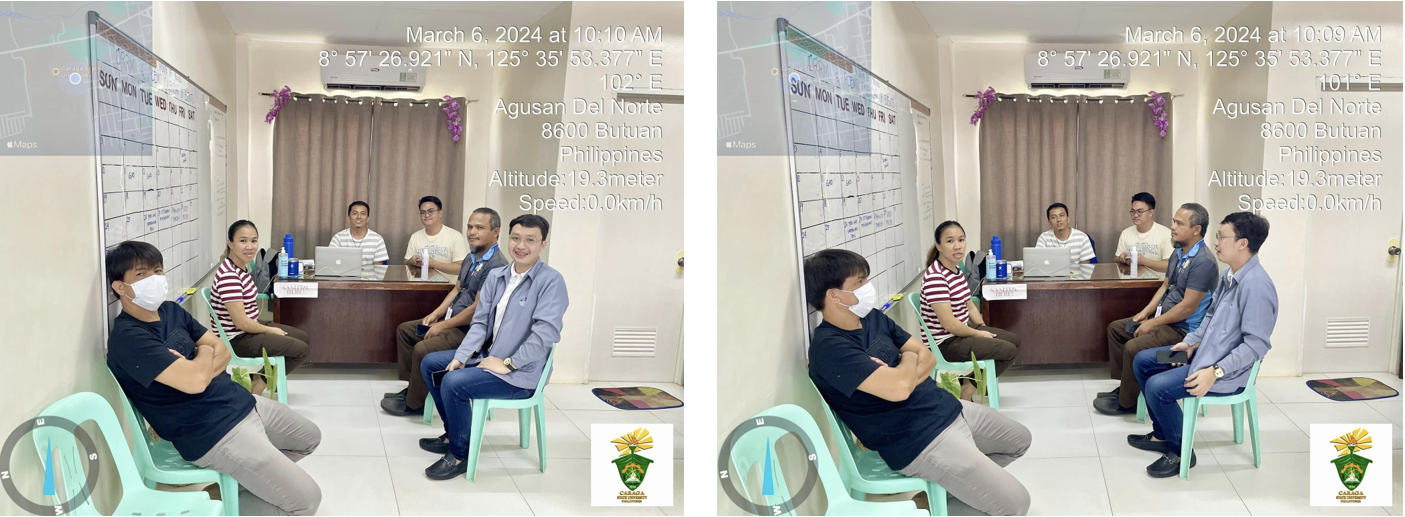
Source: CSU Pollution Control and Environmental Management Office (PCEMO) / DENR – Environmental Management Bureau (EMB) / Barangay LGU-Ampayon: Adopt an Estero Project and MOA with EMB.
Creation of the Taguibo River Water Quality Management Area (TRWQMA) Governing Board
The Water Quality Management Section (WAQMS) of the Environmental Management Bureau (EMB) Caraga convened a special meeting to select the Principal and Alternate Representatives of the academic sector for the Taguibo River Water Quality Management Area (TRWQMA) Governing Board.
The meeting was attended by representatives from various academic institutions in Butuan City, including Butuan City Colleges, Father Saturnino Urios University (FSUU), Saint Joseph Institute of Technology (SJIT), Agusan Colleges Foundation, and Caraga State University (CSU). In accordance with Section 5.5 of the TRWQMA Governing Rules, which requires that academic representatives be chosen through a sectoral assembly, both a Principal and an Alternate Representative were duly selected.
The Principal Representative serves on the TRWQMA Governing Board, while the Alternate Representative assumes the role in the Principal’s absence. As stated in Section 6.6 of the Governing Rules, non-government members, including those from the academic sector, serve for a maximum term of three (3) years, subject to re-nomination by their respective institutions. This term also applies to Alternate Representatives to ensure continuity and effective participation in governance.
Previously, Resolution No. 2020-02 designated Father Saturnino Urios University as the Principal Representative and Caraga State University as its Alternate. Following the recent meeting, Caraga State University was elected as the new Principal Representative, with Saint Joseph Institute of Technology serving as its Alternate Representative, reaffirming the academic sector’s continued engagement in the TRWQMA governance.
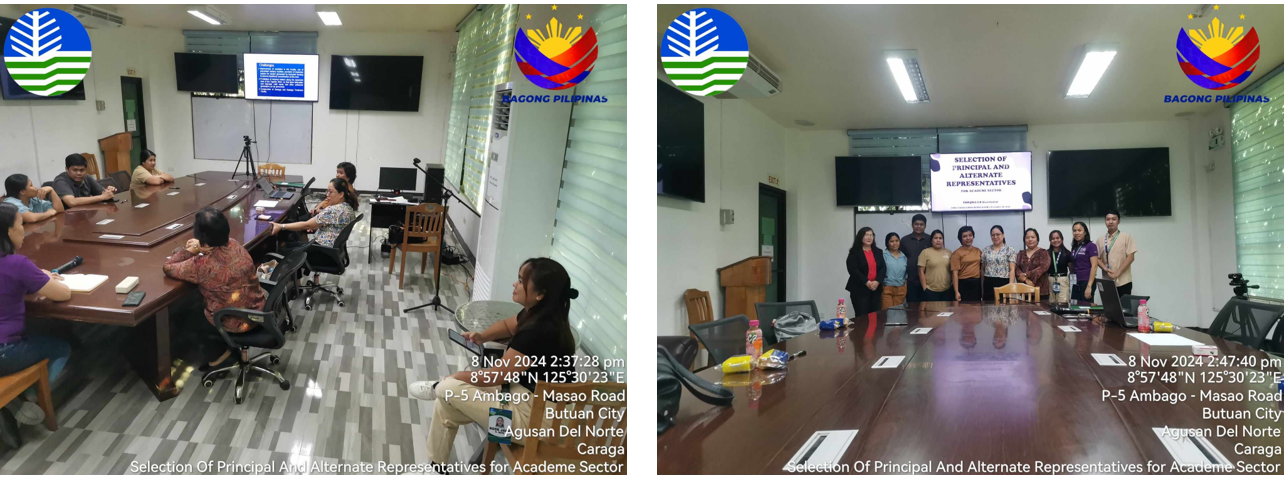
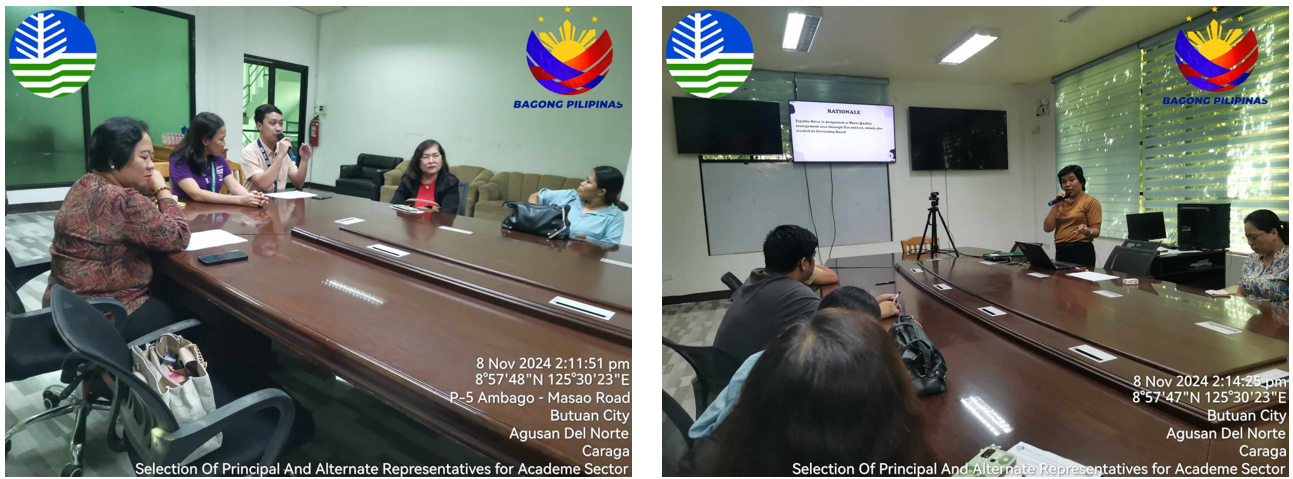
Source: EMB Caraga Facebook Post
Assessing the Water Quality of Creek Systems at Caraga State University–Main Campus, Philippines, Using Macroinvertebrate-based Biotic Indices
Caraga State University (CSU) actively contributes to the prevention of water system pollution through scientific research and environmental monitoring within its campus and surrounding ecosystems. One significant initiative is the study titled “Assessing the Water Quality of Creek Systems at Caraga State University–Main Campus, Philippines, Using Macroinvertebrate-based Biotic Indices.” This research was conducted to evaluate the ecological health of the university’s creek systems, which serve as natural drainage and stormwater pathways connected to the larger watershed of Butuan City.
The study utilized macroinvertebrate-based biotic indices, a biological approach that measures water quality through the diversity and abundance of aquatic organisms sensitive to pollution. Findings revealed spatial variations in water quality influenced by runoff, organic waste inputs, and nearby land use activities. The results provided essential insights for identifying pollution sources, assessing ecosystem integrity, and recommending management interventions to prevent further degradation of the campus’s aquatic environments.
This initiative underscores CSU’s commitment to evidence-based environmental stewardship. By integrating biological monitoring into its campus management system, the university not only ensures the protection of its freshwater resources but also raises awareness among students and staff about the importance of pollution prevention.
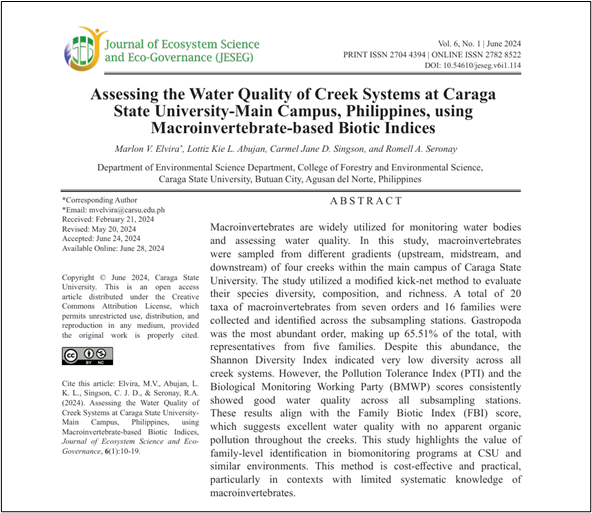
DOI: https://doi.org/10.54610/jeseg.v6i1.114
Furthermore, the study complements CSU’s ongoing water quality and wastewater management initiatives, including the periodic monitoring of effluent discharge, the establishment of a wastewater treatment facility, and the implementation of solid waste segregation and runoff control systems. These coordinated efforts ensure that only treated and environmentally safe water is released into the creek systems, thereby maintaining compliance with national water quality standards and contributing to the sustainable management of on-campus and downstream water bodies.
Through this integrated research and management approach, CSU demonstrates its strong institutional commitment to Sustainable Development Goal 6: Clean Water and Sanitation, particularly under Indicator 6.3.2 – Preventing Water System Pollution, by promoting science-based actions that safeguard aquatic ecosystems and prevent pollution within the university and surrounding communities.
University-Wide Free Potable Water Access Initiative
In alignment with the United Nations Sustainable Development Goal 6 (Clean Water and Sanitation), Caraga State University (CSU) continuously strengthens its initiatives to ensure safe, accessible, and sustainable water consumption within the campus community. To safeguard the health and well-being of students, faculty, and staff, the Office of the Vice President for Student Affairs and Auxiliary Services (VPSAAS) has installed ten (10) automatic water dispensing machines in strategic areas across the university, complementing the existing water dispensers available in all campus offices.
These dispensers are strategically placed in major college halls, student centers, and high-traffic areas to ensure free and convenient access to clean, potable drinking water for all members of the CSU community – approximately 10,376 (FTE) benefeciaries per year – collectively known as the Golden Paddlers . This initiative directly addresses the need for hydration and wellness in a tropical learning environment where access to safe drinking water is vital to both academic performance and overall campus life.
Launched during the 2022–2023 academic year, the project was realized through a collaborative partnership among the University Student Government (USG), Local Student Governments (LSG), the League of Campus Organizations (LCO), and the Graduating Classes, with administrative support from VPSAAS. This joint effort exemplifies CSU’s culture of participatory governance and its commitment to sustainable and student-centered campus development.
To ensure the continuity and reliability of this service, CSU has established contingency measures to address unforeseen supply interruptions. For instance, during a fire incident affecting the university’s drinking water supplier, the university promptly issued Office of the President Memorandum Order No. 321, s. 2024, to temporarily adjust water distribution across campus. This proactive action demonstrates CSU’s resilience and commitment to maintaining equitable access to safe drinking water even under emergency conditions.
By providing free and readily available drinking water, CSU not only reduces dependence on single-use plastic bottles but also strengthens its advocacy for environmental responsibility, public health, and inclusivity. This initiative underscores the university’s proactive approach to ensuring that access to clean water remains a fundamental right and shared resource for every member of its academic community.
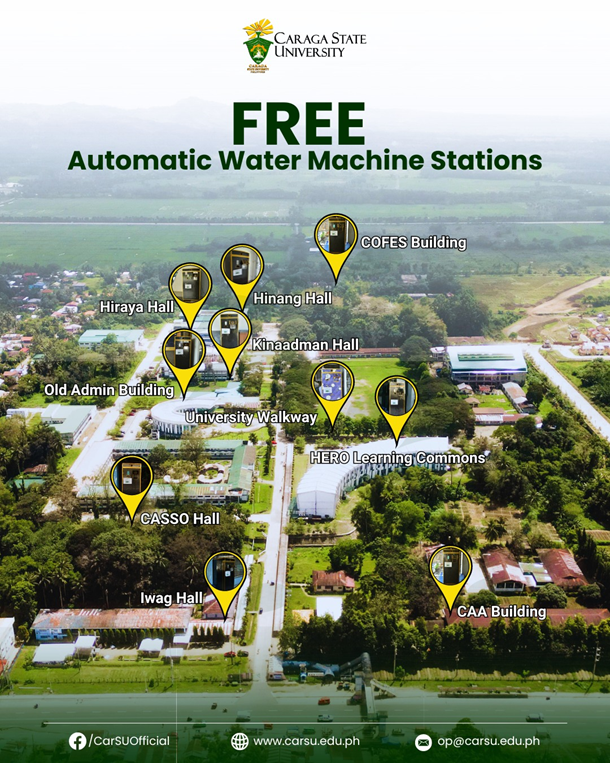
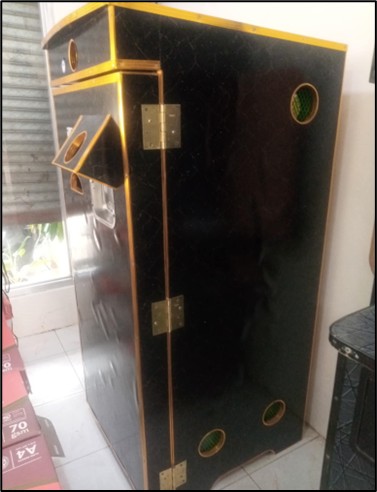
Source: Office of the Vice President for Student Affairs and Auxiliary Services (VPSAAS) / University Student Government (USG) Free Automatic Water Machines
To be updated…
World Environment Day 2025 Celebration and Waterway Conservation Efforts
As a Green University committed to responsible environmental stewardship, Caraga State University continues to lead transformative initiatives that promote clean water, sanitation, and ecosystem restoration. In celebration of World Environment Day (WED) on June 5, 2025, CSU organized a series of university-wide activities engaging students, faculty, administrative personnel, and partner communities under the global theme “Our Land. Our Future. We are #GenerationRestoration.”
The day began with a tree-planting activity by graduating students at Barangay Basag, held at dawn to symbolize a renewed commitment to a greener and more sustainable future. This activity contributed to local reforestation and watershed rehabilitation efforts that enhance water retention, prevent soil erosion, and maintain clean water sources in surrounding ecosystems.
Simultaneously, university personnel actively participated in a campus-wide “Do-Day” and Adopt-an-Estero Cleanup Drive, reflecting CSU’s collaborative engagement with Barangay Ampayon and the Department of Environment and Natural Resources – Environmental Management Bureau (DENR-EMB). These initiatives are part of the Adopt-an-Estero/Water Body Program, which aims to restore and sustainably manage the Ampayon Creek, a vital tributary influencing the hydrology and water quality of the surrounding area. Regular cleanup activities under this program help mitigate pollution, improve drainage systems, and prevent the discharge of solid waste and effluent into waterways.
In the afternoon, CSU held a Stakeholders’ Consultation on the Formulation of the “No Single-Use Plastic Policy” at the University Conference Hall. This policy initiative aims to reduce plastic consumption and pollution within the university, in line with the global WED call for collective action against plastic waste. The consultation gathered inputs from academic leaders, student representatives, local government officials, and environmental advocates to ensure a participatory approach to policy design and implementation.
Through these integrated actions—tree planting, creek rehabilitation, and plastic waste reduction—Caraga State University demonstrates its holistic approach to sustainable water management and environmental protection. These programs strengthen CSU’s alignment with the United Nations Sustainable Development Goals, particularly:
Caraga State University’s continued participation in WED and related environmental initiatives exemplifies its institutional commitment to ecological restoration, clean water advocacy, and community-driven sustainability, advancing both academic excellence and environmental responsibility.

Carbon Sink Enhancing Program
June 19, 2024 – The Pollution Control and Environmental Management Office (PCEMO) of the university successfully launched the University Carbon Sink Enhancement Program, marked by the planting of 2,532 native trees at the Basag and Antongalon boundaries of the university. This initiative pushes to uplift our Golden Paddlers’ commitment to environmental stewardship and sustainability.
A total of 750 Sagimsim, 792 Lanutan, 78 Lipote, 463 Pipi, and 449 Kalantas trees were collectively planted by the graduating Sanghaya Class of 2024, postgraduate students, CEAS members, and NSRC volunteers. This effort aligns with several key legislative frameworks and mandates, including Executive Order No. 26 (National Greening Program), Republic Act No. 10176 (Arbor Day Act), and Republic Act No. 9729 (Climate Change Act). Additionally, it meets the Environmental Compliance Certificate (ECC) conditions, which require tree planting to mitigate vegetation loss and bolster reforestation efforts. The program also adheres to CHED Caraga Memorandum Orders No. 38 and No. 68, Series of 2022, as part of the “Growing One Million Trees Advocacy Program,” involving the graduating students, NSTP, CES, and OSAS in all Higher Education Institutions (HEIs) within the Caraga Region.
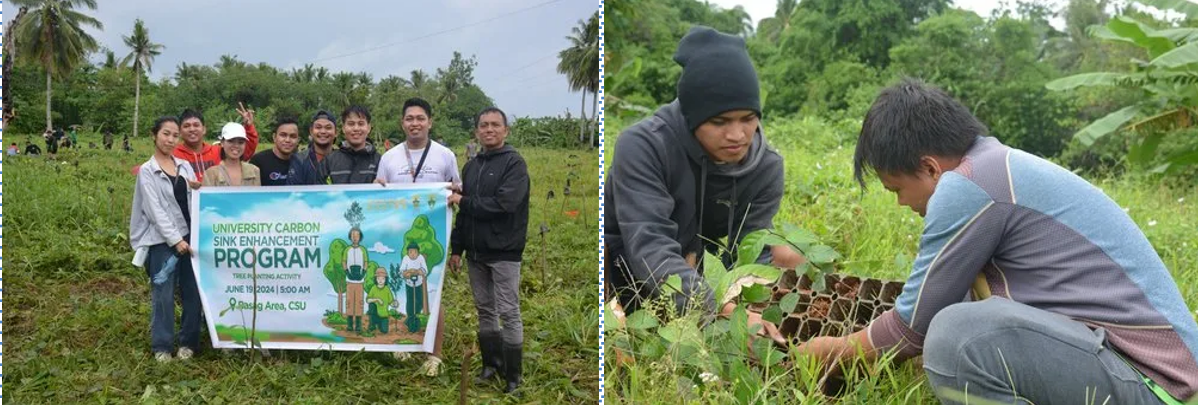
Source: Launching of Carbon Sink Enhancement Program, Carbon Sink Enhancement Program,
Source: Carbon Sink Enhancement Program
Caraga State University implements water reuse and efficient water-use strategies through its agricultural production systems. Within the university’s landholdings, approximately 81.80 hectares of the 200 hectares (40.9 %) of rice farm areas are irrigated using water supplied through a formal Memorandum of Agreement (MOA) with the National Irrigation Administration (NIA). The following map is the recent status of areas serviced by the irrigation administration since for decades already since Caraga State University originated as an agricultural college established in 1946.
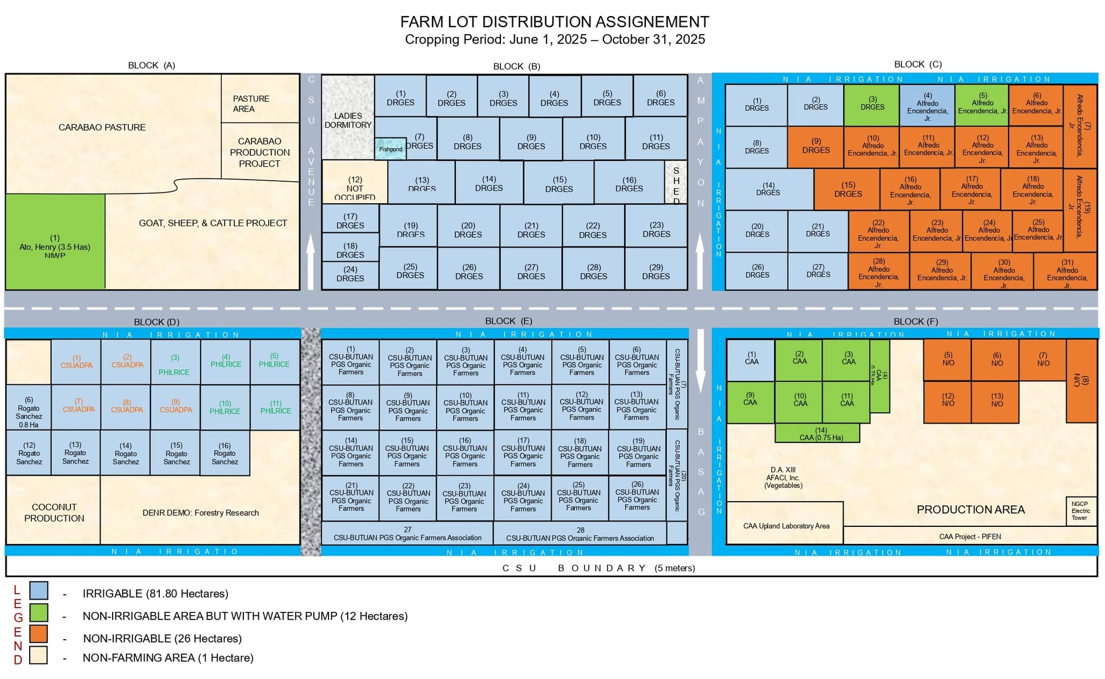
Through this arrangement, irrigation water is continuously cycled, reused, and distributed across multiple paddies throughout the planting seasons. This system reduces dependence on additional freshwater abstraction and demonstrates large-scale practical application of water reuse, aligning directly with THE’s SDG 6.4 criteria on improving water-use efficiency and sustainable withdrawal.
Beyond farm operations, CSU integrates this irrigation system into teaching, research, and extension activities, providing students and researchers with hands-on engagement in:
● Sustainable agricultural water management
● Monitoring irrigation efficiency
● Evaluating water reuse and distribution strategies
● Demonstrating climate-resilient rice production systems
Through this initiative, CSU contributes to sustainable water resource management, localized food security, and evidence-based agricultural practices that support SDG
Promoting Water Reuse and Efficiency through Alternate Wetting and Drying (AWD) Technology
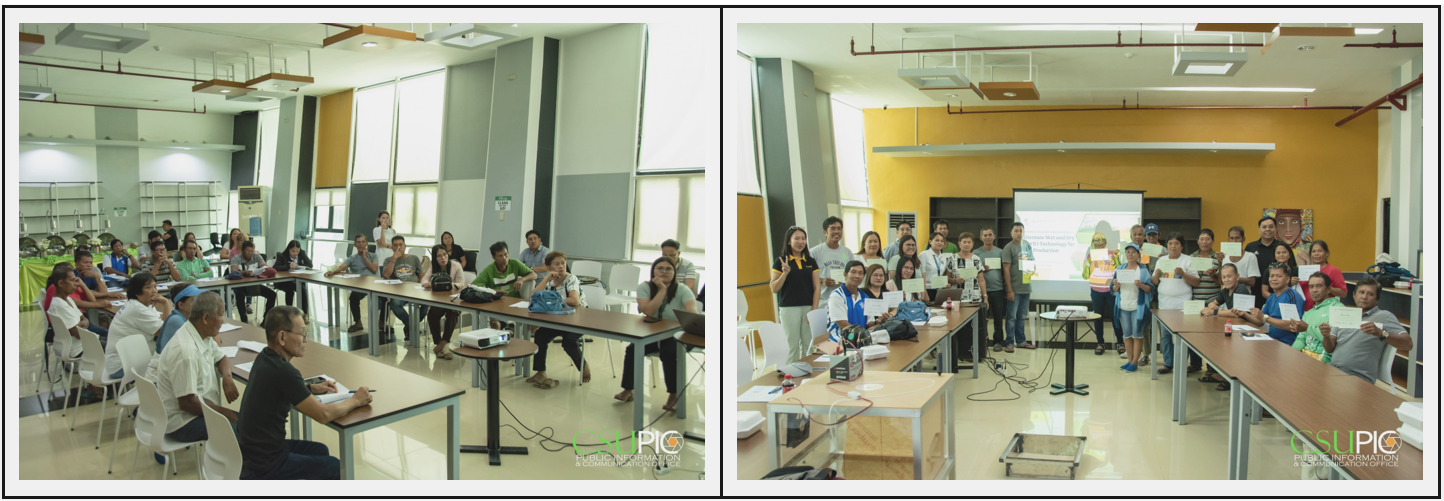
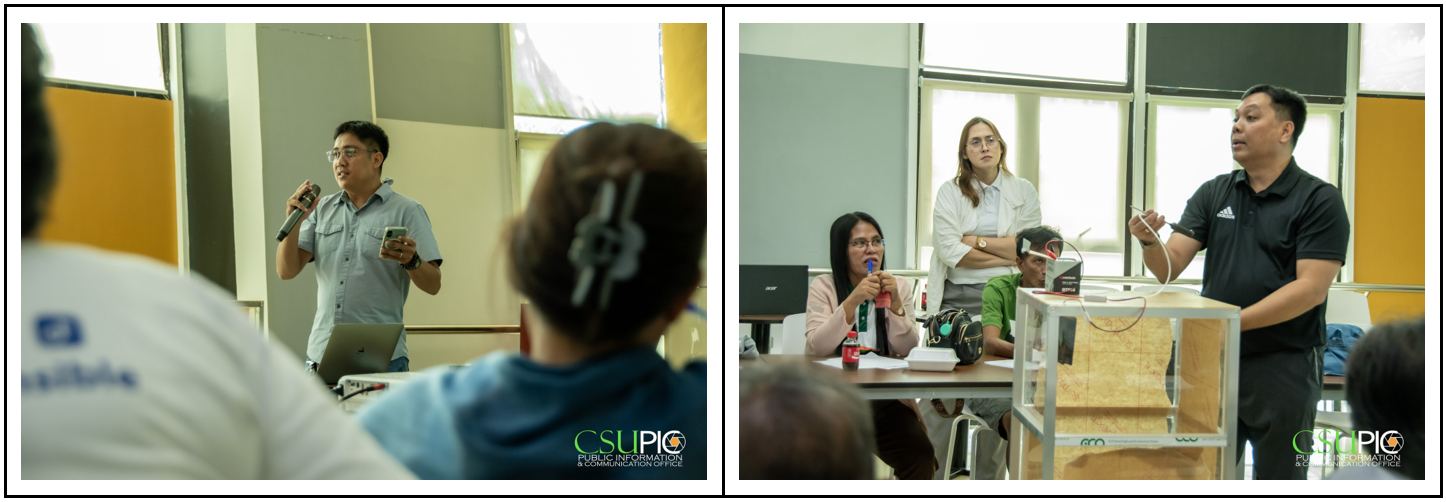
Caraga State University (CSU), through its College of Agriculture and Agri-Industries (CAA), promotes water reuse and efficient irrigation management in rice farming by utilizing the Alternate Wetting and Drying (AWD) technology. Developed and introduced by the Soil Science Division, the system allows farmers to reuse residual soil moisture and stored water between irrigation cycles by alternating flooded and dry field conditions.
This practice reduces total freshwater extraction for rice production by 15–30%, thereby conserving water resources and minimizing irrigation energy costs. The intermittent drying period enables natural soil water recycling, demonstrating a practical model of field-based water reuse that enhances agricultural sustainability.
Beyond improving water efficiency, AWD significantly reduces methane emissions by up to 50%, mitigating the environmental impact of rice cultivation. Through extension programs and technology demonstrations, CSU trains local farmers in adopting AWD, integrating research, innovation, and community outreach to advance sustainable water use in the region.
This initiative exemplifies CSU’s commitment to Sustainable Development Goal 6 (Clean Water and Sanitation) by applying science-based solutions that reduce water demand, promote reuse, and strengthen local resilience in agricultural communities.
Link: Caraga State University Facebook Page
6.4.1 Water reuse policy
Water Purification System Powered by a Mini Hydroelectric Power System
Caraga State University (CSU) demonstrates its commitment to sustainable water management through innovative research that integrates water reuse, purification, and renewable energy generation. The study titled “Water Purification System Powered by a Mini Hydroelectric Power System” addresses the global challenge of providing clean and safe drinking water, particularly in off-grid and low-income communities.
The project developed a self-sustaining water purification system that operates through energy harnessed from flowing freshwater sources, such as rivers and creeks, using a mini hydroelectric turbine. The generated electricity is stored in a battery, providing continuous power to the filtration unit. The system employs a five-stage purification process that eliminates harmful bacteria, odors, and unpleasant taste—ensuring potable water suitable for household use.
Aligned with Indicator 6.4.2 – Water Reuse Measurement, the device promotes efficient water recycling and reuse by enabling the treatment and repeated use of freshwater from natural or domestic sources without reliance on external power. The integration of renewable hydroelectric energy ensures zero-carbon operation, making the system both water- and energy-efficient.
This study exemplifies CSU’s role in advancing science-based water reuse technologies that deliver measurable outcomes—reducing freshwater extraction, promoting circular water use, and contributing to a sustainable water supply for underserved communities.
Link: DOI https://doi.org/10.1109/ICDRET54330.2021.9752679
6.4.2 Water reuse measurement
6.5.1 Water management educational opportunities
The 2024 ENS 120 Watershed Management field trip provided students with direct, community-embedded learning experiences across the Patin-ay, Bislig River, and Tago watersheds, strengthening their understanding of watershed science, governance, and sustainability. Through lectures facilitated by DENR-PENRO/CENRO personnel and LGU partners, students gained comprehensive insights into watershed delineation, planning processes, policy frameworks, biodiversity characteristics, and existing environmental challenges. This hands-on engagement exposed students to real-world issues such as tenurial conflicts, fluctuating water supply, land-use pressures, and community-level cooperation barriers, reinforcing the academic foundations of integrated watershed management.
In Bislig, students learned about a ridge-to-reef management approach, the development of the 2025–2035 Integrated Watershed Management Plan, and the socio-environmental issues affecting a critical watershed—including weak law enforcement, timber poaching, climate-induced hazards, and water quality concerns. They also explored CENRO Bislig’s innovative community-based initiatives such as “Plant a Tree on Your Birthday,” arboretum development, multi-agency linkages, and extensive IEC campaigns. These practical demonstrations highlighted how inclusive stakeholder participation and nature-based solutions strengthen watershed resilience while serving as rich educational models for learners.
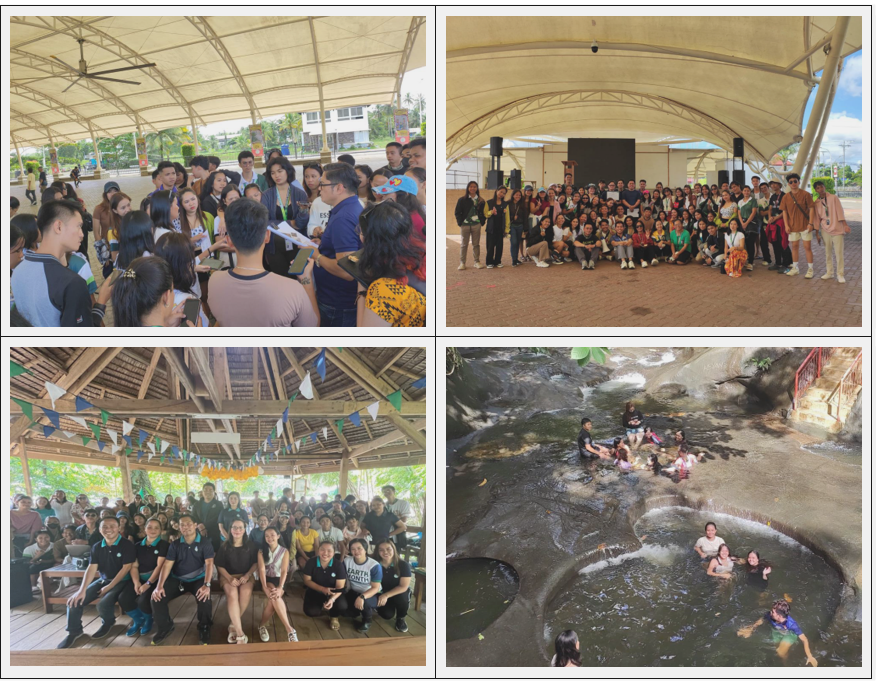
Similarly, the engagement with Tago Watershed management officials introduced students to large-scale watershed planning that integrates multiple municipalities and Indigenous Peoples with existing CADT areas. Students examined land-use pressures, high coliform counts from residential runoff, illegal logging, and gaps in sanitation facilities—issues that underscore the need for science-based monitoring and community-centered watershed governance. Exposure to ongoing research and development programs, such as waste processing technologies and sanitary landfill initiatives, allowed students to appreciate the role of applied research in informing policy and improving watershed sustainability.
Complementing these academic activities, the field trip incorporated ecotourism site assessments in Bislig and Hinatuan, enabling students to evaluate how tourism practices intersect with watershed protection. By observing carrying-capacity policies, environmental regulations, community partnerships, and the ecological pressures faced by destinations such as Tinuy-an Falls and Enchanted River, students deepened their understanding of the socio-ecological dynamics that shape watershed health. These immersive learning opportunities directly advance SDG 6.5.1, as they demonstrate the university’s commitment to providing accessible, experiential, and community-engaged education that builds future professionals capable of driving integrated water resources management at all levels.
Source: CHED Fieldtrip Approval, Narrative Report
6.5.3 Off-campus water conservation support
Caraga State University actively extends its expertise beyond campus boundaries through research and development initiatives that contribute to regional water conservation, watershed management, and sustainable water resource utilization. In support of the United Nations Sustainable Development Goal 6 (Clean Water and Sanitation), particularly Target 6.5 on Water in the Community, CSU undertakes scientific studies that generate data-driven solutions for the sustainable use and protection of freshwater systems across Caraga Region.
Among these initiatives are the following:
Through these off-campus initiatives, CSU strengthens its role as a science-based partner of local government units, communities, and national agencies in advancing water conservation and watershed protection. The university’s research outputs provide valuable insights for policy formulation, climate adaptation planning, and sustainable land–water management in Caraga Region and neighboring provinces.
By contributing technical expertise and actionable data for watershed and hydrological studies, CSU demonstrates its commitment to integrated water resource management (IWRM) and to fostering resilient, water-secure communities—a clear manifestation of its leadership in achieving SDG 6.5.3 Off-campus Water Conservation Support.
Responsible Ground-and Surface-Water Withdrawal at CSU
Caraga State University (CSU) ensures the sustainable extraction and utilization of water resources through efficient management of its central campus reservoir and submersible water pump system. To regulate groundwater extraction and preserve the operational lifespan of the pumping facility, the Office of the Vice President for Administration and Finance (OVPAF) issued Memorandum Order No. 36, s. 2020, entitled “Schedule of Water Distribution from the Reservoir”.
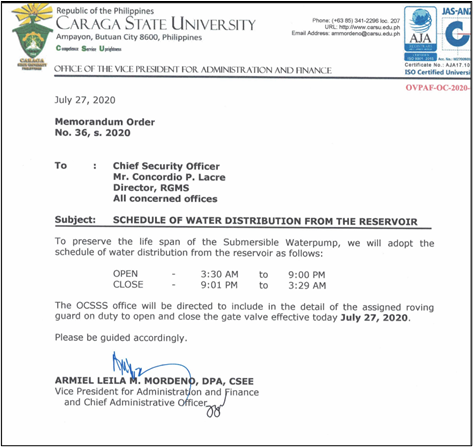
The memorandum established a regulated schedule for water distribution to balance campus demand with resource sustainability. Under this directive, water extraction from the submersible pump is scheduled from 3:30 AM to 9:00 PM daily, while the system is closed from 9:01 PM to 3:29 AM. This controlled schedule minimizes over-extraction and reduces the operational strain on pumping equipment, thus promoting responsible groundwater management.
The directive also designates the Campus Security and Services Office to oversee the implementation, ensuring that the assigned roving guards open and close the valve system as scheduled. This administrative measure institutionalizes accountability and adherence to the university’s water conservation and sustainability policy.
Through this initiative, CSU demonstrates its commitment to Sustainable Development Goal (SDG) 6: Clean Water and Sanitation, particularly under Indicator 6.5.4 – Sustainable Water Extraction on Campus. The scheduled extraction system not only extends the service life of water infrastructure but also aligns with CSU’s long-term environmental management plan to maintain water availability for future academic and community use.
Link: Water Distribution Schedule
Collaborative Research on Water Resource Assessment and Modeling in the Caraga Region
In pursuit of sustainable and science-based water management, Caraga State University (CSU) formalized a tripartite Memorandum of Agreement (MOA) with the Butuan City Water District (BCWD) and the Taguibo Aquatech Solutions Corporation (TASC) to jointly implement the research project titled “Water Resource Assessment and Modeling of the Selected Watershed in Caraga Region for Sustainable Domestic and Irrigation Water Supply.” This partnership reflects CSU’s continuing commitment to promote cooperation on water security through applied research, knowledge sharing, and stakeholder engagement.
The collaboration leverages CSU’s academic and technical expertise through its Center for Resource Assessment, Analytics and Emerging Technologies (CREATE) and the Department of Agricultural and Biosystems Engineering (DABE) of the College of Engineering and Geosciences. The university is tasked with conducting hydrological modeling, data analysis, and simulation studies to estimate monthly and annual water availability and sediment yield within the identified watershed. The project aims to support evidence-based decisions for water distribution, conservation, and resource sustainability.
Meanwhile, BCWD, as the government-owned water utility, and TASC, as a private partner engaged in water supply and treatment services, commit to providing technical, logistical, and data support. These include the collection and laboratory analysis of daily water samples, monitoring of discharge and sediment levels, and sharing of operational data essential for model calibration and validation. The study’s results will inform improvements in water resource allocation, pollution control, and infrastructure planning for sustainable domestic and irrigation water supplies.
Through this cooperative research, CSU, BCWD, and TASC exemplify a multi-sectoral approach to water security, bridging the academe, government, and industry sectors. The partnership fosters innovation in local water resource assessment and ensures that scientific outputs are translated into practical solutions for the Taguibo Watershed and other priority catchments in the Caraga Region.
This initiative underscores CSU’s leadership in promoting integrated water resource management (IWRM) and aligns with SDG 6.5, which calls for enhanced cooperation and capacity-building to protect and sustain water systems at all levels.
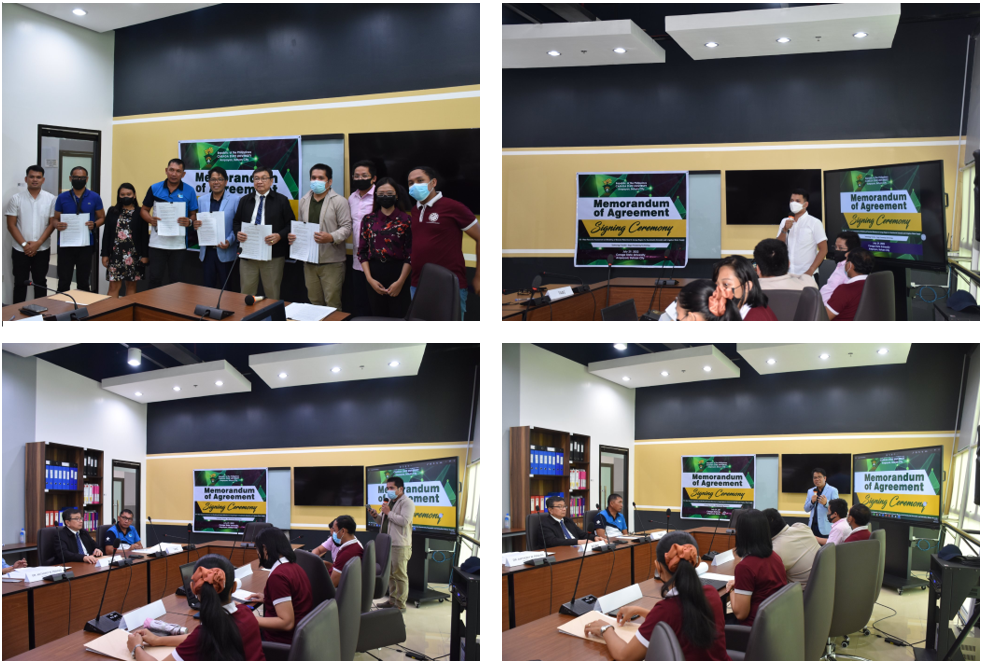
Source: CSU CReATe Facebook Post, MOA with Butuan City Water District and Taguibo Aquatech Solutions Corporation
Formulation of Cluster Management Plans on Integrated Approach in the Management of the Eastern Mindanao Biodiversity Corridor
Caraga State University promotes conscious and sustainable water usage beyond the campus through its active participation in the Project on the Formulation of Cluster Management Plans on Integrated Approach in the Management of the Eastern Mindanao Biodiversity Corridor. CSU faculty members and researchers served as part of the project team, contributing their expertise in hydrology, watershed management, and environmental planning to ensure that water resource conservation is a central element of the management plans.
The project integrates the principles of sustainable water use, watershed protection, and pollution prevention into biodiversity corridor planning and implementation. Through this initiative, CSU helps raise awareness and strengthen the capacity of local government units, communities, and partner institutions in responsible water management and efficient utilization of freshwater resources.
By engaging in this multi-sectoral and science-based initiative, CSU extends its commitment to the United Nations Sustainable Development Goal 6 (Clean Water and Sanitation)—promoting water consciousness, conservation values, and sustainable practices across the wider Eastern Mindanao community.
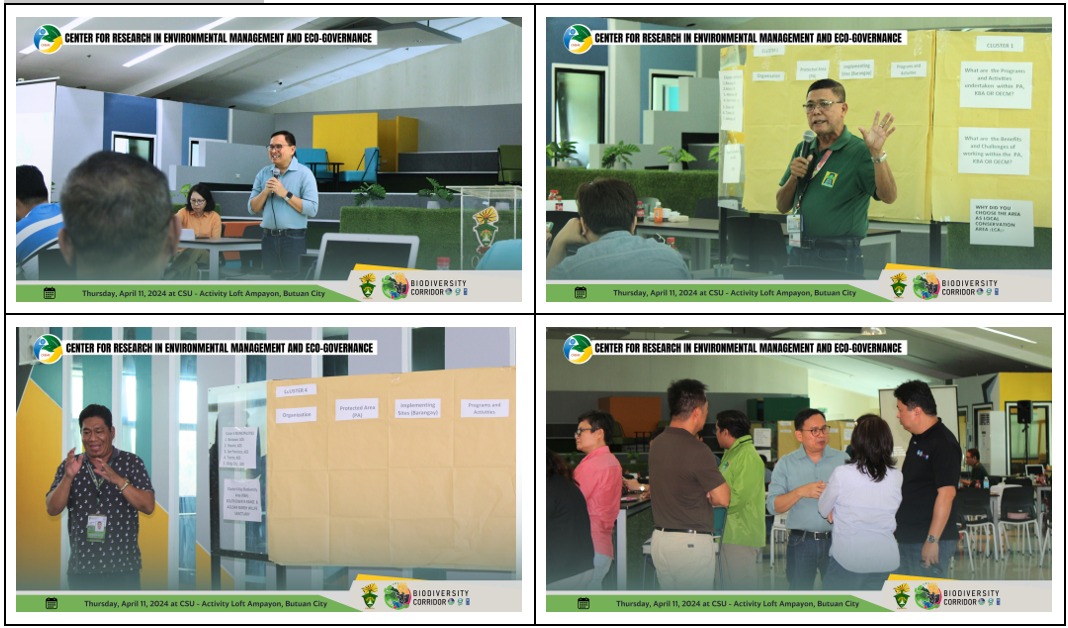
Source: Center for Research in Environmental Management and Eco-Governance
Webinar on Clean Water Act and Environmental Awareness
As part of its continuing advocacy for environmental sustainability and responsible water resource management, Caraga State University (CSU) conducted a webinar titled “Clear Skies, Healthy Ties” on December 5, 2024. This initiative, organized through the Pollution Control and Environmental Management Office (PCEMO), aimed to promote conscious water usage and pollution prevention practices among students, faculty, and partner communities.
The session featured Forester Christian D. Polenio, Technical Staff of PCEMO, who served as the resource speaker and discussed the provisions, implementation, and local relevance of the Philippine Clean Water Act of 2004 (Republic Act 9275). His presentation emphasized the importance of maintaining water quality, controlling pollution sources, and ensuring community participation in water conservation efforts.
The webinar provided practical insights into sustainable water management, highlighting how individuals and institutions can reduce water waste, properly manage wastewater, and protect freshwater ecosystems. Participants were encouraged to adopt environmentally responsible behaviors, such as efficient water use, waste segregation, and participation in cleanup and reforestation activities, which help safeguard watersheds and riparian areas.
Through this educational initiative, CSU strengthened its role as an environmental learning hub in the Caraga Region—fostering awareness, accountability, and action for sustainable water stewardship beyond the university campus. The activity aligns with the university’s mandate to extend environmental education to the wider community and supports SDG 6 (Clean Water and Sanitation) by advancing knowledge on the protection and sustainable use of water resources.

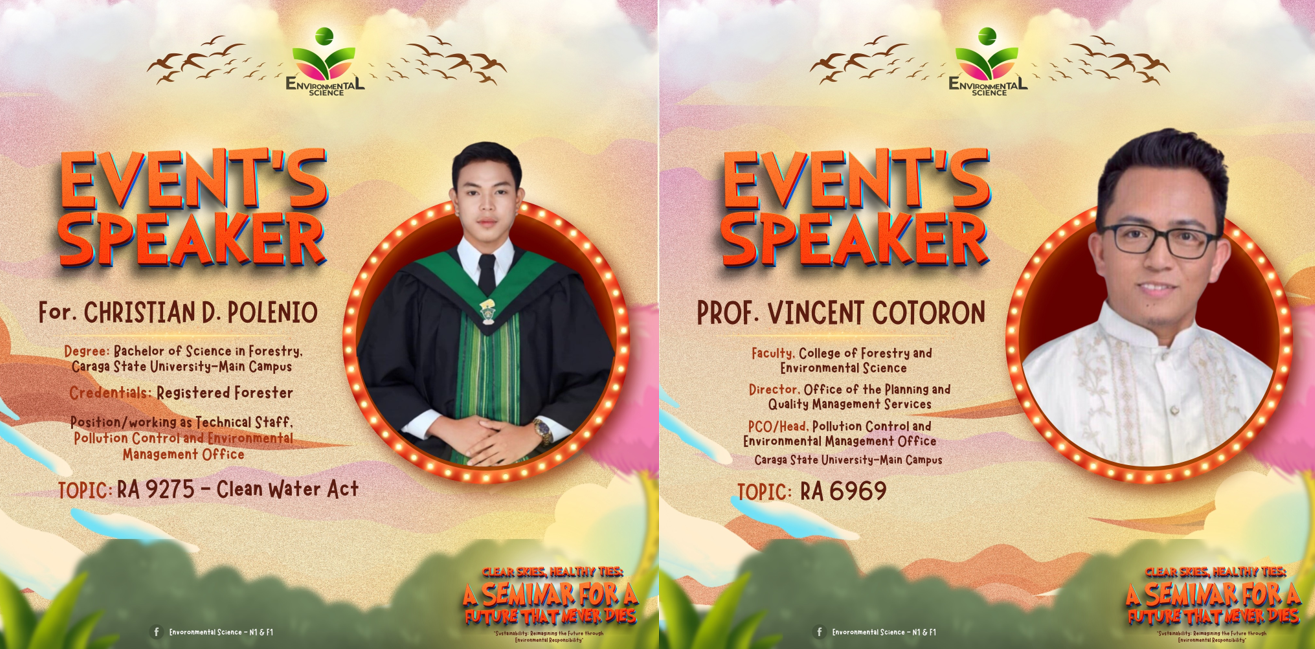
Source: Environmental Science – N1 & F1: Clear Skies, Healthy Ties
The Office of Admission and Scholarship (OAS), led by OAS Director Dr. Sheila Rae E....
Caraga State University is still among the top-ranked Higher Education Institutions (HEIs) in the Philippines...
Caraga State University (CSU) has been recognized as part of the emerging higher education ecosystem...