OAS conducts orientation to over 900 CHED-TES,TDP scholarship grantees
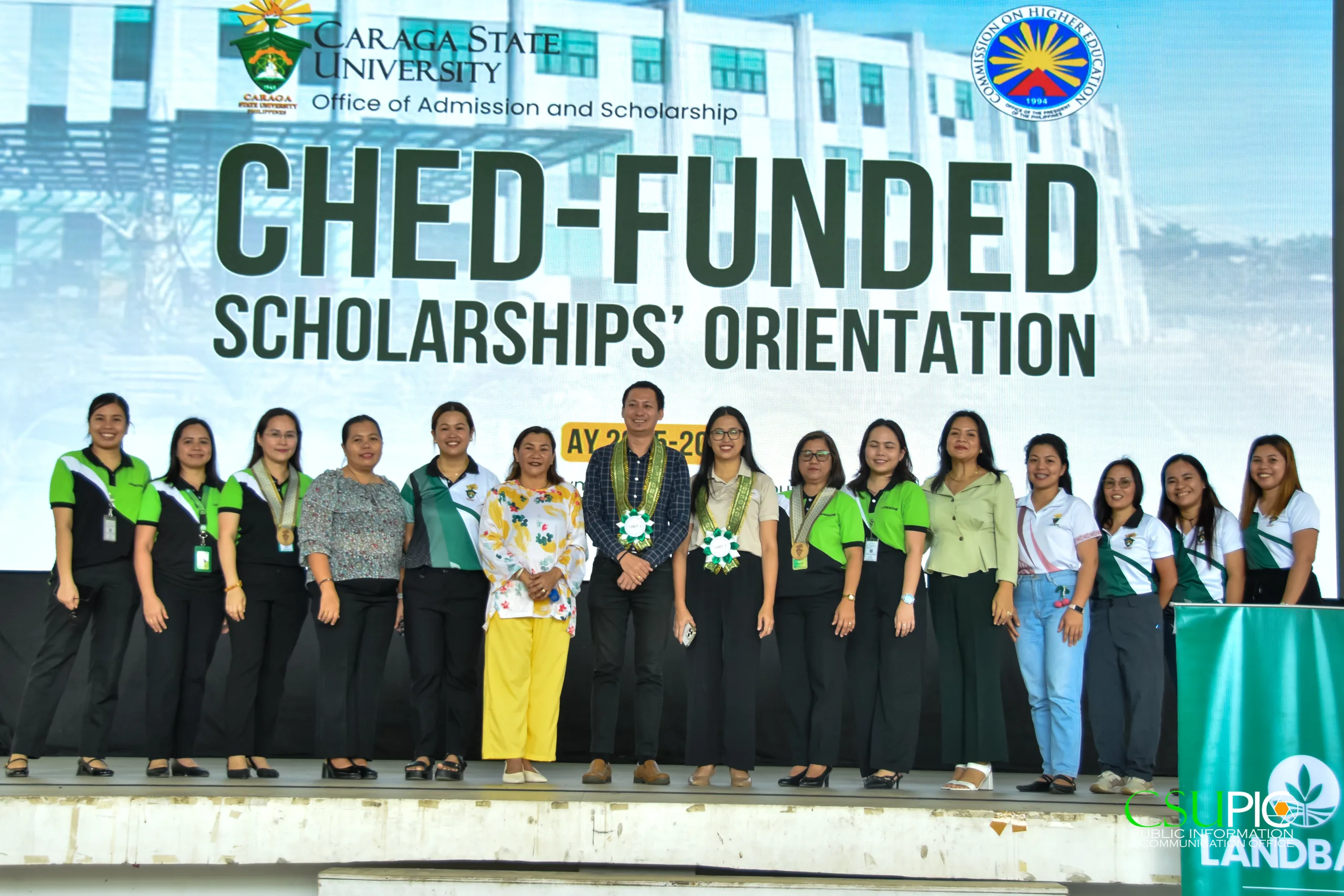
The Office of Admission and Scholarship (OAS), led by OAS Director Dr. Sheila Rae E....

Caraga State University is an active key player in advancing Sustainable Development Goal 8 by promoting sustained economic growth, productive employment, and decent work as foundations of a sustainable future. To achieve this goal, the university prioritizes the creation of quality jobs, ensures equal opportunities for professional growth, supports and nurtures entrepreneurship, and fosters inclusive economic development that benefits the entire community.
CSU acknowledges the role of conducting research on economic growth and employment to examine how the expansion of a nation’s productive capacity influences job creation, income levels, and overall societal well-being. CSU seeks to understand the conditions under which economic growth leads to more and better employment opportunities, as well as the factors that contribute to unemployment and underemployment. By analyzing trends, policies, and structural changes in the economy, this line of research provides evidence-based insights to guide decision-makers in promoting inclusive and sustainable development.
“A total of 22 SDG-8-relevant publications with FWCI 1.05 and 51 citations in 2020–2024. CSU’s SDG 8 work is cited above world average. It remains committed to producing high quality research outputs”
According to the CiteScore metric, a total of twenty-two studies have been published on decent work and economic growth, with a field-weighted citation impact of 1.05 and an overall citation count of 51. The breadth of research topics in the field of agriculture, eco-tourism, RE, circular economy, urbanisation, etc. indicates that SDG 8 is embedded across disciplines. With FWCI >1.0. signals that CSU’s SDG 8 work is cited above world average. Likewise, this performance highlights the university’s strong commitment to producing high-quality research outputs.
Table 1.0 Summary of CSU’s scholarly output, field-Weighted Citation impact, and Citation count
| Sustainable Development Goal | Scholarly Output | Field-Weighted Citation Impact | Citation Count |
| SDG 8: Decent Work and Economic Growth (2025) Analyze at Institution Analyze worldwide | 22 | 1.05 | 51 |
Using Elsevier SciVal’s SDG 8 (Decent Work and Economic Growth) topic filter, CSU produced and published a total of 22 researches on international-indexed peer-reviewed journals and conference proceedings that focus on decent work and economic growth from 2020-2024, with FWCI 1.05 and 51 citations. The following tables summarize the details showing the SDG 8 target areas, research title, date of publication, Journal, Abstract link, and DOI link.
Table 2.0 The Selected SDG-8-relevant publications of Caraga State University from 2020-2024 in the field of Entrepreneurship and SMEs Development
| SDG 8 Target: Entrepreneurship and SMEs Development | |||||
| No | Title | Year | Scopus Source title | Abstract | DOI |
| 1 | Assessing timber trade middlemen for development policy actions: a case study in the Caraga region, Philippines | 2022 | Humanities and Social Sciences Communications | https://www.scopus.com/record/display.url?eid=2-s2.0-85130977839&origin=resultslist | 10.1057/s41599-022-01176-7 |
| 2 | Mixed-method study on the association between inclusion to conditional cash transfer program and the multiple faces of malnutrition in children and adolescents aged 3 to 19 years: a school-based evidence from Caraga Region, the Philippines | 2023 | BMC Pediatrics | https://www.scopus.com/record/display.url?eid=2-s2.0-85179685874&origin=resultslist | 10.1186/s12887-023-04438-8 |
| 3 | Economic zones site selection in butuan city using multi-criteria decision-making approach and GIS techniques | 2021 | International Archives of the Photogrammetry, Remote Sensing and Spatial Information Sciences – ISPRS Archives | https://www.scopus.com/record/display.url?eid=2-s2.0-85118716315&origin=resultslist | 10.5194/isprs-archives-XLIV-M-3-2021-13-2021 |
As shown in Table 2.0, there are three CSU publications related to SDG 8, specifically addressing the target on Entrepreneurship and SME Development. These papers contributed to the economic growth and employment in the region by collectively highlighting the complex interplay between economic development, social welfare, and spatial planning in Butuan City and Caraga Region. The assessment of timber trade middlemen in Caraga underscores their significant influence on pricing, supply chains, and local livelihoods, revealing both economic benefits and challenges such as market imbalances and regulatory gaps that call for better transparency and policy reform. The mixed-method investigation on the Conditional Cash Transfer (CCT) program and malnutrition among children and adolescents shows that, although financial assistance can support basic needs, multiple forms of malnutrition persist due to deeper issues related to food security, household practices, and access to health services, thereby emphasizing the need for strengthened nutrition and community interventions. Complementing these, the study on economic zone site selection in Butuan City uses multi-criteria decision-making and GIS to identify optimal locations for industrial and commercial development, providing evidence-based guidance for sustainable land use and investment planning. Together, these studies offer an integrated perspective on how governance, social protection, and spatial-economic planning must align to foster inclusive and sustainable regional development.
Table 3.0 The Selected SDG-8-relevant publications of Caraga State University from 2020-2024 in the field of Sustainable Economic Growth in Agriculture, Food Systems, and Eco-Tourism
| SDG 8 Target: Sustainable Economic Growth in Agriculture, Food Systems, and Eco-Tourism. | |||||
| No | Title | Year | Scopus Source title | Abstract | DOI |
| 1 | Climate risk vulnerability assessment of the major crops in the province of agusan del norte, philippines | 2021 | International Archives of the Photogrammetry, Remote Sensing and Spatial Information Sciences – ISPRS Archives | https://www.scopus.com/record/display.url?eid=2-s2.0-85122310942&origin=resultslist | 10.5194/isprs-Archives-XLVI-4-W6-2021-27-2021 |
| 2 | Assessing Patterns and Trends in Urbanization and Land Use Efficiency Across the Philippines: A Comprehensive Analysis Using Global Earth Observation Data and SDG 11.3.1 Indicators | 2024 | PFG – Journal of Photogrammetry, Remote Sensing and Geoinformation Science | https://www.scopus.com/record/display.url?eid=2-s2.0-85201199567&origin=resultslist | 10.1007/s41064-024-00305-y |
| 3 | Perceived ecosystem services towards the conservation of agusan marsh wildlife sanctuary in Mindanao, Philippines | 2020 | International Journal of Conservation Science | https://www.scopus.com/record/display.url?eid=2-s2.0-85084254304&origin=resultslist | – |
| 4 | Impact Assessment of the Government-installed Solar-Powered Irrigation Systems in Agusan del Sur | 2024 | International Exchange and Innovation Conference on Engineering and Sciences | https://www.scopus.com/record/display.url?eid=2-s2.0-85213349312&origin=resultslist | 10.5109/7323334 |
| 5 | Climate resilient agriculture and enhancing food production: Field experience from Agusan del Norte, Caraga Region, Philippines | 2022 | Frontiers in Sustainable Food Systems | https://www.scopus.com/record/display.url?eid=2-s2.0-85137185431&origin=resultslist | 10.3389/fsufs.2022.974789 |
| 6 | Changing the Way We Produce Food: An Overview of the Current Agricultural Food Production Industry and Worldwide Trends for Sustainable Production | 2021 | Climate Change and Resilient Food Systems: Issues, Challenges, and Way Forwards | https://www.scopus.com/record/display.url?eid=2-s2.0-85137250352&origin=resultslist | 10.1007/978-981-33-4538-6_7 |
| 7 | Water Resource Potential Assessment for Pump Irrigation Systems for Open Source in Caraga Region, Philippines | 2021 | 2021 IEEE 13th International Conference on Humanoid, Nanotechnology, Information Technology, Communication and Control, Environment, and Management, HNICEM 2021 | https://www.scopus.com/record/display.url?eid=2-s2.0-85127561281&origin=resultslist | 10.1109/HNICEM54116.2021.9732006 |
| 8 | Willingness to pay towards the conservation of ecotourism resources at Agusan Marsh Wildlife Sanctuary, Agusan Del Sur, Philippines | 2021 | International Journal of Conservation Science | https://www.scopus.com/record/display.url?eid=2-s2.0-85115777790&origin=resultslist | – |
| 9 | Estimating Rice Crop Yield based on the Sentinel-1A C-Band SAR Data: A Focus in the Rice Granary Capital of Agusan del Sur, Philippines | 2024 | Proceedings of SPIE – The International Society for Optical Engineering | https://www.scopus.com/record/display.url?eid=2-s2.0-85184519561&origin=resultslist | 10.1117/12.3009655 |
| 10 | Circular Economy across Australia: Taking Stock of Progress and Lessons | 2021 | Circular Economy and Sustainability | https://www.scopus.com/record/display.url?eid=2-s2.0-85171369497&origin=resultslist | 10.1007/s43615-021-00020-5 |
| 11 | Diurnal Avifaunal Species in the Designated Mangrove Eco-park in Cabadbaran City, Philippines | 2021 | Asian Journal of Conservation Biology | https://www.scopus.com/record/display.url?eid=2-s2.0-85131444679&origin=resultslist | 10.53562/AJCB.68774 |
As can be gleaned on Table 3.0, a total of 11 publications of CSU that related to SDG 8 Target on Sustainable Economic Growth in Agriculture, Food Systems, and Eco-Tourism. These studies contribute to the growth and economic development of the Caraga Region by providing evidence-based insights essential for strengthening local agriculture, environmental management, and resource utilization. Research on climate-resilient crops, irrigation systems, water resource potential, and remote sensing for rice yield directly supports higher agricultural productivity, food security, and stable livelihoods—key drivers of rural economic growth. Meanwhile, studies on ecosystem services, ecotourism valuation, land-use efficiency, and biodiversity conservation guide sustainable land management and tourism development, enabling the region to balance economic expansion with long-term environmental protection. Collectively, these works equip policymakers, farmers, and communities with actionable data to enhance resilience, attract investments, and promote sustainable development across Caraga.
Table 4.0 The Selected SDG-8-relevant publications of Caraga State University from 2020-2024 in the field of Decent Work and Productive Employment in RE, electrification, and infrastructure
| SDG 8 Target: Decent Work and Productive Employment in renewable energy, electrification, and infrastructure | |||||
| No | Title | Year | Scopus Source title | Abstract | DOI |
| 1 | Socially inclusive valorization of gold mill tailings from the small-scale gold mining sector | 2024 | Global Journal of Environmental Science and Management | https://www.scopus.com/record/display.url?eid=2-s2.0-85200769762&origin=resultslist | 10.22034/gjesm.2024.04.34 |
| 2 | Bioenergy updates and prospects for decarbonization in the ASEAN region: A review on logistical concerns and potential solutions | 2024 | Wiley Interdisciplinary Reviews: Energy and Environment | https://www.scopus.com/record/display.url?eid=2-s2.0-85171307855&origin=resultslist | 10.1002/wene.499 |
| 3 | Techno-Economic Analysis of a 5 MWp Solar Photovoltaic System in the Philippines | 2021 | 21st IEEE International Conference on Environment and Electrical Engineering and 2021 5th IEEE Industrial and Commercial Power System Europe, EEEIC / I and CPS Europe 2021 – Proceedings | https://www.scopus.com/record/display.url?eid=2-s2.0-85126443719&origin=resultslist | 10.1109/EEEIC/ICPSEurope51590.2021.9584709 |
| 4 | Risk Assessment and Policy Recommendations for a Floating Solar Photovoltaic (FSPV) System | 2024 | IEEE Access | https://www.scopus.com/record/display.url?eid=2-s2.0-85186084345&origin=resultslist | 10.1109/ACCESS.2024.3368620 |
| 5 | Techno-economic Aspects and Circular Economy of Waste Biorefineries | 2022 | Handbook of Waste Biorefinery: Circular Economy of Renewable Energy | https://www.scopus.com/record/display.url?eid=2-s2.0-85161955022&origin=resultslist | 10.1007/978-3-031-06562-0_39 |
| 6 | The framework of waste management in gold mining towards building sustainable communities in Caraga Region, Philippines | 2020 | International Journal of Conservation Science | https://www.scopus.com/record/display.url?eid=2-s2.0-85092228876&origin=resultslist | – |
| 7 | Sustaining angiosperms’ diversity of bood promontory and eco-park, butuan city, philippines: Step towards a community based-protection management program | 2021 | Biodiversitas | https://www.scopus.com/record/display.url?eid=2-s2.0-85108433931&origin=resultslist | 10.13057/biodiv/d220662 |
| 8 | Techno-economics and programs of rural electrification using solar energy in South and Southeast Asia | 2021 | 21st IEEE International Conference on Environment and Electrical Engineering and 2021 5th IEEE Industrial and Commercial Power System Europe, EEEIC / I and CPS Europe 2021 – Proceedings | https://www.scopus.com/record/display.url?eid=2-s2.0-85126448888&origin=resultslist | 10.1109/EEEIC/ICPSEurope51590.2021.9584582 |
Caraga State University is committed to fostering a professional, merit-based, and performance-driven workplace that fully adheres to national labor laws and the principles of decent work and economic growth. As a State University in the Philippines, CSU’s employment practices are anchored on the Philippine Civil Service System, ensuring fairness, transparency, and equity for all faculty and staff.
As provided in Article 83, Section 1 of the CSU Code, employment at the University is open to all qualified and competent Filipino citizens and to foreign nationals holding valid work visas. The University will actively recruit highly capable candidates, giving preference, when possible, to its own outstanding graduates.
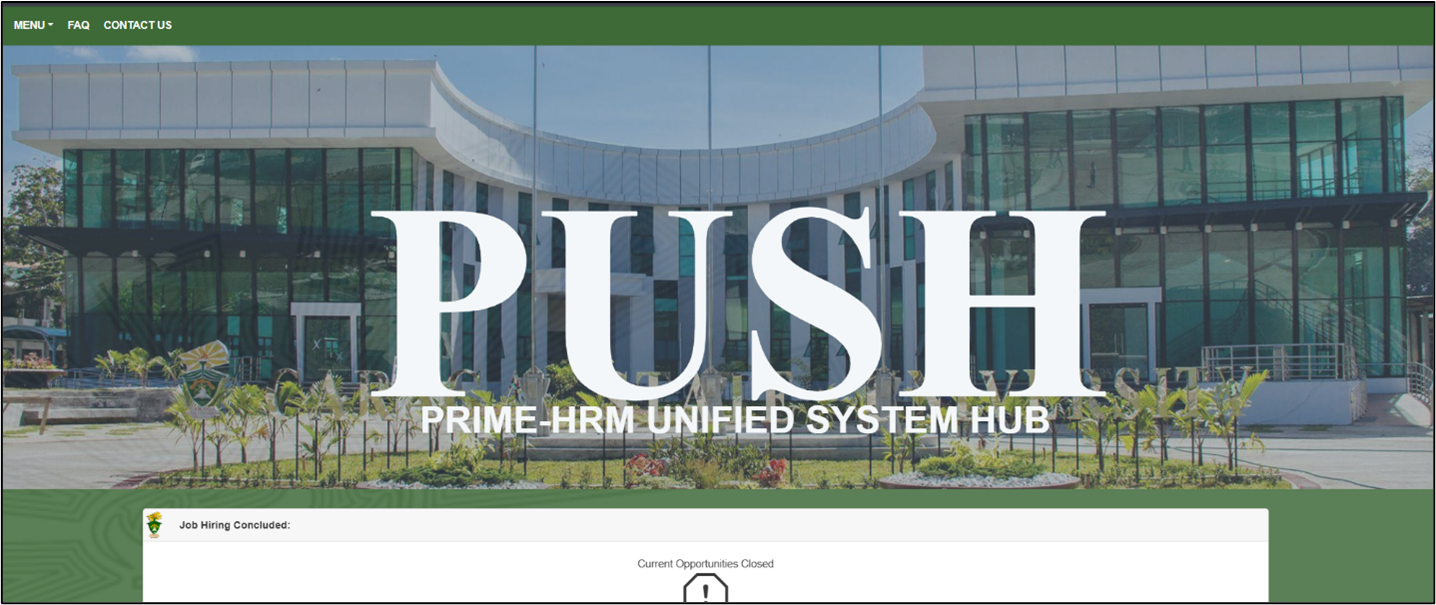
Figure 1.0 PRIME-HRM Unified System Hub (PUSH)
Source:
PUSH System
The University utilizes an online platform called the PRIME-HRM Unified System Hub (PUSH) to facilitate the submission of employment applications from prospective candidates. This system also serves as a screening tool designed to identify and filter highly qualified and capable applicants, ensuring that only the most suitable individuals progress in the recruitment process.
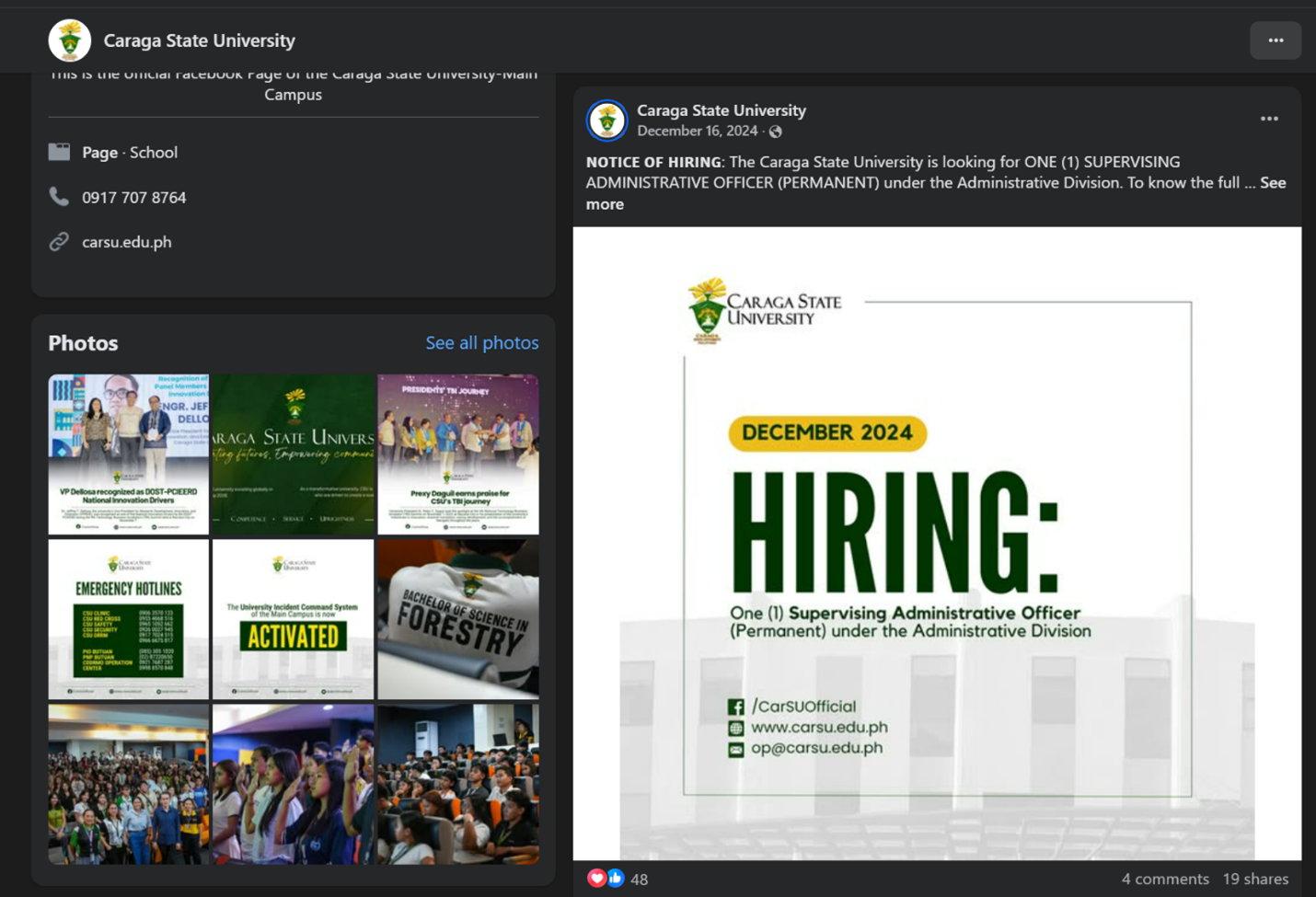
Figure 2. Notice of Hiring posted on CSU Facebook Page
Source:
CSU Facebook Page
Similarly, the official CSU Facebook page serves as an important platform for advertising job opportunities within the University, providing greater accessibility and ensuring wider dissemination of information to potential applicants.
All hiring decisions are strictly merit- and fitness-based, following the policies, rules, and procedures set in the University’s Merit Selection Plan (MSP) and Merit Promotion Plan (MPP), and, where practicable, the qualification standards of the Civil Service Commission (CSC) and any additional criteria the University may adopt.
The University will ensure that individuals are matched to roles appropriate to their duties and responsibilities. During selection and promotion, no tests or inquiries shall relate to a person’s gender, religious beliefs, or political or tribal affiliations.
All personnel are appointed by the University President, subject to Board of Regents (BOR) confirmation, and every appointment’s terms and conditions shall be put in writing.
When required, personnel appointments shall be submitted to the CSC for appropriate action.
Source:
CSU Code, page 45. Approved/updated: March 1, 2019
All employment in the University is classified into specific categories, each with its own characteristics in terms of job nature, security, and benefits. An employee’s category is determined by their job title and role.
Source:
Facebook Post
The Academic Staff category includes non-faculty personnel whose roles are distinct to higher education institutions. These positions may be either fixed-term renewable or fixed-term with a definite end date. Under this category, there are three main types of appointments. A Permanent appointment is a government service position granted to ranked university personnel for an indefinite period upon the recommendation of the appropriate department and approval by the Board of Regents (BOR) through the University President. A Contractual appointment is a full-time government service engagement for a limited period, approved by the University President based on the recommendation of the concerned unit or department, often serving as a preparatory phase before tenure. Lastly, a Job Order appointment is a full-time, non-government service position for a limited period, also approved by the University President upon departmental recommendation, where the personnel render services on a per-hour basis, typically with limited benefits and lesser job security.
Source:
Facebook Post
The Faculty category covers individuals holding the ranks of Professor, Associate Professor, Assistant Professor, Instructor, or Lecturer. Faculty appointments include: (1) Permanent—an indefinite government service post granted by the BOR upon recommendations of the department and University President; (2) Temporary—a government service post, similarly BOR-approved, held pending a tenure decision; (3) Contractual—a full-time, time-bound government service post approved by the University President upon departmental recommendation, often preceding a tenure decision; (4) Lecturer—a part-time, non-government engagement on a per-hour basis, approved by the University President upon departmental recommendation; and (5) Reclassified—a full- or part-time post (government or non-government) approved by the BOR and University President, created when an employee’s position title is changed to a different classification.
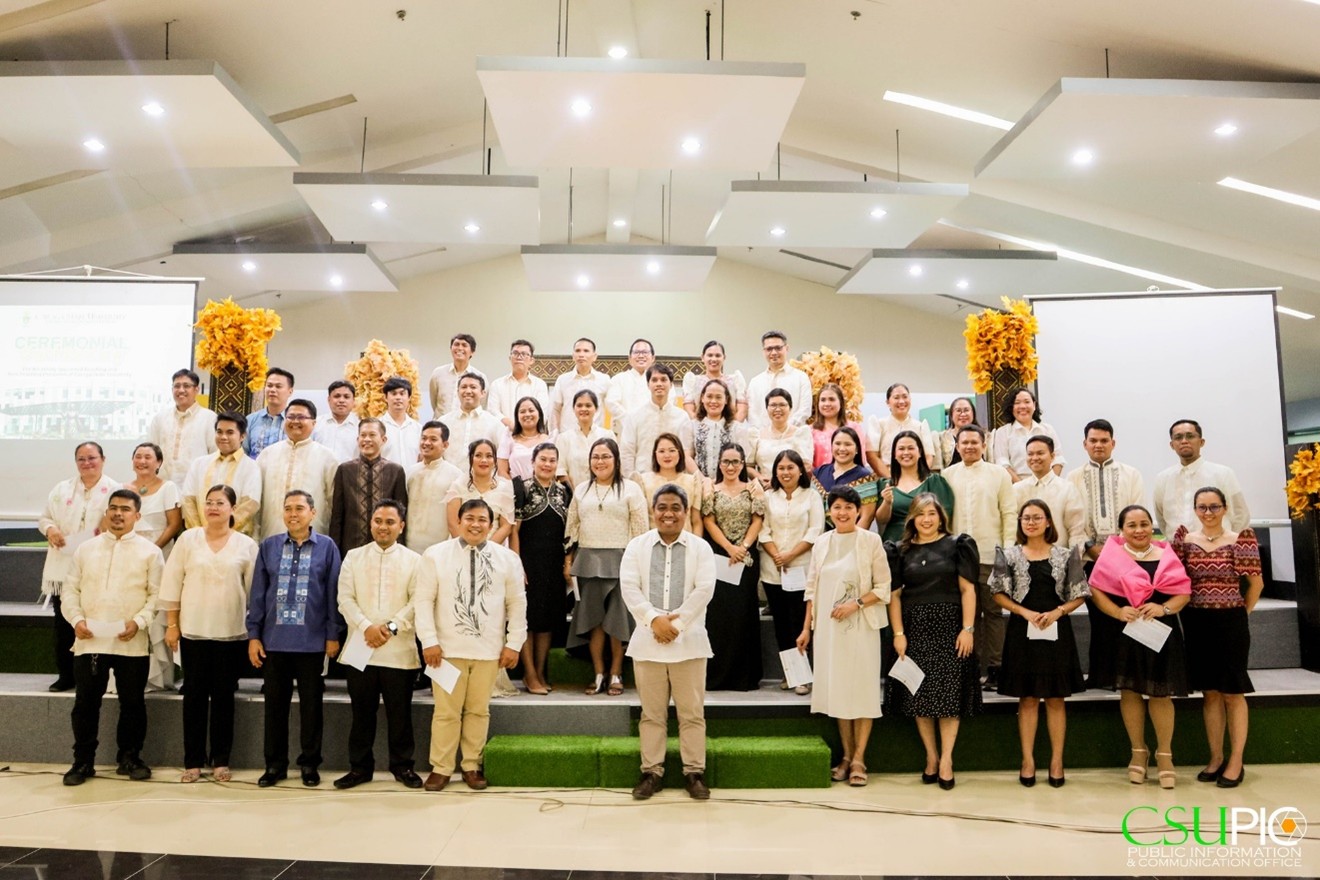
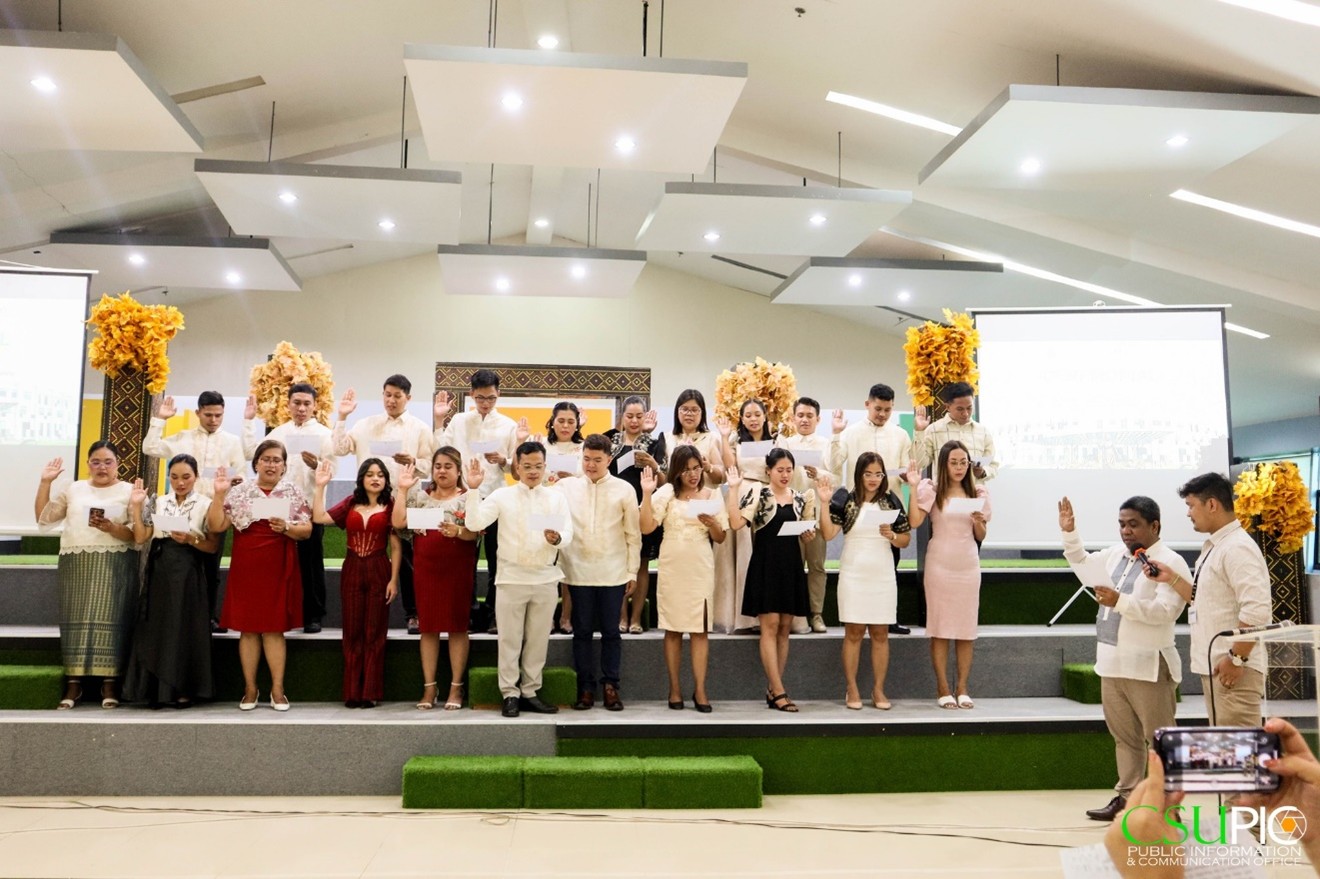
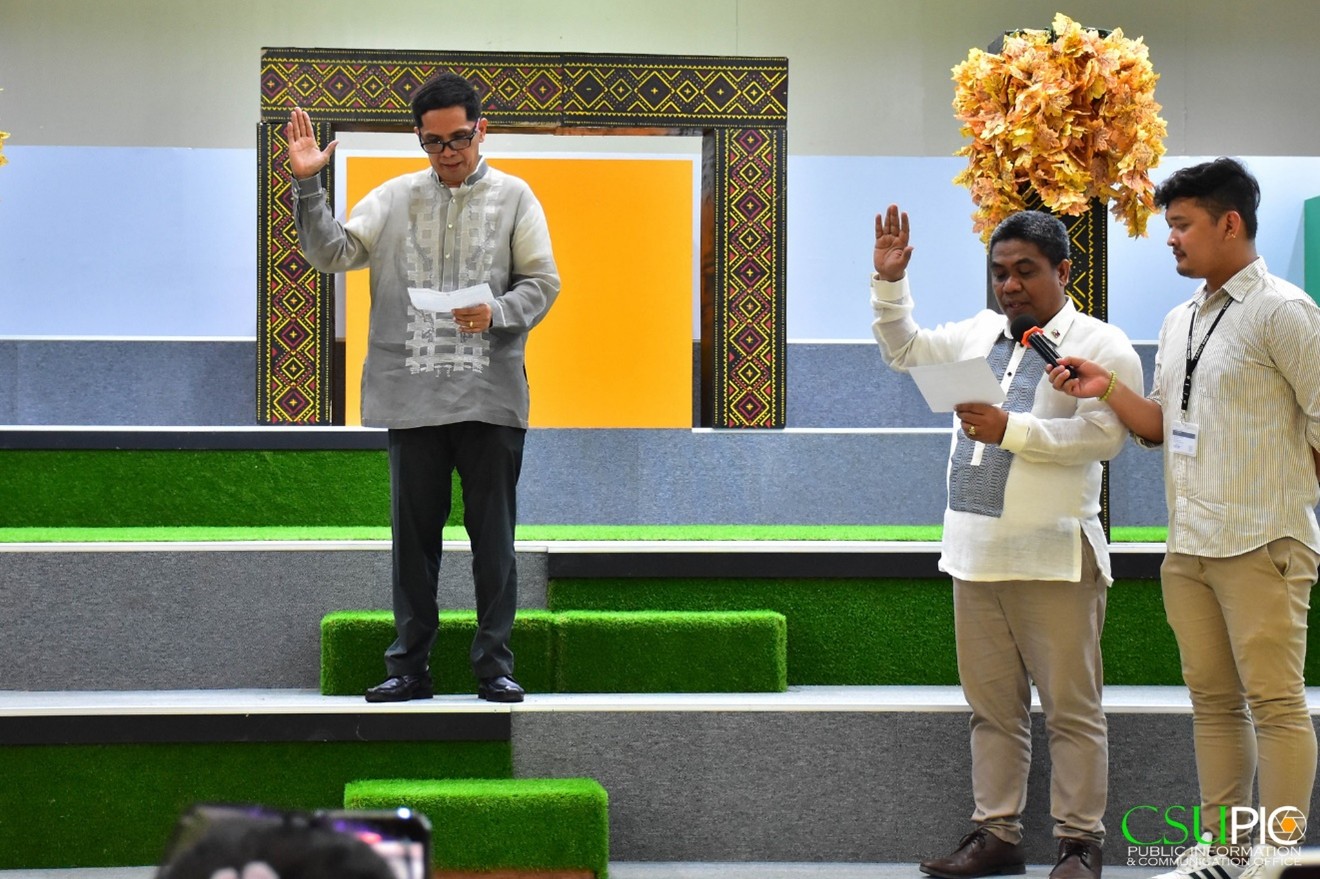
On April 17, a total of 181 newly hired, promoted, and reclassified personnel from both CSU campuses took their oath before University President Dr. Rolyn C. Daguil at the HERO Learning Commons. These appointments stem from the remaining 2023 Phase 1 implementation of the DBM Revised Organizational Structure and Staffing Standards (ROSSS) for non-teaching staff and from faculty reclassification under DBM–CHED Joint Circular No. 3, s. 2022. Dr. Rolando N. Paluga likewise took his oath as the newest University Professor, following National Certification Committee endorsement and BOR Referendum Resolution No. 04-02-01, s. 2024. In support of the proposed School of Medicine’s application to offer the region’s first Doctor of Medicine program, CSU also hired three medical doctors as professors and TWG members, complying with CHED requirements.
Source:
CSU Code, page 46 – Approved/updated: March 1, 2019
CSU is committed to upholding the principles of meritocracy and excellence by ensuring a fair, equitable, and inclusive onboarding process for all employee. This commitment extends irrespective of age, sex, sexual orientation, gender identity, civil status, pregnancy, disability, religion, ethnicity, social status, income, class, political affiliation, or any other personal circumstances that contravene the principles of equal employment opportunity.
The onboarding of new employees is a critical function within the Human Resource Management Services of CSU. This process is designed to ensure that all newly hired personnel are properly introduced to the university values, policies, systems, and culture
The Employee Onboarding Program is grounded in the following legal and policy frameworks:
The Guidelines on Employee Onboarding Program ensures that all onboarding activities are aligned with the competency-based human resource management systems framework, specifically encompassing Recruitment, Selection, and Placement (RSP); Learning Development (L&D); Rewards and Recognition (R&R); and Performance Management (PM).
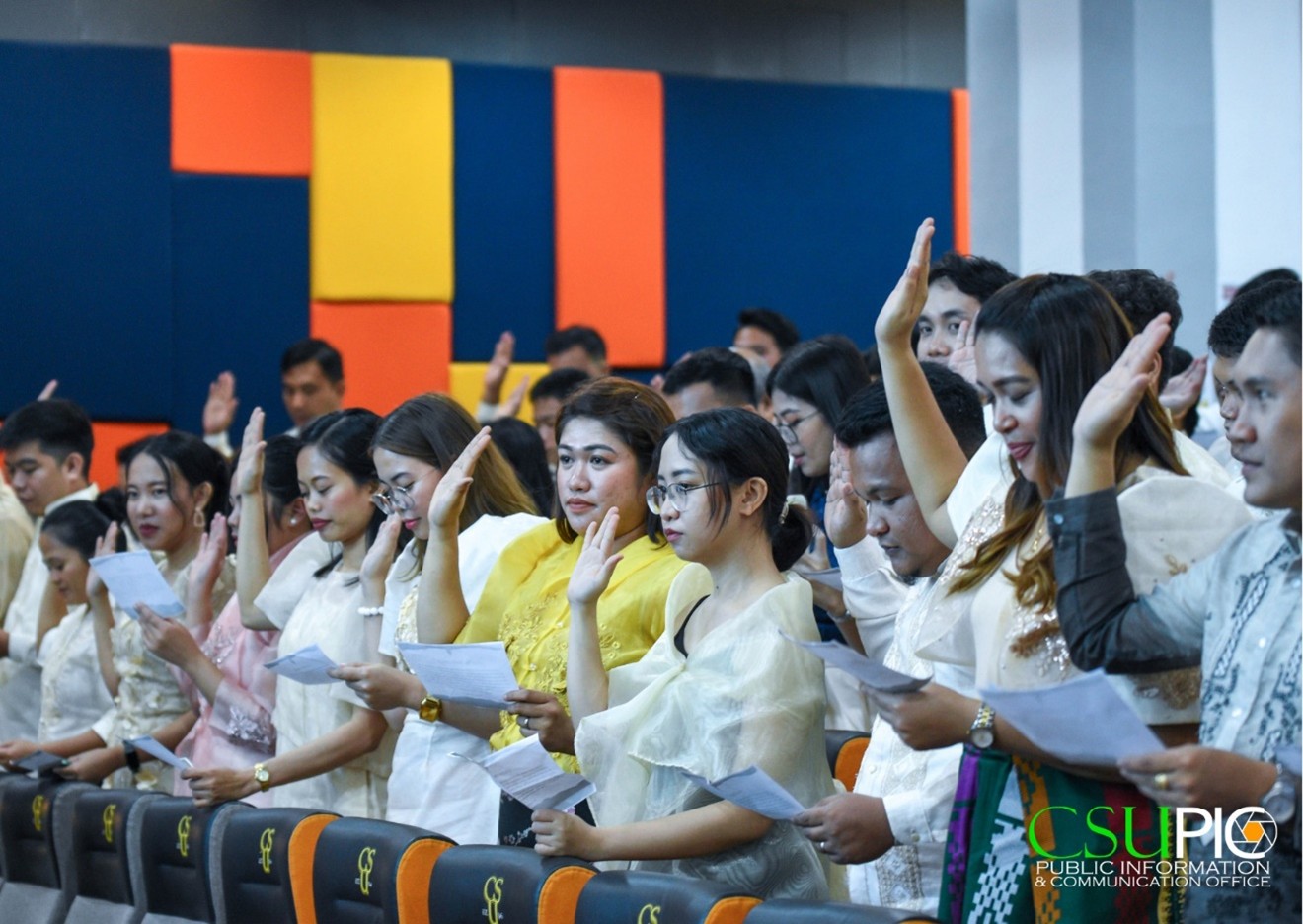
On November 20, 2024, CSU formally welcomed 179 newly appointed permanent teaching and non-teaching personnel during an oathtaking and onboarding ceremony at the HERO Learning Commons Auditorium. The cohort includes 118 employees from the Main Campus and 61 from the satellite campus in Cabadbaran City.
Source:
Facebook Post
Guidelines on Employee Onboarding Program Approved/updated: June 2025
The University upholds merit and fitness in recruitment, appointment, and promotion through its Merit Selection Plan (MSP) and Merit Promotion Plan (MPP), aligned with Civil Service laws. These frameworks establish sector-specific boards to support fair, objective decisions and enable advancement either by promotion to a higher post or appointment to an upgraded/reclassified position—typically with corresponding salary increases. To optimize staffing within budget constraints, the University may adopt a scrap-and-build approach, abolishing vacant positions to create or reclassify roles as needed, while all promotions strictly follow MPP procedures with Civil Service rules as supplementary guidance.
In parallel, the University has begun its PRIME-HRM accreditation, with the MSP serving as a baseline manual for the Recruitment and Selection Plan—one of PRIME-HRM’s pillars. Consistent with this, CSU enforces equal employment opportunity: selection is based solely on relative qualifications and competence, with no discrimination on the grounds of gender, civil status, disability, religion, ethnicity, or political affiliation.
Source:
CSU Code, page 47 – Approved/updated: March 2019
Merit Selection Plan for Teaching Personnel – Approved/updated: June 2025
Merit Selection Plan for Non-Teaching Personnel – Approved/updated: June 2025
Excerpts from the MSP for Teaching and Non-Teaching Personnel – Approved/updated: April 2024
Article 86, Section 1 of the CSU Code provides for the University’s Program on Awards and Incentives for Service Excellence (PRAISE), designed to foster creativity, innovation, efficiency, and integrity in public service. Through PRAISE, faculty and non-teaching personnel—individually or as teams—are recognized and rewarded for suggestions, inventions, outstanding achievements, and other initiatives that enhance operational efficiency, economy, or otherwise advance the public interest. All regulatory requirements and compliance measures shall follow the standards and policies set in the Faculty Manual and the Administration Manual of Operations. Moreover, all procedures under this mechanism shall consistently safeguard the University’s academic integrity.
In accordance with CSC MC No. 01, s. 2001 and the CSC PRIME-HRM framework, Caraga State University (CSU) adopts the Enhanced Program on Awards and Incentives for Service Excellence (PRAISE), hereafter referred to as CSU E-PRAISE.
CSU is committed to the continuous development, implementation, and institutionalization of its awards and incentives system to uphold and reward exemplary public service. Through CSU E-PRAISE, the University aims to provide more responsive and meaningful forms of recognition for deserving faculty and staff, thereby promoting a culture of excellence in the workplace. The program outlines various mechanisms for regularly acknowledging employee performance, subject to the availability of PRAISE funds under the HRD budget.
Specifically, CSU E-PRAISE is crafted to foster creativity, innovativeness, efficiency, integrity, and productivity in public service. It does so by granting recognition and rewards to individual employees or groups for their innovative ideas, systems and approaches, inventions and research outputs, exceptional achievements, and other significant contributions that enhance day-to-day operations or advance the public interest. Furthermore, the program incorporates additional features customized to align with the unique context and priorities of the University’s rewards and recognition framework.
Source:
E-PRAISE Manual – Approved/updated: January 2018
Approved PRAISE Guidelines – Approved/updated: January 2018
Resolution to Approve PRAISE Guidelines – Approved/updated: September 2016
To recognize the exemplary employees and offices that advanced the pursuit of excellence and innovation in the university, the Caraga State University (CSU) launched the LIKHA Excellence Awards during the Program on Awards and Incentives for Service Excellence (PRAISE) or PASIDUNGOG on October 4, 2024.
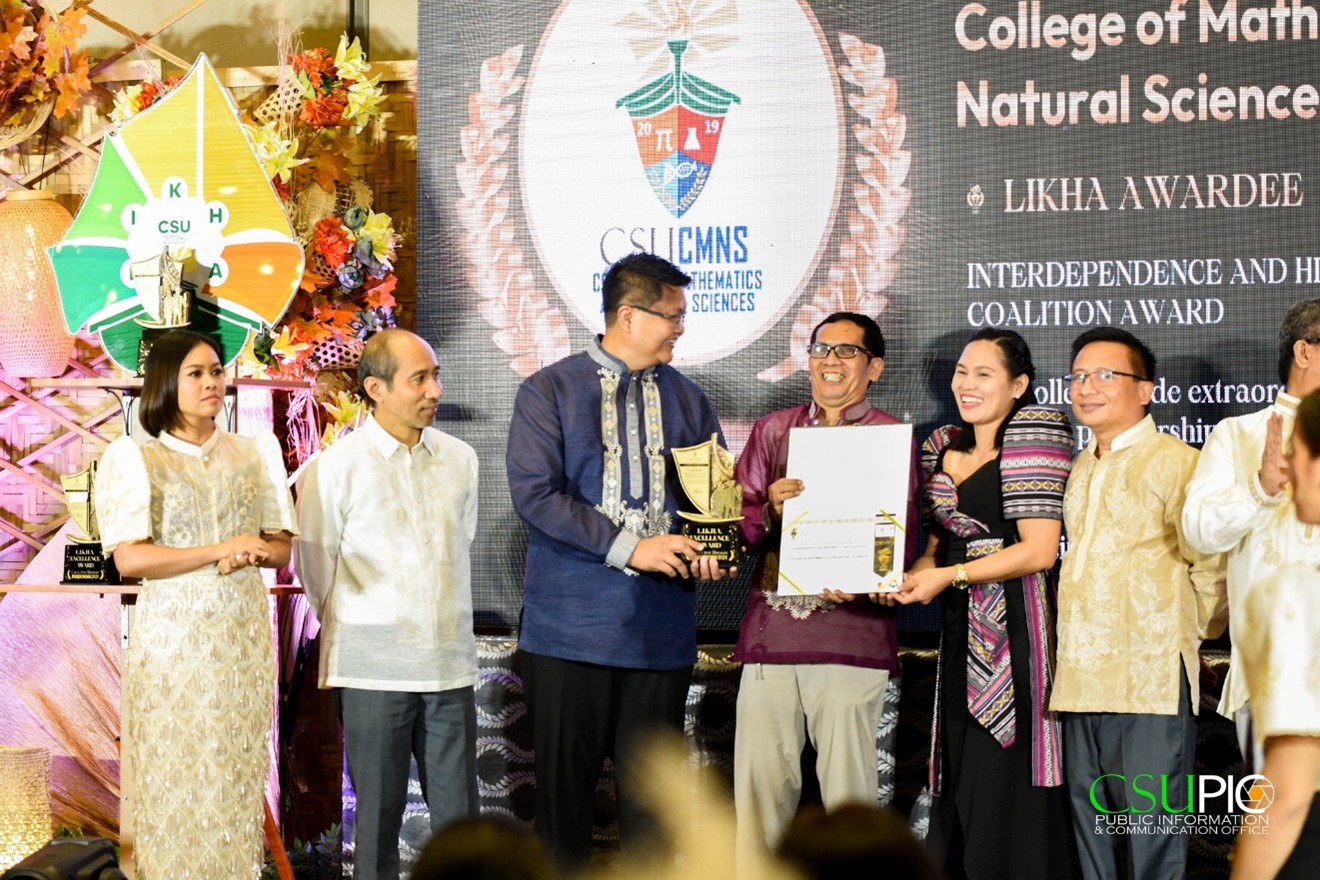
The award system anchors on the LIKHA Agenda set by University President Rolyn C. Daguil, PhD, which outlines CSU’s strategic path toward a transformative university that drives sustainable development within and beyond the region.
The following offices and personnel obtained special awards for their contributions relative to the five indications of the LIKHA agenda:
𝗟 – Department of Physics
𝗜 – College of Mathematics and Natural Sciences
𝗞 – Navigatú
𝗛 – College of Humanities and Social Sciences
𝗔 -Management Information System
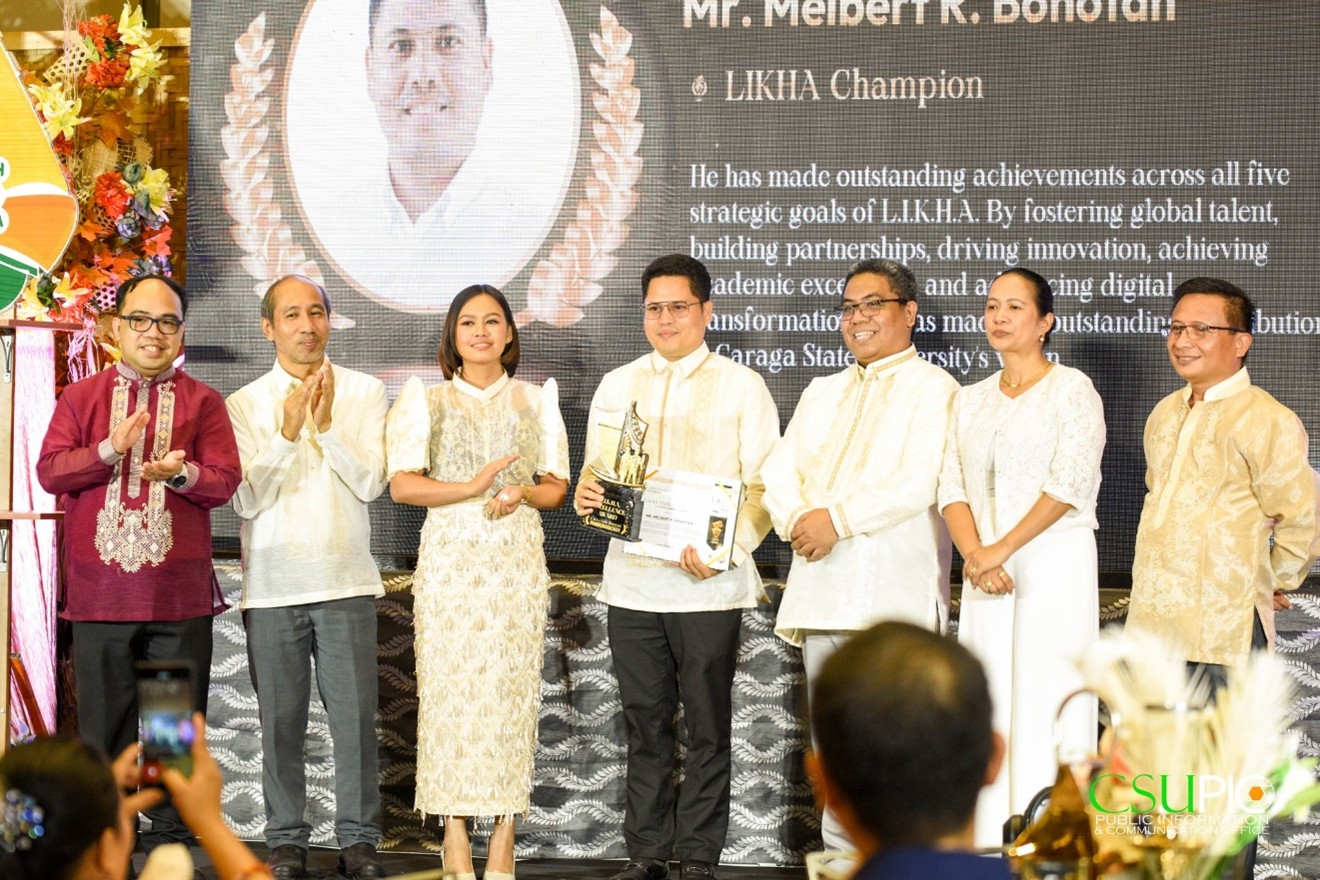
𝗟𝗜𝗞𝗛𝗔 𝗖𝗵𝗮𝗺𝗽𝗶𝗼𝗻 (𝗢𝘃𝗲𝗿𝗮𝗹𝗹) – Associate Professor Melbert R. Bonotan spearheaded entrepreneurship capacity-building, incubated 47 startups, forged local and international partnerships (including work at Navigatú), and founded the Caraga-RISE consortium to reinvigorate the region’s startup ecosystem. He mentored the Scrapcycle team to secure ₱3.2 million in DOST funding and led student teams to DICT’s Philippine Startup Challenge regional championships (2021–2023) and a national win at the DAP START Hackathon with ₱150,000 in cash and seed funding. He also established TARA—CSU’s second Technology Business Incubator focused on agriculture and aquaculture—now supporting 14 incubatees and backed by eight key partnerships, with his impact aligning to CSU’s strategic goals and earning him the LIKHA Champion award.
Source:
Facebook Post
The Civil Service Commission (CSC), the lead agency and the premier human resource institution of the Philippine government, has issued the Program to Institutionalize Meritocracy and Excellence in Human Resource Management (PRIME-HRM) under the Enhanced Maturity Level indicators through CSC MC No. 24, s. 216. With this, CSU has diligently complied in meeting the accreditation requirements and comprehensively review and recalibrate the university’s PRIME-HRM policies, guidelines, and provisions under the Level III Accreditation such as:
On April 30, 2024, CSU’s Program on Awards and Incentives for Service Excellence (PRAISE), through HRMS, honored 230 administrative employees and faculty for their contributions during the first quarter of 2024.
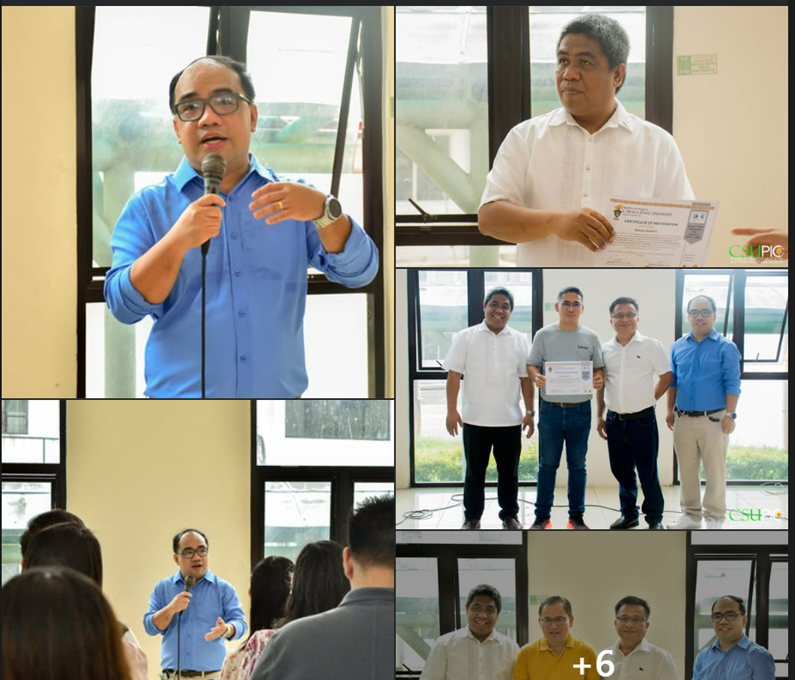
Held at the Administration Building Conference Hall after the Flag Convocation, the ceremony recognized 104 punctuality awardees and 29 special awardees for academic and extracurricular excellence. Research and innovation were likewise highlighted, with CSU recording 107 publications (including 26 papers) and one intellectual property patent filed. The recognition reflects the pride and high regard for service excellence the university upholds.
On the other hand, Raquel M. Balanay, PhD, Professor VI and a recognized leader in advancing innovative agricultural, aquatic, and natural research in the region, was honored with the Outstanding Leadership Award from the DOST-Philippine Council for Agriculture, Aquatic, and Natural Resources Research and Development (PCAARRD) on November 8, 2024, at the Philippine International Convention Center in Pasay City.
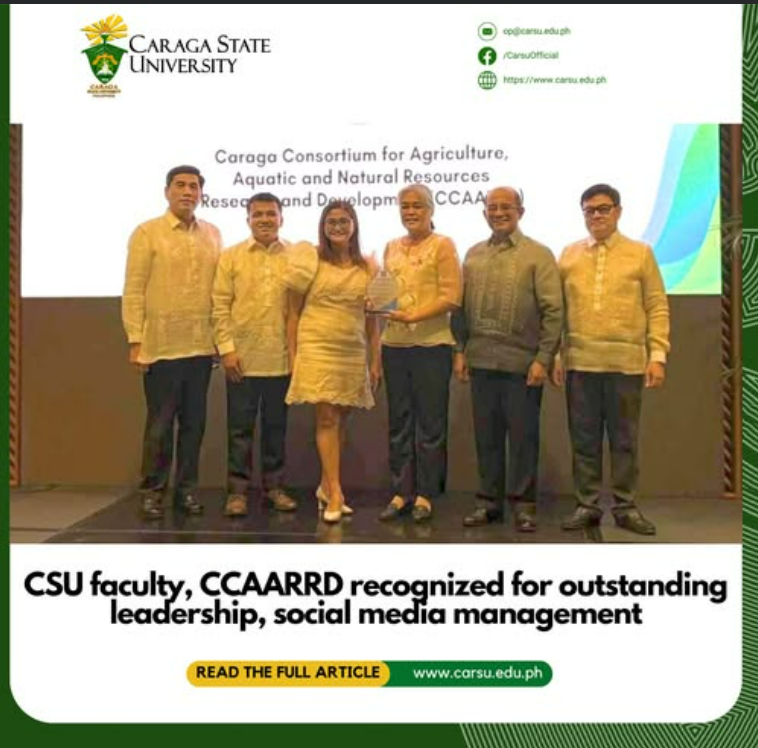
Dr. Balanay is the director of the Caraga Consortium for Agriculture, Aquatic, and Natural Resources Research and Development (CCAARRD). During the 52nd Founding Anniversary of PCCAARRD, where the awarding took place, the regional consortium also obtained the Excellence in Social Media Engagement Award for effectively disseminating research and development outputs on social media to stakeholders and its intended audience.
Source:
Facebook Post
According to the Philippine Statistics Authority (PSA, 2023), the estimated monthly poverty threshold for a family of five in the Caraga Region in 2023 is ₱12,146.00. Using this value as a basis, a living wage proxy for a 5-member household is derived through a simple per capita computation (₱12,146.00 × 4/5), divided over 22 working days at 8 hours per day, resulting in an hourly rate of ₱55.00. This threshold indicates the minimum monthly income that a five-member family in the region needs to afford essential food and non-food necessities (PSA_PT_Caraga). The non-permanent Job Order (JO) personnel and core outsourced staff of Caraga State University earn at least this equivalent hourly amount.
The University actively ensures its lowest-paid workers, the non-permanent Job Order (JO) personnel, are compensated at a rate that meets the local living wage standard, demonstrating a long-term commitment to decent work. For example, in 2018, the minimum compensation for JO staff is approximately ₱59.63/hour, mandated by CSU Special Order (S.O.) No. 82, Series of 2018. This hourly rate, established in 2018, already exceeded the 2023 Poverty Threshold (PT) for a family of five in the Caraga Region. When the order was issued in 2018, the ₱59.63/hour rate represented a significant premium over the regional minimum wage at that time. This demonstrates a strong, early commitment by CSU to fair compensation.
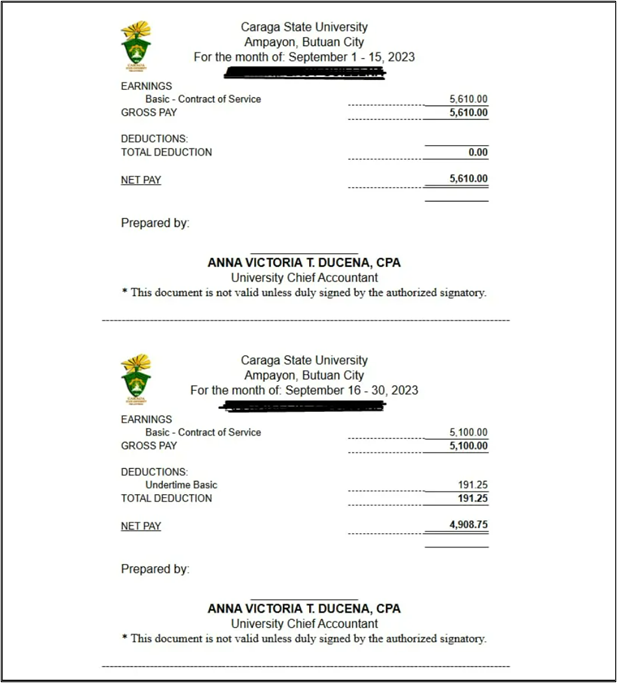
In 2024, CSU’s contracts with outsourced providers (e.g., security, janitorial services) require that their workers assigned to CSU enjoy equivalent rights, including compliance with minimum wage laws, social protection, and safe working conditions. Personnel employed on a contractual basis receives a salary of ₱510.00/day or ₱63.75/hour. Sample contract clauses and procurement terms are extracted from the contract and presented below. Likewise, a sample pay slip has been officially generated for the minimum compensation rate of Job Order (JO) personnel along with the list of Job Order employees’ and their daily rate in CSU.
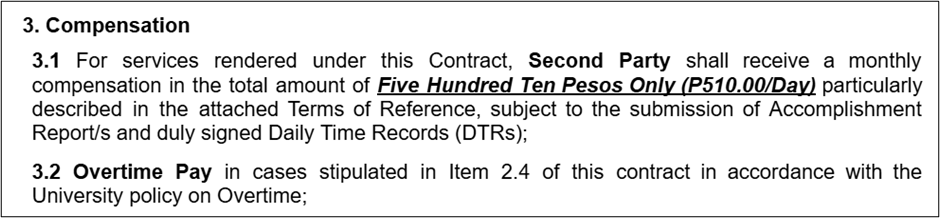
CSU also maintains a robust and transparent process for disseminating job opportunities, ensuring that critical information, including compensation, is publicly accessible to all prospective applicants.
CSU publicly discloses the official Salary Grade (SG) or the corresponding Monthly Salary for all vacant plantilla and for contractual and job order positions. The Notice of Vacancy for every available position is officially posted on the main CSU Website via the PUSH Platform and official Facebook Page. Crucially, this posting explicitly includes the Position Title, Plantilla Item Number, and the corresponding Salary Grade Rate. This SG directly links to the publicly mandated Salary Standardization Law (SSL) schedule, which defines the exact monthly compensation, thereby eliminating ambiguity and confirming the university’s commitment to government-mandated compensation standards.
CSU employs distinct, systematic processes for hiring permanent and non-permanent staff, all of which are rooted in the principle of merit and fitness. The entire process, especially for permanent roles, is anchored in the requirements of the Philippine Civil Service Commission (CSC).
CSU operates a dual-track hiring system committed to transparency and meritocracy. For Permanent (Plantilla) Positions, the process is rigorous and publicly transparent, aligning with CSC PRIME-HRM principles. All vacancies are publicly posted on the CSU website and the PUSH (Platform for Unified System Hub), mandatorily disclosing the Position Title and Salary Grade (SG), with selection being strictly merit-based via systematic screening, assessment (exams and interviews), and final evaluation by a Selection Board based only on competence. Conversely, hiring for Non-Permanent (Job Order/COS) Positions is streamlined and based on the exigency of service, requiring top-level management approval and competency vetting. All hiring is documented to ensure compliance with fair compensation principles.
Caraga State University (CSU) demonstrates a robust and operational commitment to pay scale equity, including the elimination of gender pay gaps, through two critical institutional documents that translate policy into functional practice.
The Operational Guidelines on Equal Employment Opportunity Principles (EEO) provide the foundational policy evidence. These guidelines explicitly mandate non-discrimination in all employment matters, ensuring that the entire employment lifecycle, including compensation and promotions, is governed by fairness. This establishes the ethical cornerstone, setting a zero-tolerance standard against pay decisions influenced by gender or other protected characteristics.
Complementing this policy, the Individual Performance Commitment and Review (IPCR) for teaching personnel provides the crucial implementation mechanism for job grading and classification. The PES ensures compensation is tied to the value of the work by linking academic rank and salary grades to objective, quantifiable metrics such as teaching effectiveness, research output, and professional credentials. This formalized, merit-based structure serves as a procedural safeguard, preventing subjective bias from influencing employee classification and directly enabling the university to conduct an accurate and equitable pay analysis.
Collectively, the EEO Guidelines and the PES form a unified system where ethical commitment is integrated with administrative enforcement. They prove that CSU possesses the necessary internal tools to systematically measure, classify, and sustain fair compensation practices across its academic workforce.
CSU also monitors pay scale equity through HRMS salary data, disaggregated by sex and rank, and periodically reviews for gaps.
Source:
Equal Employment Opportunity Principles (EEO) – Approved/updated: May 30, 2024
The following documents serve as operational proof that CSU’s commitment to labor rights and equal treatment is embedded in its daily procedures, not just in high-level policy.
CSU guarantees that labour rights are extended equitably across all employee demographics, as evidenced through institutionalized programs and operational memos. The Employee Onboarding Program is a critical evidence point, ensuring that every new hire, regardless of their gender, status (permanent or non-permanent), or position, is immediately and explicitly informed of their fundamental rights. This includes mandatory orientation sessions covering the right to self-organization and robust Anti-Discrimination/Anti-Harassment policies, as well as the Safe Spaces Act. This proactive measure ensures that staff, including women and other diverse employees, are empowered from day one.
Furthermore, the university’s internal communications and procedures reinforce equity. Memos for Work Suspension (due to calamities, etc.) serve as tangible proof of equitable treatment, as they are disseminated to all employees and confirm the uniform application of operational decisions.
Source:
Anti-Discrimination/Anti-Harassment policies – Approved/updated: January 2025
Safe Spaces Act. – Approved/updated: October 4, 2023
Approval of Safe Spaces Development Program – Approved/updated: October 4, 2023
The Article 87, Section 1 of the CSU Code indicates that all University employees, irrespective of employment status, can form, join, or assist organizations of their own choice for purposes not contrary to law for the furtherance and protection of their collective interests. They can also form, in conjunction with appropriate authorities, labor management committees, work councils, and other forms of workers’ participation schemes to achieve the same objectives. All pertinent regulatory principles and compliance thereto must be in accordance with the standards and policies stipulated and prescribed in the Faculty Manual and the Administration Manual of Operations. All procedural standards and policies pertaining to such mechanism shall at all times protect the academic integrity of the University.
With this, CSU institutionalizes the employees’ collective voice through established and recognized associations. The Faculty Association (FA) and the Administrative Personnel Association (ADPA) serve as official, recognized entities for collective representation. In no case shall membership in a union consist of both teaching and non- teaching personnel of the CSU. The unions are registered with Department of Labor and Employment and Civil Service Commission. CSU shall be governed by the rules and policies on Public Sector Unionism. The representatives of the accredited faculty association shall sit as members of the different committees such as Training and Development Committee, Faculty Selection Board, Grievance Committee, PRAISE Committee, and PMT.
This representation ensures that policy-making is participatory and that the collective interests of both the academic and non-academic sectors are considered during crucial decisions related to workload, compensation, professional development, and strategic planning. The university’s official recognition of these bodies and its incorporation of their representatives into the governance structure provides tangible evidence of its commitment to collective negotiation and shared responsibility, a hallmark of fair labor practice.
Source:
Faculty Association By Laws – Approved/updated: January 2024
Merit Selection Plan page 20 – Approved/updated: June 2025
CSU Code Article 87 Section 1 – Approved/updated: March 2019
Article 87, Section 2 of the CSU Code mentioned that any question involving an appointment or promotion may be a subject of protest. There shall be a mechanism to accommodate fair treatment through the normal judicial system, especially concerning the personnel’s entitlement. All pertinent regulatory principles and compliance thereto must be in accordance with the standards and policies stipulated and prescribed in the Faculty Manual and the Administration Manual of Operations. All procedural standards and policies pertaining to such mechanism shall at all times protect the academic integrity of the University.
Civil Service Commission Memorandum Circular No. 4, s. 2010 regarding the Revised Policies in the Resolution of Protest Cases has the following provisions on Protest on Appointments:
Source:
CSU Code Article 87 Section 1 – Approved/updated: March 2019
Based on Article 87, Section 3 of the CSU Code, there shall be a mechanism where employees of the University have the right to present their complaints or grievances to the management and have them adjudicated as expeditiously as possible in the best interest of the University and the employee concerned. All pertinent regulatory principles and compliance thereto must be in accordance with the standards and policies stipulated and prescribed in the Faculty Manual and the Administration Manual of Operations. All procedural standards and policies pertaining to such mechanism shall at all times protect the academic integrity of the University.
A qualified next-in-rank employee may present the grievance with the agency grievance machinery under the following conditions:
The process for appeal and grievance is summarized with the steps below:
Source :
Faculty Manual – Approved/updated: March 2023
Merit Selection Plan for Non-Teaching Personnel, page 23 – Approved/updated: March 2023
Subject to applicable laws and regulations, the University shall provide free legal and other related services to its personnel who are charged with administrative, civil, or criminal proceedings by parties other than the University or government law enforcement and regulatory authorities for acts and omissions committed which are directly related to the lawful discharge of their official duties and functions or in defense of University policies and regulations, or both. All pertinent regulatory principles and compliance thereto must be in accordance with the standards and policies stipulated and prescribed in the Faculty Manual and the Administration Manual of Operations. All procedural standards and policies pertaining to such mechanism shall at all times protect the academic integrity of the University.
Source:
Faculty Manual – Approved/updated: March 2023
CSU Code – Approved/updated: March 2019
Merit Selection Plan for Teaching Personnel, page 20 and 21 – Approved/updated: March 2023
The Administrative Order No. 135, s. 2005 and Congress Joint Resolution No. 4, s. 2009 institutionalize the grant of the Collective Negotiation Agreement (CNA) Incentive as a reward to encourage higher productivity, efficiency, and cost-saving measures in government agencies. The CNA Incentive may be granted to civilian personnel in NGAs, Constitutional Offices with fiscal autonomy, SUCs, GOCCs, LWDs, and LGUs—whether regular, contractual, or casual—provided there is a valid CNA between management and an accredited employee organization that includes agreed cost-cutting measures. Under Section 81 of the FY 2024 General Appropriations Act, the CNA Incentive is a one-time annual benefit sourced from allowable MOOE, granted through a labor–management resolution approved by the agency head, limited to the amount set by DBM, and subject to the validity of appropriations, with any unused balance reverting to the General Fund.
Source:
CNA Budget Circular Number 2024– Approved/updated: November 11, 2024
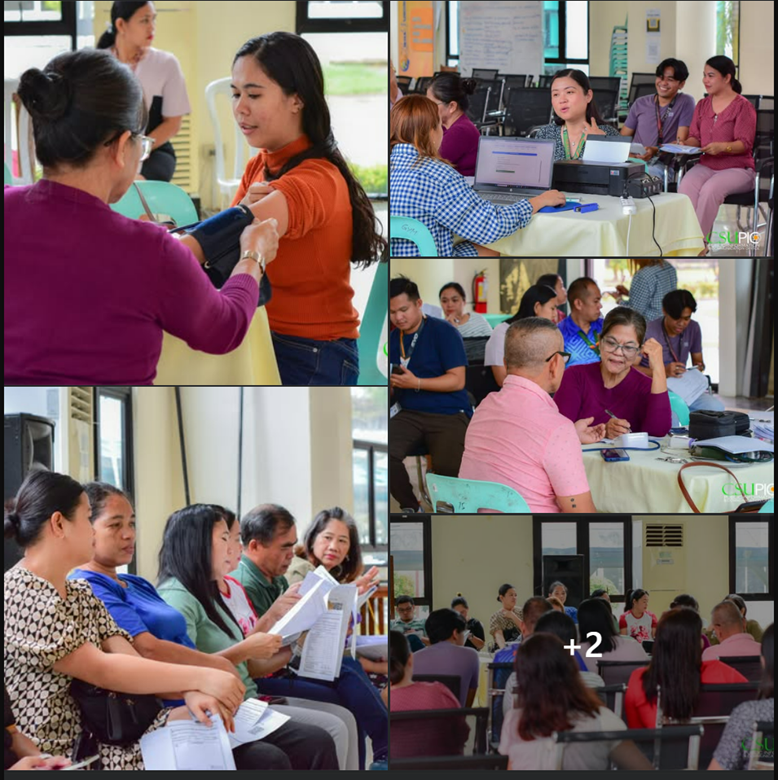
Caraga State University offered free on-campus medical consultations and diagnostic testing for employees in partnership with Rivera Healthcare Clinic, an accredited PhilHealth Konsulta provider. The Universal Health Care services—hosted at the Conference Hall, Administration Building—included urinalysis, electrocardiogram (ECG), blood glucose testing, and free medications, among others, and were conducted from November 27 to 29, 2024.
Source:
Facebook Post
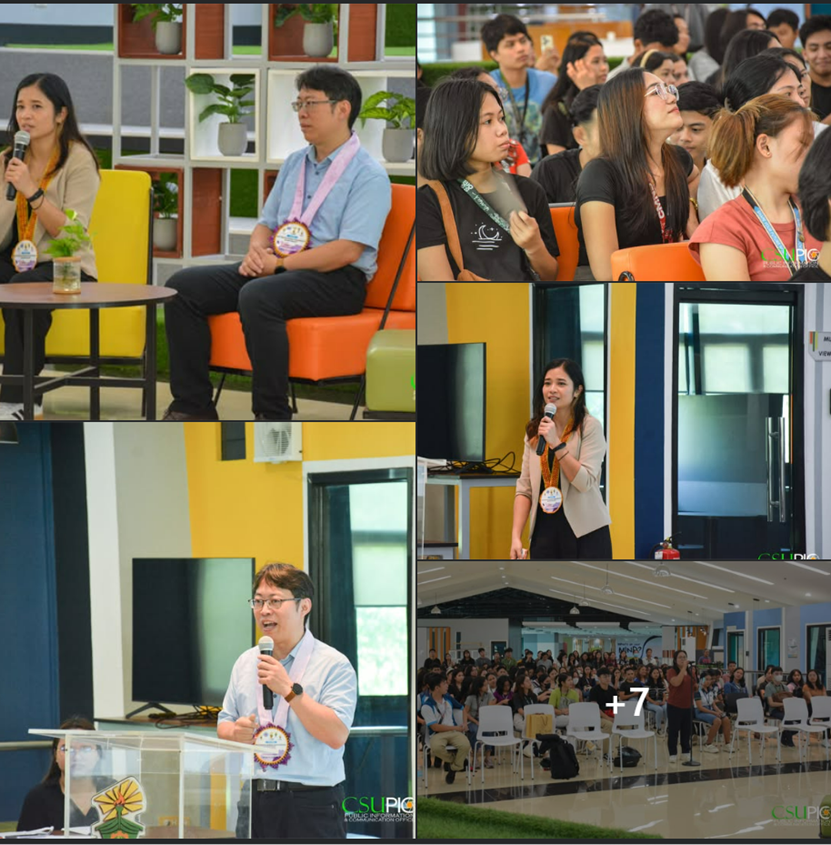
On August 19, 2024, 𝗖𝗦𝗨 conducted 𝘁𝗮𝗹𝗸 𝘀𝗲𝗿𝗶𝗲𝘀 𝗼𝗻 𝗯𝗿𝗲𝗮𝘀𝘁 𝗰𝗮𝗻𝗰𝗲𝗿 𝗿𝗲𝘀𝗲𝗮𝗿𝗰𝗵 𝗮𝗻𝗱 𝗱𝗿𝘂𝗴 𝗱𝗶𝘀𝗰𝗼𝘃𝗲𝗿𝘆.
The talk series focused on the cutting-edge mechanisms of cancer progression, chemoresistance, and programmed cell death, emphasizing immunogenic cell death. Dr. Chiu and Ms. Gallego’s research at Kaohsiung Medical University spanned both apoptotic and non-apoptotic cell death processes, such as necroptosis, pyroptosis, and ferroptosis. It has made significant strides in leveraging these pathways to increase the efficacy of natural and semi-synthetic anticancer drugs.
Source:
Facebook Post
CSU also advanced mental health awareness initiatives through “Gatekeepers” training developed by UNILAB Foundation. The training course was conducted onn May 6, 2024 and tackled effective responses to students’ mental health concerns through appropriate identification, management, and referral. It follows the toolkit completed by Unilab Foundation and peer-reviewed by the Bayanihan for Wellbeing in collaboration with the Philippine Guidance and Counseling Association, Psychological Association of the Philippines, Philippine Psychiatric Association, Philippine Society for Child and Adolescent Psychiatry, and the Philippine Pediatric Society.
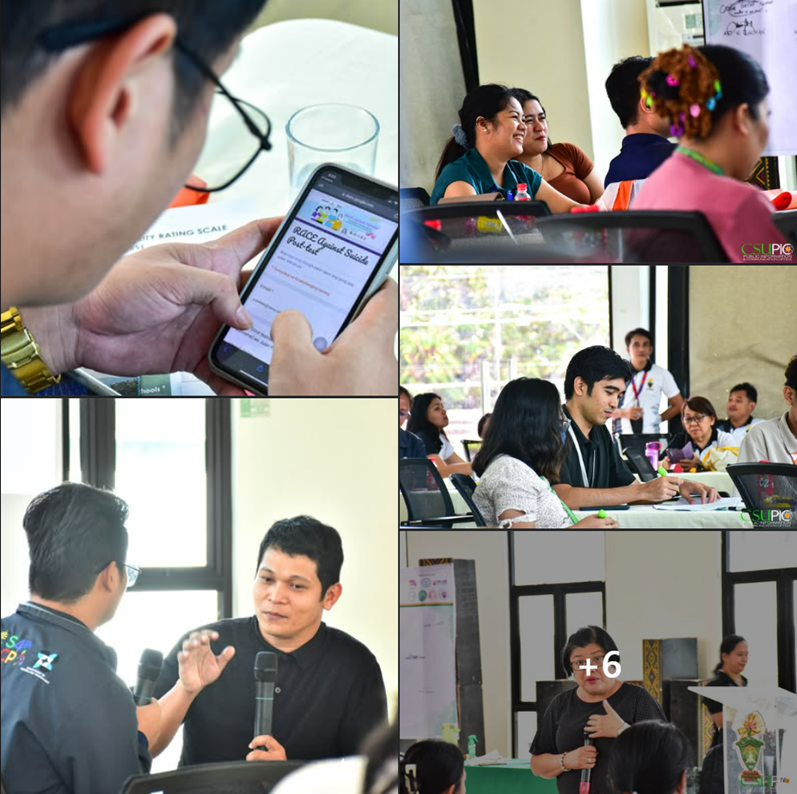
The Department of Education also provided full cooperation in the pilot run of this program. It is tailored for faculty members, school administrators, staff, and mental health advocates. Faculty members were identified as ‘gatekeepers’ recognizing their relationship and position to influence students to promote, protect, and provide mental health services.
Source:
Facebook Post
The University is dedicated to fostering a workplace where employment decisions are made solely on the basis of merit, qualifications, and competence. It upholds a strict non-discrimination policy, ensuring that no employee or applicant is treated unfairly due to personal attributes such as age, sex, gender identity or expression, sexual orientation, civil status, appointment status, socioeconomic background, family responsibilities, race, ethnicity, religion, physical condition, union affiliation, political beliefs, or any other personal circumstance unrelated to job performance. This commitment reflects the institution’s adherence to the principles of equality, equity, and fairness in all aspects of employment.
Source:
EPEEP Policy – Approved/updated: May 30, 2024
Educational institutions in the Philippines are establishing a robust framework for inclusion built on three central pillars. The Anti-Discrimination Policy, the Gender and Development (GAD) Policy, and the stringent implementation of the Safe Spaces Act (RA 11313). This unified approach, formalized by institutional resolutions such as BOR-Res.-No.-81-20-S.-2023, ensures that dignity and equality are actively guaranteed for all, particularly women and the LGBTQIA+ community.
The Safe Spaces Act (SSA) serves as the executive component program, significantly expanding protection against Gender-Based Sexual Harassment (GBSH) to all institutional spaces, including physical, online, and public settings. With this, Caraga State University conducted training sessions and seminars on the Safe Spaces Act.
The Gender and Development Office of Caraga State University drives this implementation, having conducted several training and seminar programs on the Safe Spaces Act to effectively operationalize the policies. This reinforces protection for the LGBTQIA+ community and ensures their identities are respected in all areas, from enrollment to employment.
Source
Safe Space Act – Approved/updated: October 4, 2023
Approval of Safe Space Act – Approved/updated: October 4, 2023
Reconstitution of the University Committee on Decorum and Investigation (CODI) on Sexual Harassment Cases (CSU Main and CSUCC – Approved/updated: October 4, 2023
A policy commitment against forced labor, modern slavery, human trafficking, and child labor is substantially supported by the integration of the following documents: the Code of Ethics, Agency Operational Plan, and the Procedure Manual. The Code of Ethics provides the essential Policy Documentation by explicitly binding all internal staff and external partners to zero-tolerance standards, thereby fulfilling the mandate for a formal commitment. This foundational document ensures that the anti-slavery mandate is universally understood, extending its requirements not only to internal employees but also to contractors and the entire supplier network. The Agency Operational Plan and Manual provides crucial Implementation and Operational Evidence. This manual outlines the specific internal protocols, including age verification procedures for new hires and due diligence steps, demonstrating that the high-level ethical commitment is translated into a mandatory, enforceable daily practice.
Source:
Agency Operational Plan Approved/updated: January 2025
Procedure Manual. – Approved/updated: 2019
A. Men’s Well-Being and Gender Sensitivity
The discourse tackled the importance of men’s well-being, often overlooked by societal pressure and conditioning, covering mental health and emotional resilience, responsible parenthood, gender sensitivity, and masculinity.
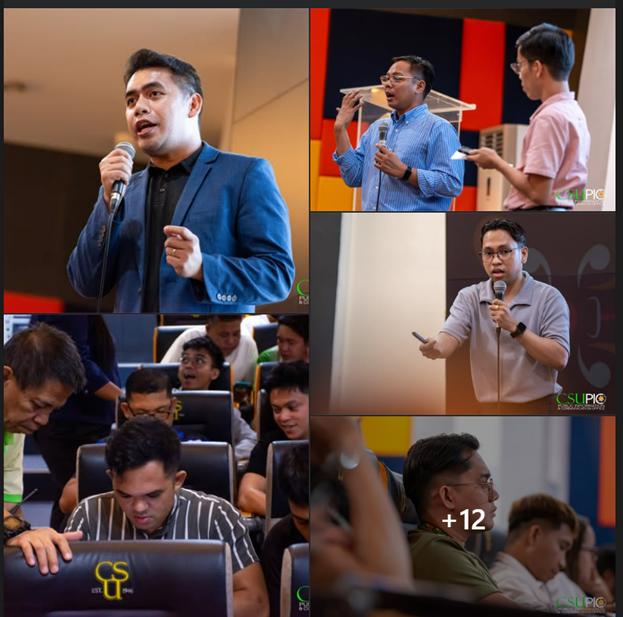
CSU GAD Director Marjorie Escartin closed the activity by highlighting the role of men in the GAD framework. Educating the PADI, the men of CSU, addresses the knowledge gap on their emotional needs and also better equips them as partners.
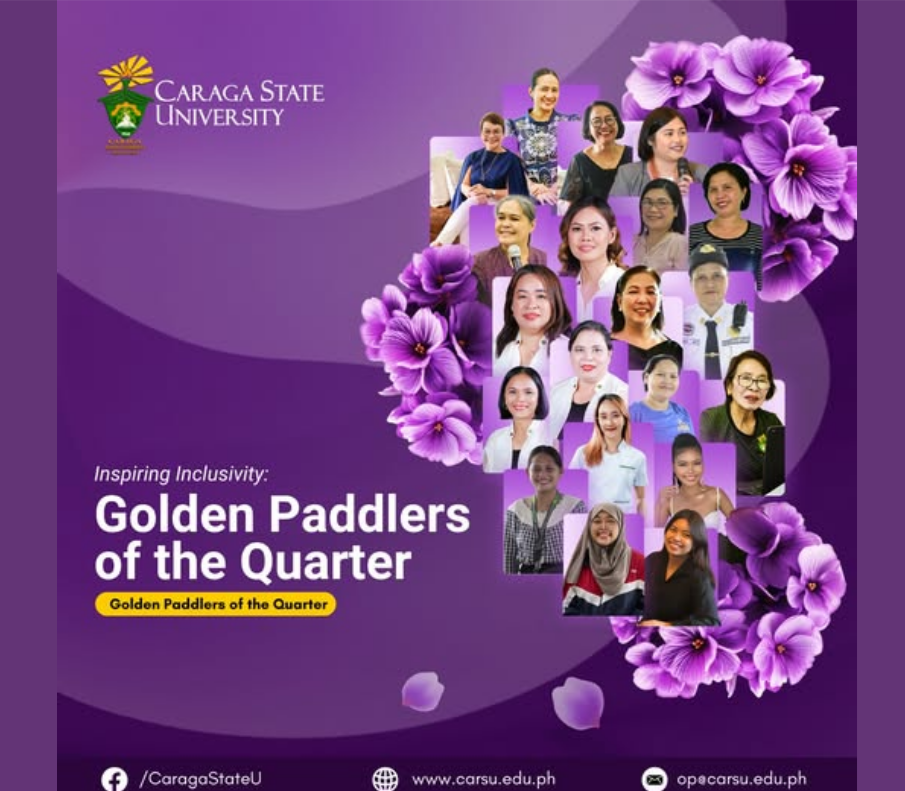
B. Inspiring Inclusivity: Golden Paddlers of the Quarter
Caraga State University officially releases the full stories of its twenty Golden Paddlers of the Quarter on April 4, 2024. Explore narratives of our women’s leadership, inspiration, resilience, faith, and foresight from various university pillars and walks of life through this link:
Source:
Facebook Post
C. Gender Sensitivity Training
A total of fifty-eight (58) teaching and administrative personnel of Caraga State University participated in a Gender Sensitivity Training, aiming to broaden their awareness about the rights, duties, and obligations of all genders and, in turn, promote equality.
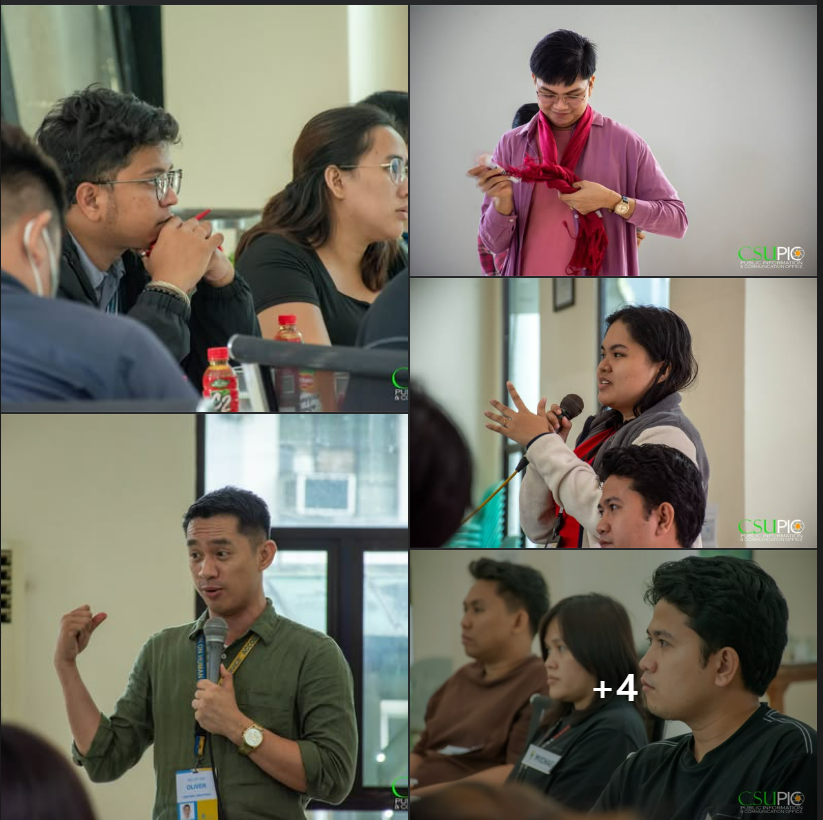
CSU Gender and Development Office led the activity in line with the National Women’s Month celebration. It expounded on gender as a social construct, SOGIESC, legal mandates and policy imperatives on GAD, gender-fair language, manifestation of gender bias, and gender mainstreaming with Commission on Human Rights (CHR) Training Specialist Oliver Salino as the resource speaker.
On November 08, 2024, Executives from the Local Government Academy (LGA) tap Caraga State University (CSU) to tackle possible collaborations for development and risk reduction management plans through a partnership meeting.
The discussion focused on documenting LGU’s innovations and best practices, creating systems for knowledge-sharing and replication, engaging citizens through Voter Education Programs, and training barangays to develop their Barangay Development Plans (BDP), Disaster Risk Reduction Plans, and Youth Development Plans with annual investment programs.
LGA is a government arm responsible for developing human resources and training local government officials and personnel. It is dedicated to consistently offer high-quality and innovative training solutions rooted in transparency, accountability, and participatory and responsive local governance.
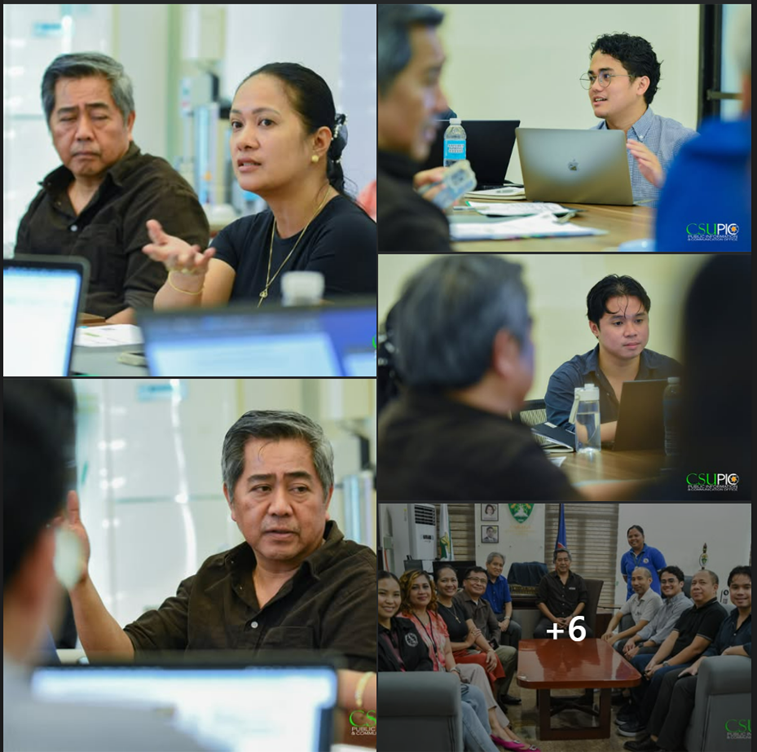
Leading the discussion for the university is Dr. Michelle V. Japitana, Vice President for Executive Operations, and Dr. Alexander T. Demetillo, Vice President for Administration and Finance.
Source:
Facebook Post
The Executives, select directors, deans, unit heads, and personnel participated in a two-day seminar on performance management facilitated by Civil Service Commission (CSC) Assistant Regional Director Christopher C. Mabale, held on October 7-8, 2024. The participants were upskilled with their knowledge and application of the Strategic Performance Management System (SPMS) in their respective performance commitment reviews.
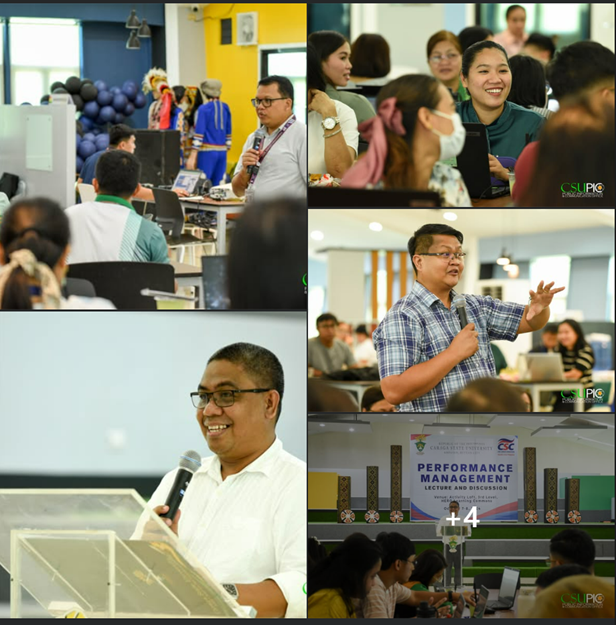
The university’s Human Resource Management Services (HRMS) spearheaded the initiative, aiming to further strengthen performance management practices across the institution.
Source:
Facebook Post
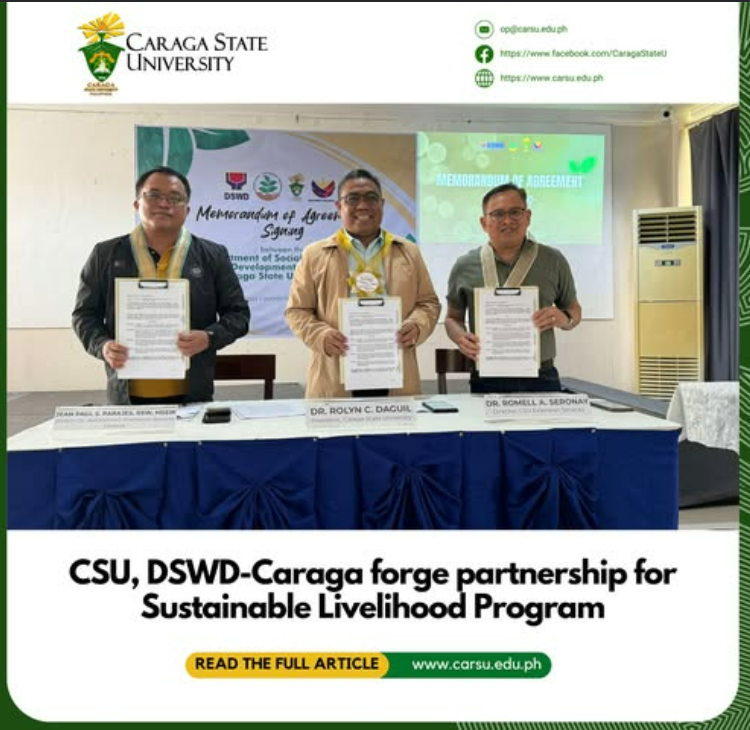
On August 21, 2024, with its extensive experience in research and community engagement, CSU is well-positioned to contribute to the goals of the Sustainable Livelihood Program (SLP). This partnership not only enhances the university’s role as a key player in regional development but also complements DSWD-FO Caraga’s ongoing efforts to uplift the socio-economic status of Caraganons through sustainable livelihood initiatives.
Source:
Faceboook Post
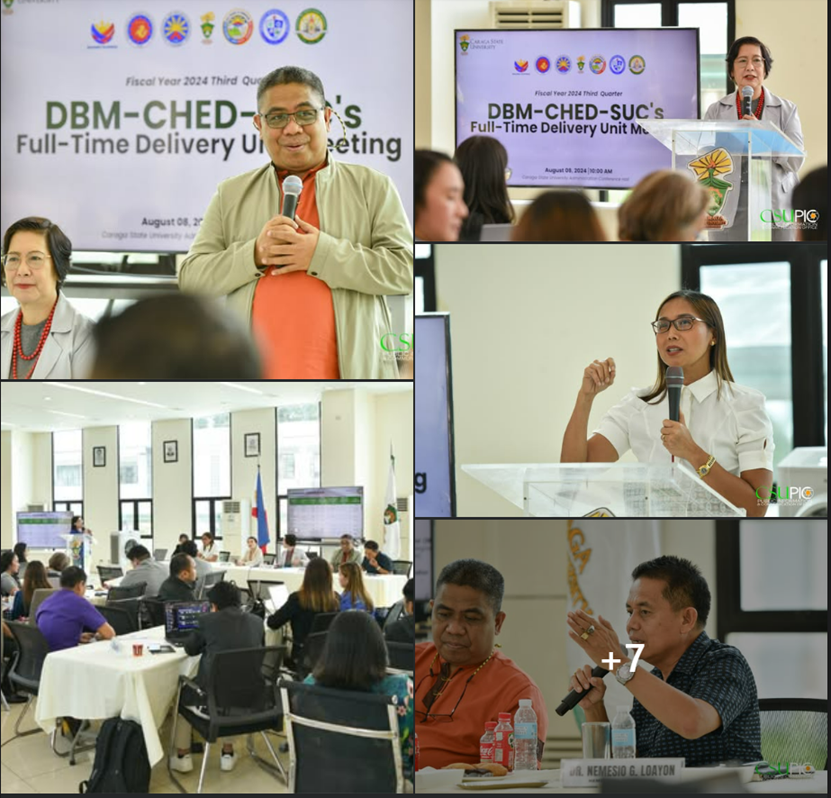
The university also hosted the quarterly Full-Time Delivery Unit (FDU) meetings are organized to ensure that government agencies, such as the SUCs, maximize their allocated resources to improve the quality of education at their respective institutions.
Source:
Facebook Post
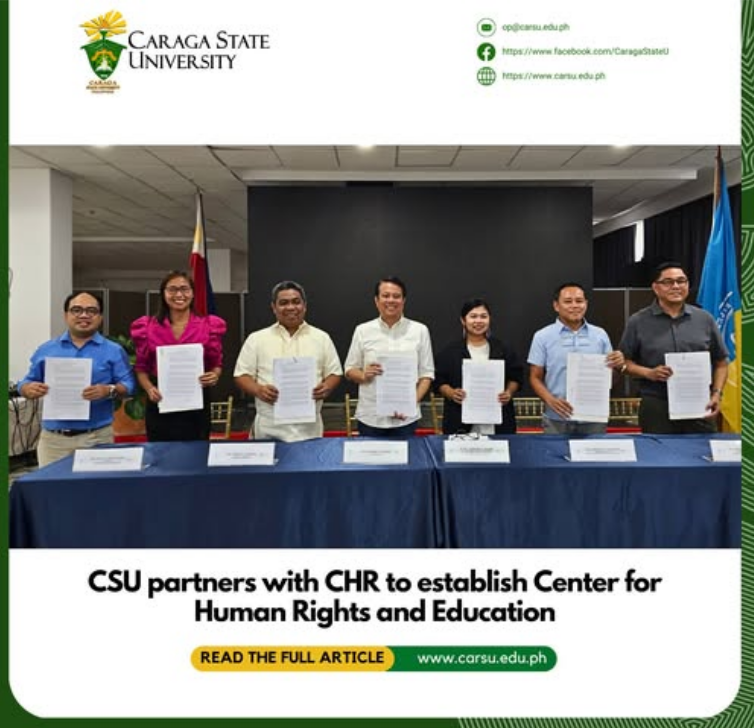
On June 24, 2024, CSU partners with CHR to establish Center for Human Rights and Education. This center is a proactive initiative in response to the Commission on Human Rights’ call for expanded human rights education. Its mission is to cultivate a well-informed and rights-conscious community in Caraga.
Source:
Facebook Post
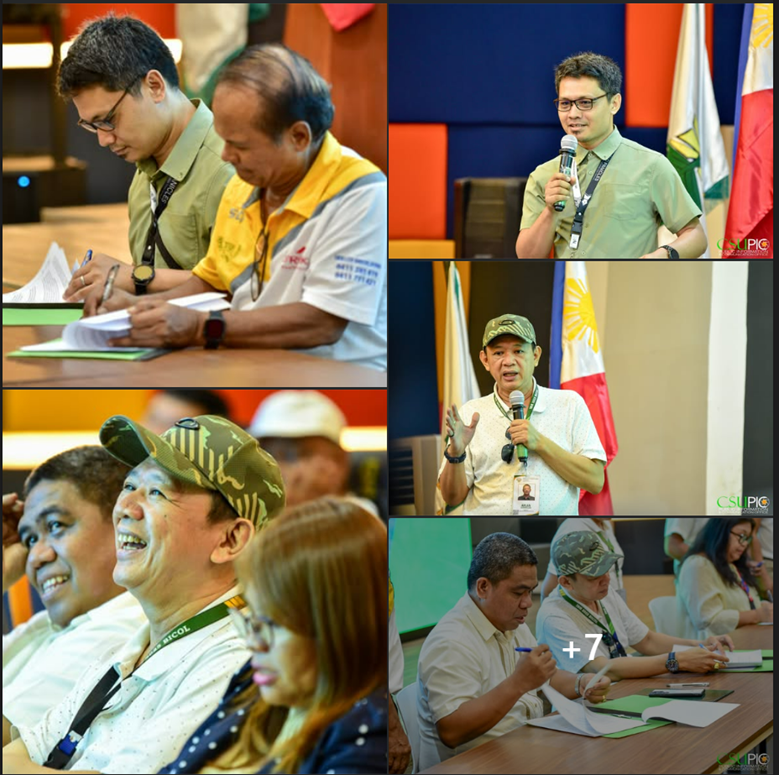
CSU also inked partnership with Department of Agriculture and CSU-Butuan PGS Organic Farmers Association for sustainable farming on May 14, 2024. The agreement between CSU and DA Caraga involves the provision of a Rice Combine Harvester and a Four-Wheel Drive Tractor to CSU. These modern pieces of equipment are expected to significantly enhance the university’s agricultural operations and training capabilities. The university is then expected to provide hands-on learning opportunities for students and aid local farmers in adopting advanced farming techniques.
Source:
Facebook Post
The Farm-to-Market Road Impact Assessment (FaMRIA) Project was officially launched on May 24, 2024, at Almont Inland Resort in this city with the signing of a memorandum of understanding (MOU) by DA-BAFE Director Engr. Ariodear Rico and CSU President Dr. Rolyn C. Daguil.
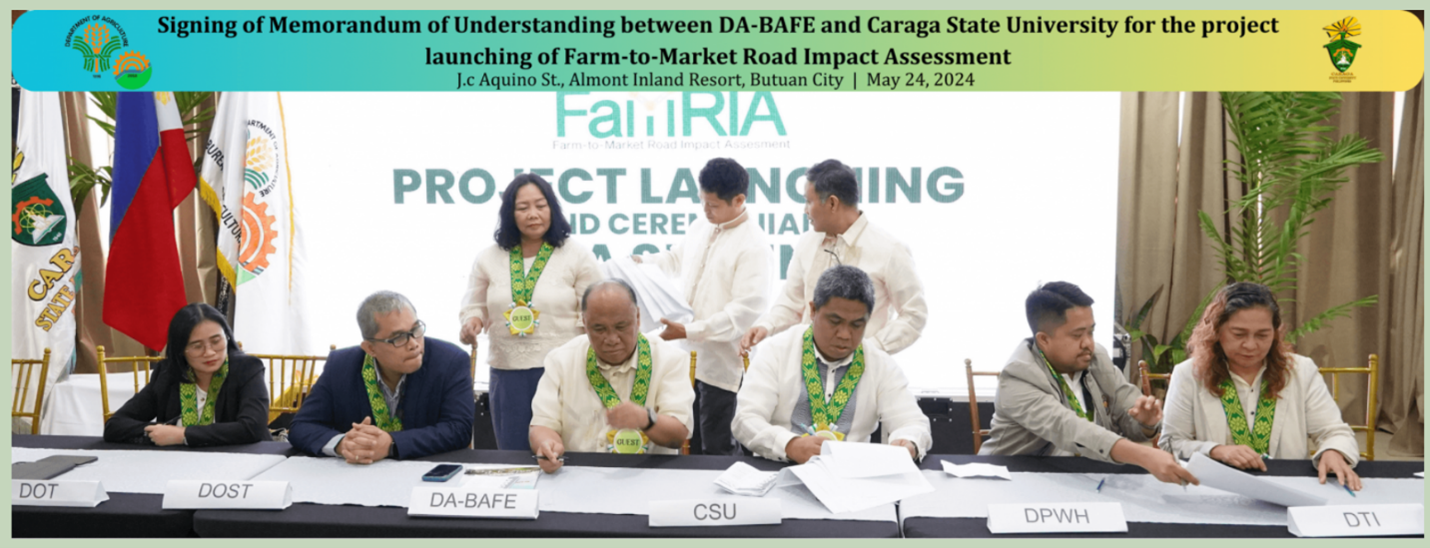
This initiative, spearheaded by the Department of Agriculture – Bureau of Agricultural and Fisheries Engineering (DA-BAFE) and Caraga State University (CSU), aims to evaluate the far-reaching effects of Farm-to-Market Roads (FMRs) on local communities.
Source:
Facebook Post
As stipulated in the CSU Code (Article 90, Section 1 to 5), the University follows policies for Financial Management.
The University’s annual budget is prepared in accordance with applicable budgetary laws, policies, and government regulations. It must align with the University’s plans and promote effective, efficient, ethical, and economical attainment of objectives. All institutional implementation and compliance measures shall conform to the standards and policies set forth in the Administration Manual of Operations. Moreover, all procedures shall consistently safeguard the integrity of the University.
The fundamental principles governing the utility of the University funds is adherent to the unified accounting, auditing, and reporting mechanisms of applicable laws, rules, and regulations of the government. All pertinent institutional regulations for the implementation and the compliance thereto must be in consonance with the standards and policies stipulated and prescribed in the Administration Manual of Operations. Further, all procedural standards and policies at all times protect the integrity of the University.
The fundamental principles governing the disbursement of university funds are adherent to the unified accounting, auditing, and reporting mechanisms of applicable laws, rules, and regulations of the government. All pertinent institutional regulations for the implementation and the compliance thereto must be in consonance with the standards and policies stipulated and prescribed in the Administration Manual of Operations. Further, all procedural standards and policies shall at all times protect the integrity of the University.
All accounts and expenses of the University are audited by an auditing officer or by an authorized representative, and all disbursements shall be made in accordance with the rules and regulations prescribed by statutory and regulatory issuances of the government. All pertinent institutional regulations for the implementation and the compliance thereto must be in consonance with the standards and policies stipulated and prescribed in the Administration Manual of Operations. Further, all procedural standards and policies shall at all times protect the integrity of the University.
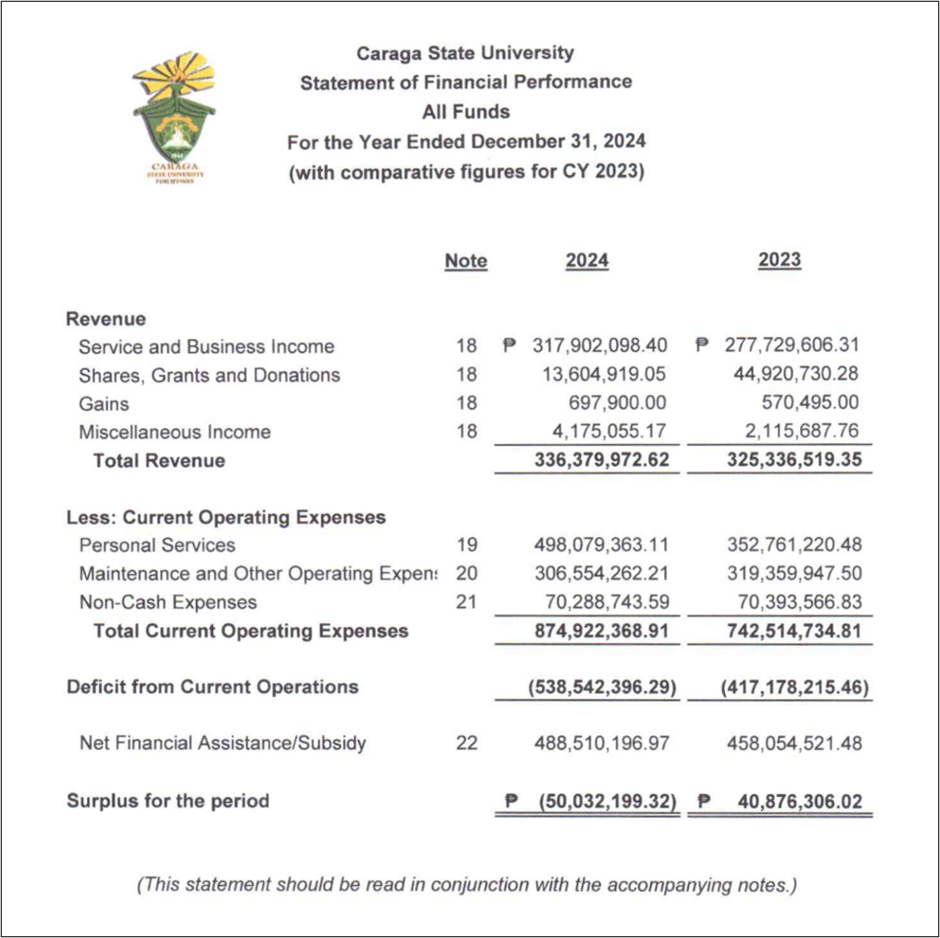
Figure 1.0 The Statement of Financial Performance for the Year Ended December 31, 2024
As presented on the figure above, it shows that for Calendar Year 2024, CSU’s total current operating expenditure for personal services was PHP352,761,220.48, benefiting 948 full-time equivalent (FTE) employees, resulting in an expenditure of PHP 372,110.99 per employee (≈ 6,306.96 USD at PPP).
Source:
Financial Statements AY 2024 – Approved/updated: December 2024
Plantila and Contract of Service List Approved/updated: May 30, 2024
The income from any revenue-generating activities of the University, either from academic or non-academic programs and whether from sponsored projects or government appropriations, must be utilized, accounted for, and reported in accordance not only with the terms and conditions of each sponsored agreement, but also with all the applicable statutory regulations. All pertinent institutional regulations for the implementation and the compliance thereto must be in consonance with the standards and policies stipulated and prescribed in the Administration Manual of Operations. Further, all procedural standards and policies shall at all times protect the integrity of the University.
CSU professionally prepared graduates by embedding required work placements and On-the-Job Training (OJT) into the curricula across all seven of its primary academic units: College of Agriculture and Agri-Industries, College of Computing and Information Sciences, College of Education, College of Engineering and Geosciences, College of Forestry and Environmental Science, College of Humanities and Social Sciences, and College of Mathematics and Natural Sciences. This practical approach ensures that students translate theoretical knowledge into real-world competencies, fostering discipline, critical thinking, and professionalism. Enabling them to contribute immediately to the local and national economy in their respective fields.

Figure 2.0 Sample curriculum indicating OJT/Practicum from the BSIT program curriculum –
Source: Sample Curriculum
The program curriculum above lists the OJT/work placement as one of the program requirements. Moreover, through Memoranda of Agreement (MOAs) with partner industries, the university ensures that students are placed in reputable institutions that uphold professional standards and provide safe, inclusive, and skill-enhancing environments. These partnerships facilitate the transfer of knowledge and promote collaboration between academe and industry, bridging the gap between education and employment.
Source:
Memoranda of Agreement – Approved/updated: December 2024
In the Academic Year 2024-2025, there are 10,951 FTE students enrolled in Caraga State University. See Table 5.0 for the summary of enrollment per colleges.
Table 5.0 Total number of FTE (Full Time Equivalent) students enrolled in the Academic Year 2024-2025
| College | Total |
| College of Engineering and Geo-Sciences (CEGS) | 1716 |
| College of Mathematics and Natural Sciences (CMNS) | 1333 |
| College of Humanities and Social Sciences (CHaSS) | 1549 |
| College of Forestry and Environmental Sciences (CoFES) | 1568 |
| College of Agriculture and Agri-Industries (CAA) | 1136 |
| College of Computing and Information Systems (CCIS) | 1828 |
| College of Education (CEd) | 1821 |
| Total | 10,951 |
In this academic year, 1,722 FTE student-interns out of 10,951 FTE students enrolled (15.73%), from the university’s seven academic colleges successfully completed their OJT requirements of more than one month.
Table 6.0 Total number of student-interns per college trained during their On-The-Job Training Program
| College | Total |
| College of Engineering and Geo-Sciences (CEGS) | 183 |
| College of Mathematics and Natural Sciences (CMNS) | 175 |
| College of Humanities and Social Sciences (CHaSS) | 258 |
| College of Forestry and Environmental Sciences (CoFES) | 223 |
| College of Agriculture and Agri-Industries (CAA) | 388 |
| College of Computing and Information Systems (CCIS) | 155 |
| College of Education (CEd) | 340 |
| Total | 1722 |
Source:
OSIP Annual Report – Approved/updated: December 2024
As presented on Table 6.0, Caraga State University (CSU) demonstrates a commitment to professional integration, with 1,722 Full-Time Equivalent (FTE) students across all seven colleges engaged in mandatory work placements or On-the-Job Training (OJT) for periods exceeding one month during Academic Year 2024. The College of Engineering and Geosciences (CEGS) (with 183 FTEs) and the College of Computing and Information Sciences (CCIS) (with 155 FTEs) who undertake lengthy internships ranging from 240 to over 480 hours essential for specialized competency development. The College of Agriculture and Agri-Industries (CAA) (388 FTEs) through field-based externships and the College of Education (CEd) (340 FTEs), where the extensive Student Teaching component fulfills the long-term placement requirement. Colleges such as the College of Mathematics and Natural Sciences (CMNS) (175 FTEs), the College of Forestry and Environmental Science (CoFES) (223 FTEs), and the College of Humanities and Social Sciences (CHaSS) (258 FTEs) ensure that their students receive critical, extended practical experience in specialized roles spanning laboratory research, environmental management, and social service provision, thereby fulfilling the University’s mandate to foster highly capable and career-ready professionals.
“1,722 FTE students (15.73% of all FTE students) in placements >1 month, across all 7 colleges; supported by 58 partner organisations and documented via OJT MOAs and completion certificates.”
The Certificates of Completion issued to students serve as tangible proof of their successful engagement in these placements, highlighting their acquisition of practical skills and real-world experience.
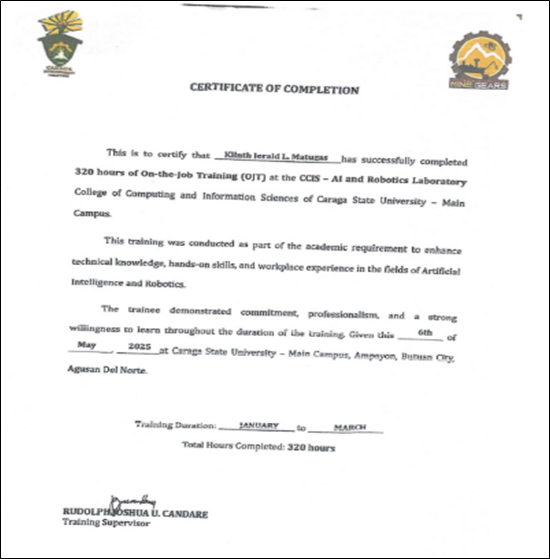
Figure 3.0 Sample Certificate of Completion given to CCIS student after completion of their internship program.
By embedding these work placements into its academic program, CSU not only enhances students’ employability but also contributes to the broader goal of fostering sustainable economic growth and productive employment within the region and beyond.
Source:
Sample MOA OJT 2024
Sample Curriculum
Sample Student OJT Narrative Report
OSIP Accomplishment Report Q1
OSIP Accomplishment Report Q4
OSIP Accomplishment Report Q2
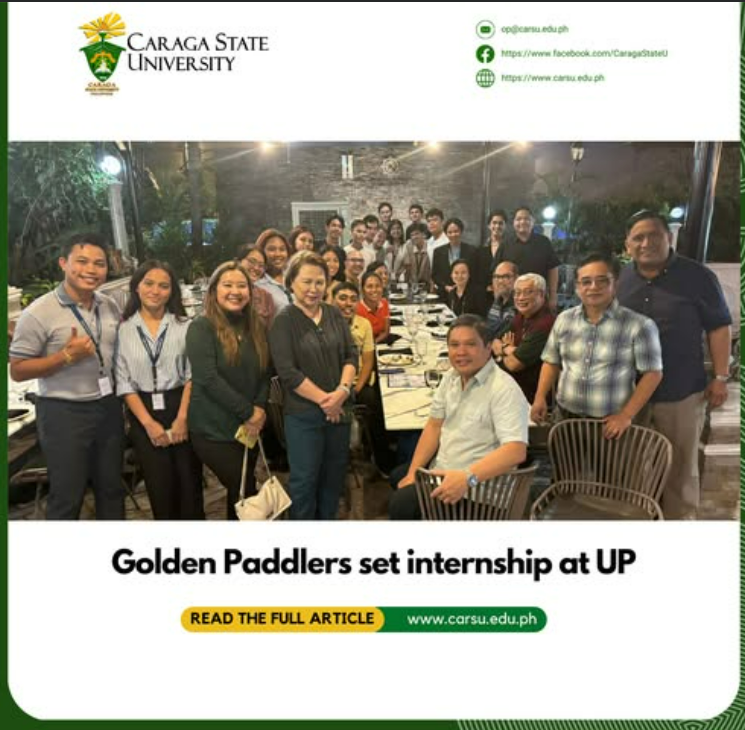
Eight BS Geology students will be assigned to the UP National Institute of Geological Sciences and the UP Resilience Institute. The remaining six BS Electronics Engineering students will be placed at the UP Electrical and Electronics Engineering Institute.
Source:
Facebook Post
Caraga State University has formalized a partnership with SEEMESOL, a leading Software-as-a-Service (SaaS) provider in talent and recruitment management, to strengthen graduate employability and enhance career support services through a digital recruitment platform.
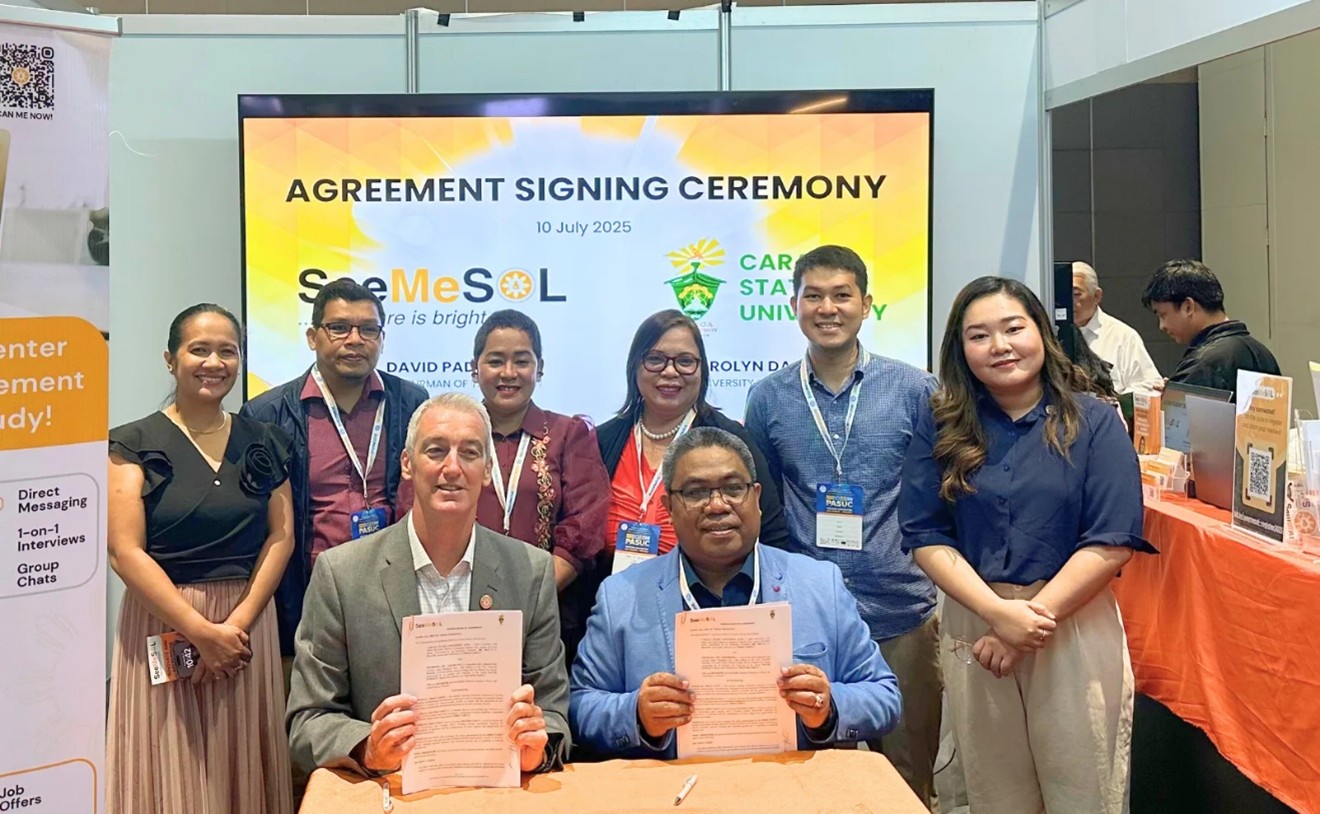
The Memorandum of Agreement (MOA) was signed at the SMX Convention Center in Pasay City, establishing a strategic collaboration to integrate SEEMESOL’s technologies into CSU’s existing systems. Through this partnership, the SeeMeConnect Career Portal is expected to be launched within the year and will be made accessible to both students and alumni. University President Rolyn C. Daguil, PhD, attended the ceremony together with Vice Presidents Michelle V. Japitana, D.Eng, and Vicente A. Pitogo, DIT, as well as Division Chiefs Jona J. Biongcog, PhD, and Maria Annie B. Mortola, MAEd, and OP Executive Assistant Nathan Kit Berro. SEEMESOL was represented by its Founder and CEO David Padgett and Community and Partnership Manager Jasmine Layugan
Source:
Facebook Post
To guide Golden Paddlers in making informed career decisions in the digital era, the Caraga State University and public and private partners organized a career exposure for students, mostly graduating by 2025.
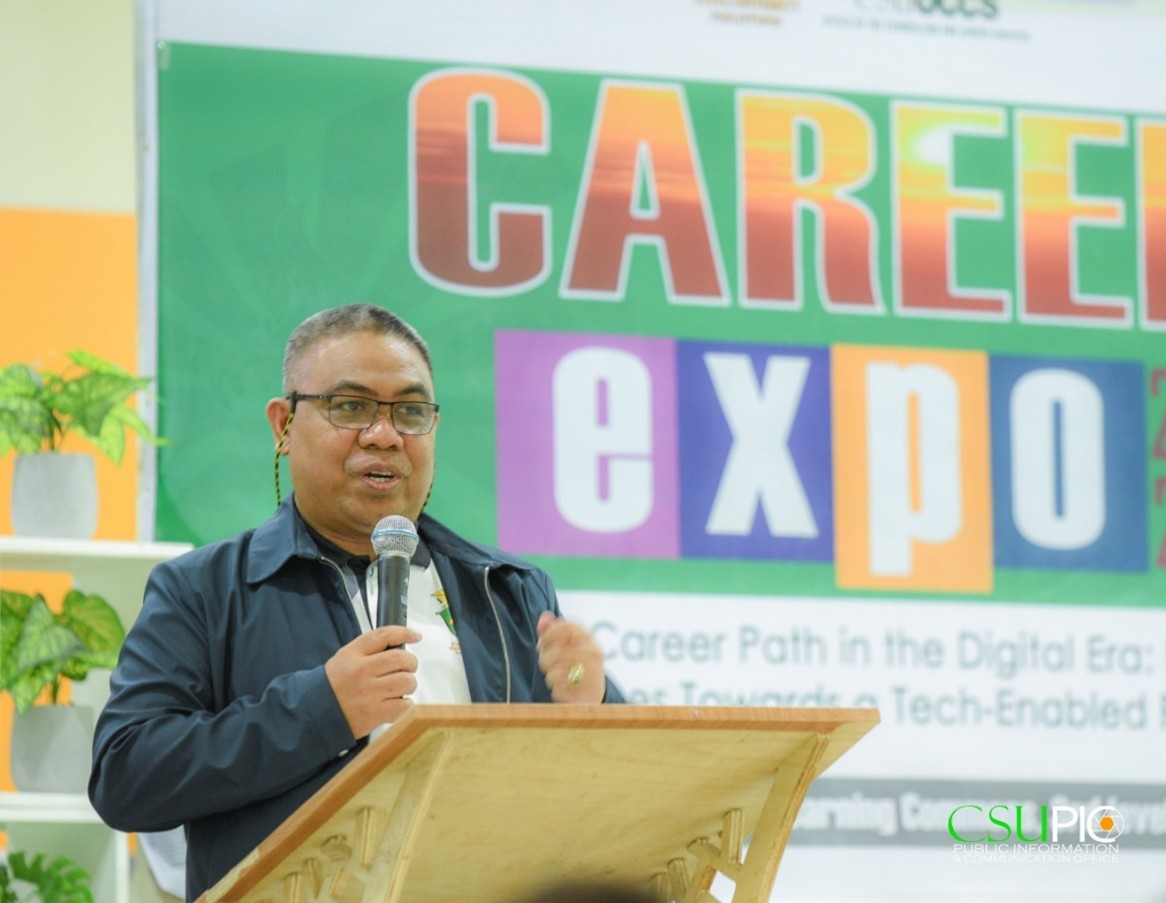
Led by the Office of Counseling and Career Services, the activity features plenary sessions, exhibits, and contests running from November 27 until 28, 2024 anchored on the theme “Gearing Career Path in the Digital Era: Paving Smart Choices towards a Tech-enabled Future.”
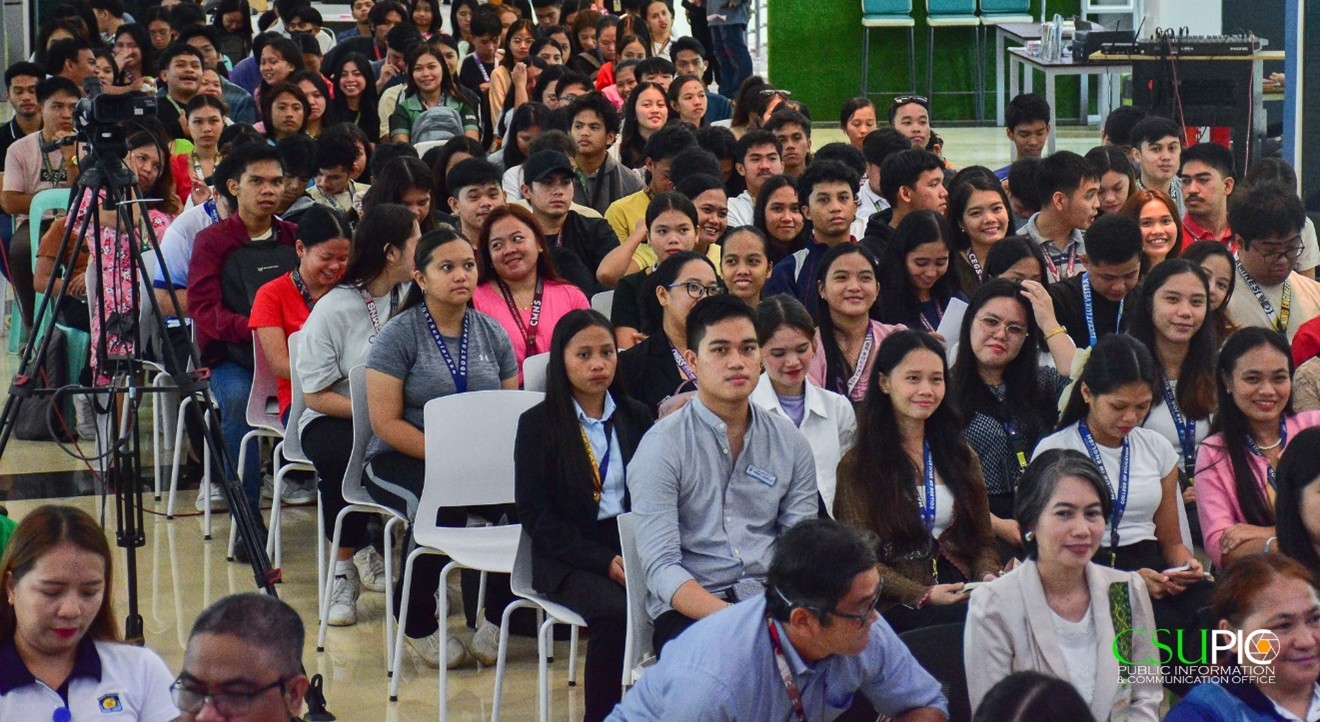
By widening the students’ perspective on career opportunities, the activity aligns with the university’s vision to produce digitally inclined and innovative students who can navigate the ever-evolving career paths in the digital era.
Source:
Facebook Post
The Alumni Relations Office (ARO) also invited all alumni Golden Paddlers and the Graduating Class of 2024-2025 to the virtual Seminar on Global Pathways: Alumni Success Stories and the Futures of Careers and Professions on September 28, 2024, starting at 7:30 AM via Zoom.
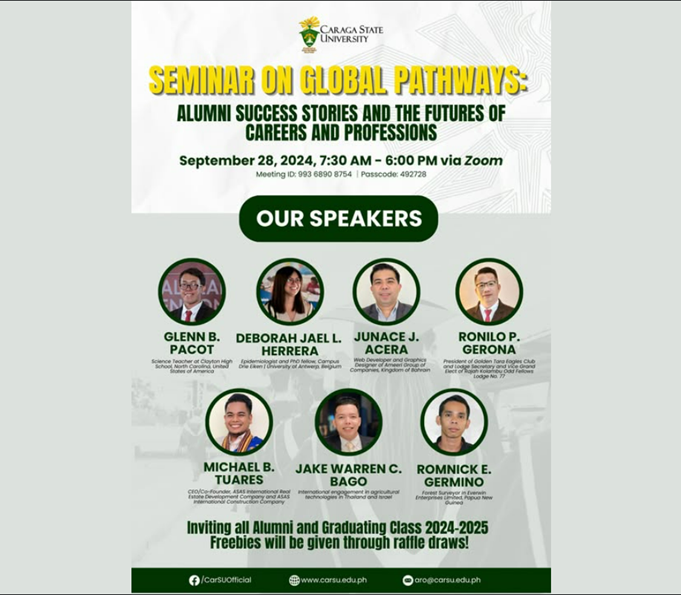
This seminar featured distinguished alumni from the seven colleges of the university, sharing their inspiring success stories and insights into the evolving landscape of careers and professions.
Source:
Facebook Post
On May 8, 2024, twenty-eight (28) agencies and offices extend local and overseas job opportunities to applicants from within and outside Caraga State University in the Trabaho Fair Dos Mil Baynte Kwatro organized by the Guidance and Counseling Office at the HERO Learning Commons, Activity Loft Area.
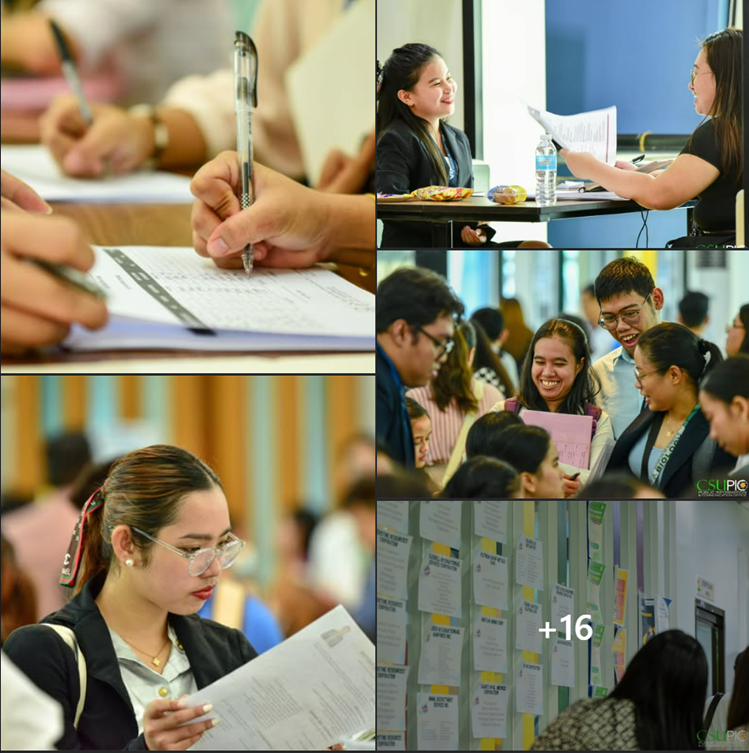
In partnership with the Department of Labor and Employment (DOLE), Public Employment Service Office (PESO), and Department of Migrant Workers (DMW), the activity aims to offer graduating students, alumni, and even external aspirants a kick-start in the employment market by bringing job offers into the university premise.
Source:
Facebook Post
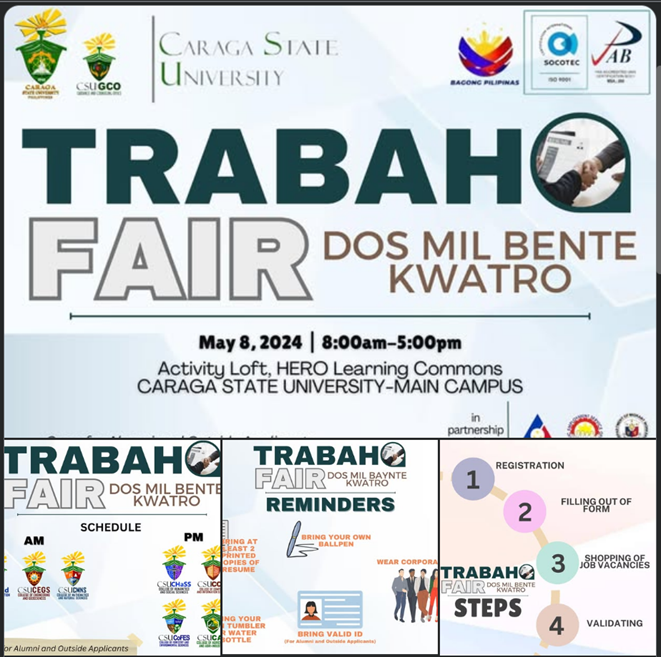
All graduating students, alumni, and outside applicants were invited to join the in-house job fair 𝗧𝗥𝗔𝗕𝗔𝗛𝗢 𝗙𝗔𝗜𝗥 𝗗𝗢𝗦 𝗠𝗜𝗟 𝗕𝗔𝗬𝗡𝗧𝗘 𝗞𝗪𝗔𝗧𝗥𝗢 on May 8, 2024 (Wednesday) from 8:00am to 5:00pm at the university’s HERO Learning Commons, Activity Loft Area. The activity also oriented them on the hiring process flow, including documentary requirements, interview decorum, and conduct, which will be insightful following their graduation in June. This activity is organized by the university’s Office of Counseling and Career Services (OCCS) in cooperation with the Department of Labor and Employment (DOLE), the Public Employment Service Office (PESO), and the Department of Migrant Workers (DMW).
Source:
Facebook Post
Caraga State University (CSU) is fully committed to the principles of Decent Work as outlined in SDG 8, ensuring its core workforce is supported by secure and stable employment conditions. The university operates under the regulatory framework of the Philippine Civil Service Commission (CSC), which mandates a rigorous, merit-based, and secure employment pathway for academic and non-academic personnel. CSU’s standard practice is to classify its core and long-term academic and non-academic staff as Permanent employees, which constitutes an indefinite term of employment, exceeding the 24-month secure contract threshold required by the ranking body.
The data presented in Table 7.0 below is derived directly from the official employment records of the university for the reporting period, which are categorized based on appointment status.
Table 7.0 Summary of FTE Employee in the University for 2024
Description | FTE Count | Supporting Document |
A. Total Secure Contract Staff (FTE) | 399 (Sum of all FTE) | |
B. Total Staff (All Contract Types, FTE) | 549 (sum of A and B) | |
C. Proportion of Secure Contracts | 72.68% | (A / B) x 100 |
Based on the FTE counts derived from the official records, Caraga State University reports that 399 FTE staff are on secure, permanent contracts out of a total of 549 FTE staff, resulting in a secure employment proportion of 72.68%.
The staff listed in Permanent – Teaching.pdf and Permanent – Non Teaching.pdf hold positions with “Permanent” status. Under the Civil Service rules governing State Universities and Colleges (SUCs), a permanent appointment signifies an indefinite tenure, providing the highest level of employment security and benefits, thus unequivocally meeting the THE ranking definition of a secure contract (greater than 24 months). Staff under Contract of Service (COS) or Job Order (JO), as listed in Contract of Service (Teaching and Non-Teaching).pdf, are classified as non-secure employment for this metric, as their contracts are typically short-term (six months to one year) and dependent on budget availability and project necessity.
Source:
Contract of Service (Teaching and Non-Teaching).pdf
Permanent – Teaching.pdf
Permanent – Non Teaching.pdf
CSU goes beyond contract security by providing several policies and initiatives that foster a fair, safe, and productive work environment for all employees. The university ensures mechanisms for fair reward distribution and dialogue through the Collective Negotiation Agreement (CNA). The document CNA_BUDGET-CIRCULAR-NO-2024-4.pdf confirms the institutional mechanism for Collective Negotiation between management and the employees’ association. The grant of the CNA Incentive, as institutionalized in the Budget Circular, rewards employee efforts toward higher productivity and ensures that staff are financially recognized for achieving performance targets, thereby promoting dialogue and fair reward distribution, which are key tenets of Decent Work. Furthermore, CSU demonstrates its commitment to comprehensive employee welfare and integration through the implementation of the mandatory Employee Onboarding Program. The official Memorandum Order MEMO No. 170, s. 2025 [Guidelines on Employees Onboarding Program] (1).pdf outlines this comprehensive program for all newly hired personnel, irrespective of contract status (Permanent, Temporary, Contract of Service, etc.). This policy is specifically designed to ensure a fair, equitable, and inclusive process, foster a strong sense of belonging, enhance job readiness, and provide clarity on performance expectations, policies, and reporting relationships from day one, thus ensuring all staff are fully integrated, supported, and protected by the university’s institutional culture.
Source:
CNA Budget Circular – Approved / Updated November 11, 202
Guidelines on Employees Onboading Program – Approved/updated: June 2025
Contract of Service (Teaching and Non-Teaching).pdf
Permanent – Teaching.pdf
Permanent – Non Teaching.pdf
Caraga State University’s strengthened SDG 8 initiatives collectively serves as the official public evidence base for THE Impact Rankings 2026, demonstrating the institution’s commitment to promoting decent work and economic growth. It highlights 22 SDG-8–aligned publications produced from 2020 to 2024, reflecting a strong research contribution with an FWCI of 1.05. The university ensures workforce stability, with 72.68% of its staff employed under secure contracts, and actively supports student development, with 15.73% of FTE students engaged in long work placements. Additionally, all job order and outsourced personnel are compensated at or above the established living wage. Together, these indicators reaffirm the institution’s dedication to responsible employment, inclusive opportunities, and sustainable economic impact.
The Office of Admission and Scholarship (OAS), led by OAS Director Dr. Sheila Rae E....
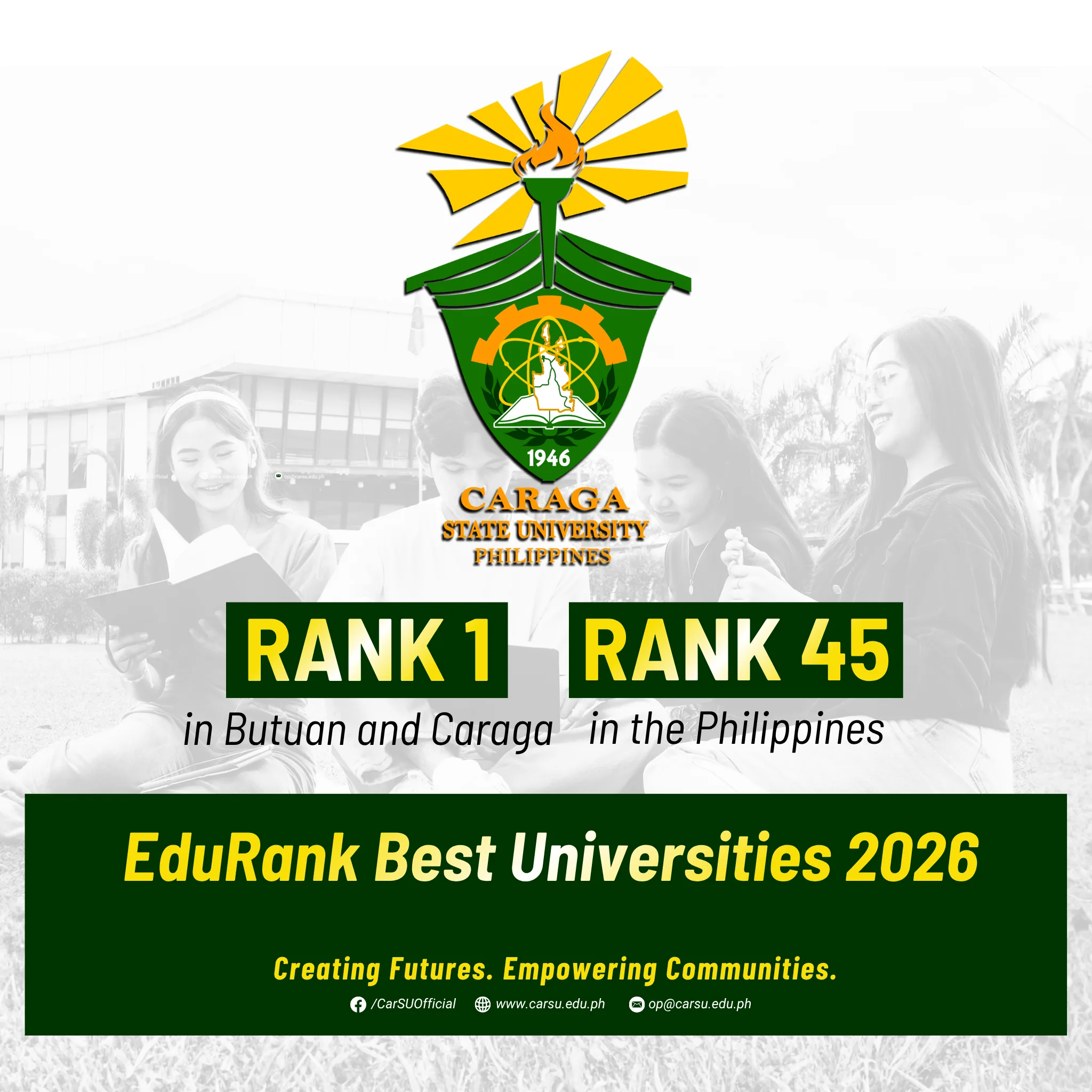
Caraga State University is still among the top-ranked Higher Education Institutions (HEIs) in the Philippines...
Caraga State University (CSU) has been recognized as part of the emerging higher education ecosystem...