
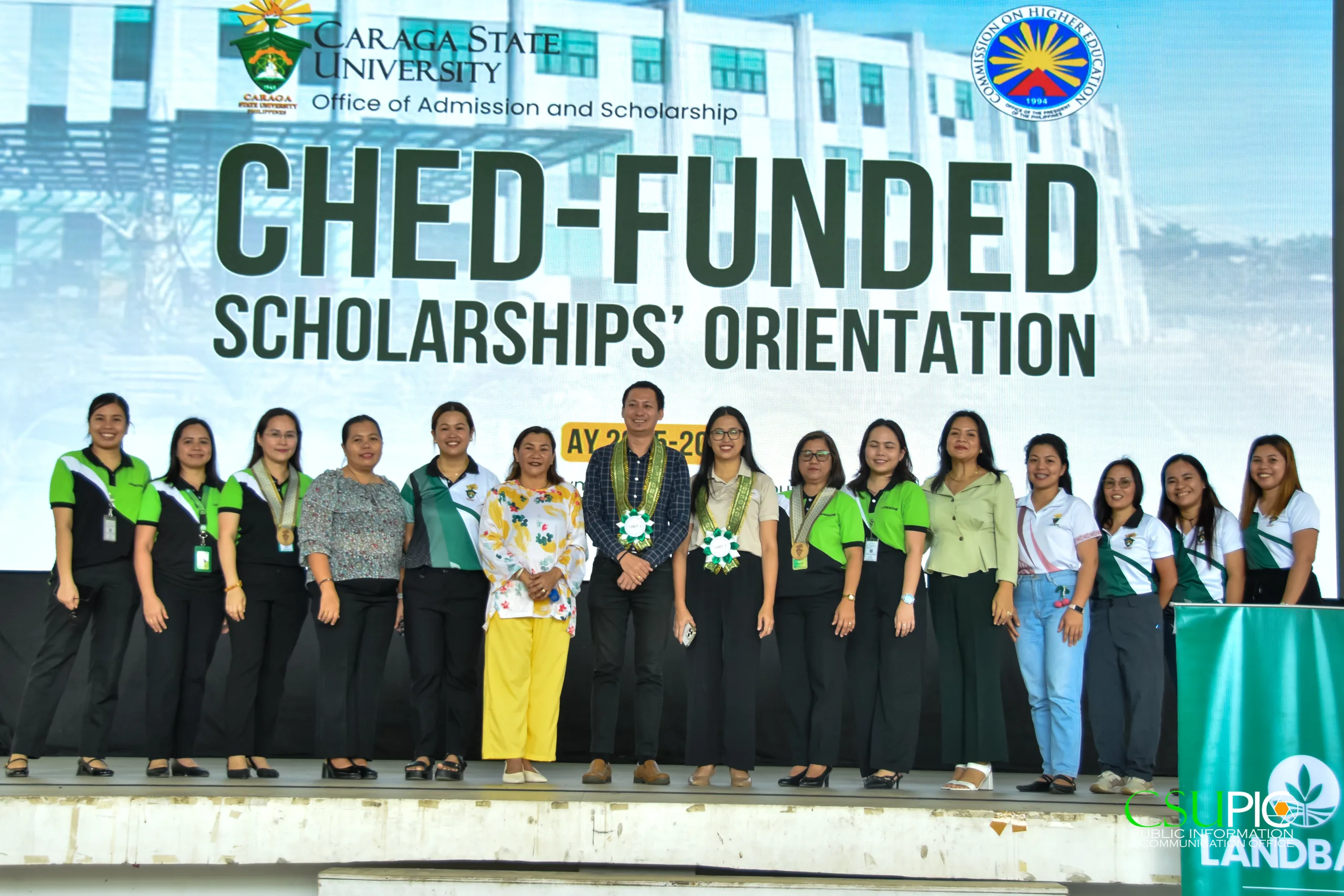
OAS conducts orientation to over 900 CHED-TES,TDP scholarship grantees
The Office of Admission and Scholarship (OAS), led by OAS Director Dr. Sheila Rae E....

In 2024, Caraga State University (CSU) demonstrated a whole-of-institution commitment to SDG 17 through international research collaboration, multi-sector policy engagement, transparent reporting, and curriculum integration. Guided by the LIKHA Strategic Agenda and aligned with national development mandates, CSU positioned itself as a convenor and evidence partner for sustainable development in Caraga and beyond.
Research partnerships. CSU produced 334 SDG-tagged outputs with 1,684 citations (overall FWCI 0.78). Notably, CSU co-authored six Scopus-indexed papers with low and lower-middle income countries (Indonesia, Ethiopia, India), strengthening research equity and capacity-building. Complementary collaborations with high/upper-middle income countries (Japan, USA, Slovenia, China, Iran, Oman) expanded CSU’s reach in biodiversity, materials science, environmental monitoring, and virology.
Policy and ecosystem engagement. Through the OVPRDIE, CSU hosted and joined multi-agency dialogues (e.g., LIKHA Summit, Climate Action & Innovation Forum, CISCon; NEDA-led RDP Caravan; ReSEED/Caraga RISE), translating science to policy for SDGs 8, 9, 11, 13, 17. The GEO-STEMS symposium and an MOU with Leibniz University Hannover formalized data-sharing and joint monitoring on agriculture, land cover change, and climate resilience.
Education for the SDGs. CSU mainstreamed sustainability across general education and degree programs (NSTP, Entrepreneurship, Earth Science, STS; Environmental Science, Agriculture, Public Administration), reinforced by community-based learning via MUGNA CARAGA and GRIND.
Transparency and public evidence. CSU institutionalized open reporting through the RDIE Annual Report, APRR, TTLO Narrative, and the Sustainability Portal, documenting partnerships, MOAs, outputs, beneficiaries, and SDG-linked indicators.
Together, these efforts show CSU’s integrated model for SDG 17: co-creating knowledge with diverse partners, informing policy with data, building local capacity through education and extension, and openly reporting impact.
In 2024, Caraga State University (CSU) demonstrated strong global engagement by actively collaborating with institutions from low and lower-middle income countries, reinforcing its commitment to SDG 17: Partnerships for the Goals. A total of six Scopus-indexed publications were co-authored with researchers from Indonesia, Ethiopia, and India—countries classified under the low or lower-middle income group by the World Bank. These partnerships highlight CSU’s growing role in advancing research equity, capacity-building, and international knowledge exchange.
Indonesia emerged as CSU’s most significant partner, contributing to research across diverse fields including urban planning, sustainable entrepreneurship, environmental management, and mathematical modeling. Collaborative works such as “Vernacular branding: sustaining city identity…”, “From Waste to Wealth…”, and “Unveiling SIR Model Parameters…” demonstrate CSU’s deepening academic ties with Indonesian universities such as UNTAG Semarang, Universitas Terbuka, Universitas Gadjah Mada, Brawijaya University, and others. These partnerships support knowledge transfer in cultural preservation, sustainability innovation, and applied mathematics—areas vital to regional and global development.
CSU also strengthened its partnership with Ethiopia through the collaborative health research article published in BMJ Open, which examined COVID-19 vaccination behaviors among Filipino parent–child dyads. This collaboration with Jimma University exemplifies CSU’s involvement in global public health research targeting vulnerable populations in low-income settings.
Meanwhile, research collaborations with India, highlighted in the Journal of Ultrafine Grained and Nanostructured Materials, contributed to advancements in materials science and engineering, connecting CSU researchers with institutions such as Saveetha School of Engineering and Chitkara University.
These partnerships reflect CSU’s strategic goal of building inclusive and sustainable international networks. Through active engagement with low and lower-middle income countries, CSU not only enhances its research productivity and visibility but also contributes directly to global capacity-building, knowledge sharing, and the achievement of the United Nations Sustainable Development Goals.
Table 1. Output co-authored with low or lower-middle income countries
Title | Journal | Authors | Affiliations | Country |
Vernacular branding: sustaining city identity through vernacular architecture of indigenous villages | Place Branding and Public Diplomacy | Nursanty, E.; Cauba, A.G.; Waskito, A.P. | UNTAG University, Semarang, Indonesia; Caraga State University, Philippines | Indonesia (Lower-middle income) |
Concordance, motivations and associated factors of COVID-19 vaccination among parent-child dyads: a cross-sectional study in Caraga Region, the Philippines | BMJ Open | Herrera, D.J.L.; Herrera, D.J.; Anore, K.M.; …; Berhe, N.M. | Caraga State University, Philippines; Jimma University, Ethiopia | Ethiopia (Low income) |
From Waste to Wealth: Entrepreneurial Ventures in Chitosan Extraction for Environmental Sustainability | APTISI Transactions on Technopreneurship | Sulistyowati, L.; Syarif, M.; Elvira, M.V.; | Universitas Terbuka and other Indonesian universities; Caraga State University | Indonesia (Lower-middle income) |
Unveiling SIR Model Parameters: Empirical Parameter Approach for Explicit Estimation and Confidence Interval Construction | Jambura Journal of Biomathematics | Susyanto, N.; Arcede, J.P. | Universitas Gadjah Mada, Indonesia; Caraga State University | Indonesia (Lower-middle income) |
Contribution to the Knowledge of the Genus Atholus (Coleoptera…) from the Indonesian Archipelago | Species Diversity | Cruz, I.N.D.; Hartini, S.; Dwibadra, D.; Ōhara, M. | Hokkaido University, Japan; Caraga State University; Museum Zoologicum Bogoriense Indonesia | Indonesia (Lower-middle income) |
One-Step Synthesis of PEG-Functionalized Gold Nanoparticles: Impact of Low Precursor Concentrations on Physicochemical Properties | Journal of Ultrafine Grained and Nanostructured Materials | Lapening, M.A.; Rivera, R.B.P.; Unabia, R.B.; … | Philippines; USA; Semnan University (Iran); Saveetha School of Engineering India; Chitkara University India | India (Lower-middle income) |
Caraga State University’s (CSU) 2024 research output also includes several works co-authored with high- and upper-middle–income countries, aside from the publications jointly produced with low- and lower-middle–income partners. These collaborations reflect CSU’s growing engagement with advanced international research institutions across fields such as materials science, biodiversity, environmental studies, virology, and engineering.
Notable high-income partners include Japan, the United States, Slovenia, and Oman, while upper-middle–income collaborations feature institutions in China and Iran. These partnerships are represented in publications such as ACS Omega, Journal of Ultrafine Grained and Nanostructured Materials, and Species Diversity, showcasing CSU’s participation in globally competitive scientific work—from nanotechnology and polymer science to taxonomy and plant virology.
These collaborations strengthen CSU’s international research profile by enabling access to advanced laboratories, fostering knowledge exchange, and enhancing multidisciplinary research capacity. Collectively, they complement CSU’s engagements with low-income and lower-middle–income countries, demonstrating the university’s broad and inclusive contributions to SDG 17: Partnerships for the Goals.
Table 2. CSU Research Collaborations with High- and Upper-Middle–Income Countries
Title | Journal | Countries |
Etlingera lacerata (Alpinieae, Zingiberaceae), a new ginger species discovered in Mindanao Island, Philippines | — (Taxonomic/Botany Journal, Scopus indexed) | China (Upper-middle income) |
Characterization and Performance Enhancement of Bio-Based Polyurethane-Modified Cement Mortar Utilizing Polyglycerol Polyester Polyol | — (Engineering/Materials Science) | United States (High income) |
Influence of the Gold Nanoparticle Size on the Colorimetric Detection of Histamine | — (Materials/Chemistry) | United States (High income) |
Assessment of contamination and potential ecological risks of heavy metals in the bottom sediments of Lake Mainit, Philippines | — (Environmental Science) | Japan (High income) |
Virome analysis of irrigation water sources provides extensive insights into plant virus diversity… | — (Virology/Plant Pathology) | Slovenia (High income), United States (High income) |
Ribbons under the rocks: intertidal ribbon-worm fauna… | — (Marine Biology/Taxonomy) | Japan (High income) |
One-Step Synthesis of PEG-Functionalized Gold Nanoparticles: Impact of Low Precursor Concentrations… | Journal of Ultrafine Grained and Nanostructured Materials | United States (High income), Iran (Upper-middle income), India (LMIC but handled separately) |
Facile Synthesis of PEGylated Gold Nanoparticles for Enhanced Colorimetric Detection of Histamine | ACS Omega | United States (High income) |
Metal Accumulation of Plants in a Nickel Laterite Mine and Their Phytoremediation Potential | — (Environmental/Mining Science) | Oman (High income) |
Contribution to the Knowledge of the Genus Atholus… | Species Diversity | Japan (High income) |
As of 2024, Caraga State University’s (CSU) research performance across the UN Sustainable Development Goals (SDGs) reflects a strong and strategically aligned contribution to global sustainability efforts. In total, CSU produced 334 SDG-related scholarly outputs with 1,684 citations, achieving an overall Field-Weighted Citation Impact (FWCI) of 0.78, which corresponds to 78% of the world average citation impact. Several SDGs show exceptional influence, with FWCI scores above the global benchmark. Notably, SDG 1 (No Poverty), SDG 7 (Affordable and Clean Energy), SDG 10 (Reduced Inequalities), and SDG 13 (Climate Action) all surpass an FWCI of 1.30, indicating that CSU’s research in these areas is cited far more frequently than comparable global publications. Although these SDGs have smaller output volumes, their high citation impact demonstrates CSU’s capacity to produce targeted, high-quality, and globally relevant research.
By 2024, CSU’s most productive SDG research area is SDG 11 (Sustainable Cities and Communities), with 80 publications supported by 181 citations. While its FWCI of 0.45 reflects lower citation density, this is typical of applied and localized studies in geospatial science and urban sustainability. Other areas with strong output and influence include SDG 12 (Responsible Consumption and Production), SDG 6 (Clean Water and Sanitation), SDG 15 (Life on Land), and SDG 7 (Affordable and Clean Energy), demonstrating consistent research engagement in environmental conservation, sustainability systems, and renewable energy solutions. SDG 3 (Good Health and Well-Being) remains the most cited category, with 444 citations, underscoring CSU’s visibility in public health and biomathematical research.
Areas such as SDG 4 (Quality Education), SDG 5 (Gender Equality), and SDG 16 (Peace, Justice, and Strong Institutions) show emerging research footprints with opportunities for enhanced collaboration and international partnerships. Overall, as of 2024, CSU’s research portfolio is robust and impactful, with notable strengths in environmental science, climate action, biodiversity, and sustainable technologies—reinforcing its positioning in the THE Impact Rankings and its role in advancing regional and national sustainability priorities.
Table 3. Publications related to SDG based on SciVal
SDG | Scholarly Output | Field-Weighted Citation Impact | Citation Count |
SDG 1: No Poverty | 4 | 1.45 | 23 |
SDG 2: Zero Hunger | 35 | 0.85 | 228 |
SDG 3: Good Health and Well-being | 67 | 0.81 | 444 |
SDG 4: Quality Education | 29 | 0.24 | 50 |
SDG 5: Gender Equality | 2 | 0.6 | 4 |
SDG 6: Clean Water and Sanitation | 42 | 0.96 | 374 |
SDG 7: Affordable and Clean Energy | 44 | 1.41 | 212 |
SDG 8: Decent Work and Economic Growth | 27 | 0.93 | 182 |
SDG 9: Industry, Innovation and Infrastructure | 31 | 0.96 | 231 |
SDG 10: Reduced Inequality | 3 | 1.35 | 17 |
SDG 11: Sustainable Cities and Communities | 80 | 0.45 | 181 |
SDG 12: Responsible Consumption and Production | 45 | 0.93 | 286 |
SDG 13: Climate Action | 20 | 1.31 | 89 |
SDG 14: Life Below Water | 18 | 0.57 | 84 |
SDG 15: Life on Land | 47 | 0.99 | 118 |
SDG 16: Peace, Justice and Strong Institutions | 11 | 0.25 | 73 |
Total | 334 | 0.78 | 1,684 |
Caraga State University (CSU) demonstrated a strong institutional commitment to fostering local, regional, and international partnerships that advance the UN Sustainable Development Goals (SDGs). Through the Office of the Vice President for Research, Development, Innovation, and Extension (OVPRDIE), CSU actively engaged in multi-sectoral collaborations that promote shared learning, data-driven policy development, and innovation for sustainability. These partnerships directly support UN SDG Targets 17.6, 17.9, 17.16, 17.17, and 17.18, focusing on building institutional capacity, global knowledge exchange, and evidence-based decision-making.
Caraga State University (CSU) demonstrated strong institutional leadership in regional and national SDG policy development through direct collaboration with government agencies, non-government organizations, and multi-sectoral bodies. Under the Office of the Vice President for Research, Development, Innovation, and Extension (OVPRDIE), CSU actively contributed to the identification of development challenges, policy formulation, foresight modelling, and monitoring of SDG-aligned interventions in the Caraga Region.
CSU provided direct technical inputs, analysis, and strategic guidance in key regional SDG policy platforms:
A. Participation in the Caraga Regional Development Plan (RDP) 2023–2028 Provincial Caravan (January 31, 2024)
B. 2024 RDIE Agenda Setting Workshop (July 17–19, 2024)
C. Cross-sectoral Alignment via ReSEED, Caraga RISE, and Innovation Ecosystem Programs
D. Extension-Driven Policy Inputs (2024 Extension Services Report)
The following institutional documents provide clear evidence:
These documents provide the needed verifiable, traceable evidence of CSU’s direct involvement in SDG policy processes.
CSU’s policy-related engagements are publicly available through:
The public visibility of these activities demonstrates CSU’s commitment to transparency and accountability in SDG policy engagement. CSU played a substantive, documented, and publicly visible role in regional SDG policy development—from data provision and agenda harmonization to multi-sectoral dialogue and innovation ecosystem building. CSU’s interactions with NEDA, DOST, DTI, DICT, DA, DENR, LGUs, NGOs, and international partners reflect a mature policy-support ecosystem, enabling adaptive management and evidence-based decision-making in line with SDG 17: Partnerships for the Goals.
Public evidence:
Caraga State University (CSU) actively organized and participated in multi-sectoral dialogues that convened government agencies, NGOs, industries, academia, and civil society to advance the Sustainable Development Goals (SDGs). These engagements enabled joint problem-solving, policy alignment, innovation ecosystem development, and shared SDG learning across sectors.
A central platform for these dialogues was the 2nd LIKHA Summit (October 28–31, 2024), which integrated the Regional Climate Change Action and Innovation Forum, CISCon (Computing, Innovation, and Sciences Conference), and the LIKHA-DUNONG Conference. These events brought together representatives from DOST, NEDA, DICT, DA, DENR, LGUs, private industries, NGOs, local HEIs, and international partners to discuss climate adaptation, digital transformation, responsible innovation, and sustainable development pathways.
CSU also contributed to SDG-aligned regional planning through the Caraga Regional Development Plan (RDP) 2023–2028 Provincial Caravan (January 31, 2024), where it joined discussions with NEDA, LGUs, CSOs, and industry groups to align regional priorities with the SDGs.
Beyond policy forums, CSU engaged in innovation and entrepreneurship ecosystem dialogues, such as the ReSEED Consortium meetings, Caraga RISE activities, and the DOST Mindanao Call Conference, which collectively convened DOST, DICT, DA, DTI, Wadhwani Foundation, and other key actors to develop sustainable innovation frameworks.
CSU’s Extension Services programs also created continuous multi-sectoral dialogue channels with stakeholders. The 2024 Extension Services Narrative Report documents extensive collaboration with LGUs, DA-BIOTECH, PhilFIDA, DOST Caraga, industry representatives, and community organizations in programs on abaca disease management, coffee and calamansi value-adding, teacher upskilling, and inclusive education—demonstrating CSU’s operational integration of SDG dialogues in community-based interventions.
At the international level, CSU strengthened cross-national dialogue on SDG-related themes through participation in ICSINTESA 2024 (Indonesia), where CSU served as keynote speaker and engaged in policy and innovation exchanges with universities and global networks such as the Asia-Europe AI Network. These engagements contributed to dialogue on digital innovation, smart agriculture, and climate-resilient development models.
Together, these activities reflect a robust institutional culture of multi-sectoral collaboration that supports SDG implementation through shared expertise, regional policy harmonization, knowledge co-creation, and community-driven development.
CSU initiated and joined numerous cross-sectoral SDG dialogues, including:
Evidence across reports includes:
Example excerpts from reports:
All cross-sectoral dialogue activities are publicly accessible through:
These open-access platforms provide transparent, verifiable documentation satisfying the metric’s “public evidence” requirement. CSU demonstrated strong, consistent, and well-documented cross-sectoral engagement in advancing the SDGs. Through multi-agency conferences, policy dialogues, innovation ecosystem forums, community-engaged extension programs, and international collaborations, CSU fostered inclusive, multi-stakeholder cooperation aligned with SDG 17—Partnerships for the Goals.
Caraga State University (CSU) strengthened its international engagement in data generation, environmental monitoring, digital innovation, and sustainability research, positioning itself as a regional hub for SDG-oriented knowledge creation and evidence-based policymaking. Guided by the LIKHA Strategic Agenda and the national performance management reforms under DBM Circular Letter No. 2025-2, CSU expanded its global collaboration network, formalized new data-sharing partnerships, and enhanced institutional capacity for SDG metric reporting and analytics.
A major highlight was the Geo-Spatial Technologies for Earth Monitoring Symposium (GEO-STEMS), held on August 9, 2024, through the Caraga Center for Geo-informatics (CCGeo). CSU collaborated with Leibniz University Hannover (Germany) and Nihon University (Japan) to advance applications of remote sensing, geospatial analytics, and environmental data modeling. The symposium focused on generating and analyzing datasets related to sustainable agriculture, forest health, land cover change, and climate resilience—key indicators underpinning SDG 2 (Zero Hunger), SDG 13 (Climate Action), and SDG 15 (Life on Land).
A Memorandum of Understanding (MOU) signed with Leibniz University Hannover formalized long-term collaboration in data sharing, joint publications, environmental monitoring, and capacity-building. The event was publicly livestreamed via Zoom and Facebook Live, ensuring transparency and open access to global and local audiences.
Beyond GEO-STEMS, CSU engaged in extensive international SDG data collaborations through academic exchanges, conferences, and innovation networks. The university maintained 27 active international partnerships by December 2024, supporting joint studies in geospatial science, agricultural informatics, energy systems, ICT for development, and sustainability analytics.
● IEICES 2024 – Kyushu University, Japan: CSU presented data-driven research on renewable energy modeling, climate-responsive infrastructure, and environmental monitoring technologies, contributing to international benchmarking efforts on SDG-aligned engineering and sustainability science.
● IEEE ASIANCON 2024: Faculty shared applications of AI, machine learning, and data analytics for sustainable engineering, environmental safety, and regional development, supporting global datasets used in SDG tracking.
● ICSINTESA 2024 (Indonesia) – CSU served as keynote speaker at the International Conference on Science and Information Technology in Smart Administration, sharing data from the FarmVista smart agriculture project and establishing collaborations with:
These collaborations support cross-country data exchange on smart agriculture, climate-resilient farming, and digital sustainability.
● Asia-Europe AI Network (ASEF InnoLab): CSU joined the Asia-Europe AI working group, participating in knowledge-sharing and multi-country data collaboration on the role of artificial intelligence in SDG forecasting, digital governance, and smart community systems.
● Wadhwani Foundation (Southeast Asia): Through Navigatu TBI, CSU contributed entrepreneurship and innovation datasets, supporting SDG 4, SDG 8, and SDG 9 indicators on startup development, digital skills, and innovation performance.
● Research and Extension Services: The 2024 Narrative Report records collaboration with DA-BIOTECH, PhilFIDA, DOST Caraga, LGUs, and industry partners in generating agri-environmental datasets, including:
These datasets support CSU’s SDG monitoring contributions at the local and regional levels.
Through sustained international partnerships, transparent data-sharing mechanisms, and multidisciplinary research collaborations, CSU significantly advanced its role as a contributor to global SDG monitoring efforts. The university’s leadership in generating, managing, and disseminating sustainability data supports both regional development planning and the global SDG evidence ecosystem.
Caraga State University (CSU) advanced international collaboration and knowledge exchange aimed at developing best practices for Sustainable Development Goal (SDG) implementation. Through the Geo-Spatial Technologies for Earth Monitoring Symposium (GEO-STEMS) with Leibniz University Hannover (Germany) and Nihon University (Japan), CSU reviewed global approaches to sustainable agriculture, ecosystem management, and geospatial data utilization.
CSU faculty also presented 50 peer-reviewed papers at the 10th International Exchange and Innovation Conference (Kyushu University, Japan) and contributed to IEEE ASIANCON 2024, engaging in comparative discussions on emerging technologies, renewable energy, and digital sustainability. Additionally, its partnership with the Wadhwani Foundation (Southeast Asia) strengthened the university’s commitment to global entrepreneurship and innovation models promoting inclusive growth.
These international linkages reflect CSU’s ongoing commitment to benchmarking global practices, enhancing local applications, and developing adaptive SDG strategies through international research collaboration.
The report highlights several international collaborations where CSU exchanged, reviewed, and developed best practices for SDG implementation, including:
Evidence in the RDIE report includes:
All activities were publicly accessible and documented:
Caraga State University (CSU) actively partnered with national and international NGOs to advance the Sustainable Development Goals (SDGs) through community outreach, innovation, and education.
Through the CRAFT Center’s partnership with USAID-EcoWeb and the GreenFiber Project, CSU established renewable energy-powered abaca processing facilities that promote environmental sustainability and rural economic growth. The MUGNA CARAGA Project, in collaboration with the Independent Order of Odd Fellows, mobilized student volunteers to deliver educational outreach and scholarship awareness programs for Indigenous Peoples.
Additionally, CSU’s Navigatu TBI partnered with the Wadhwani Foundation to integrate entrepreneurship and innovation education across campuses, while the GRIND Project with DOST Caraga supported marginalized communities through inclusive science and technology interventions.
These collaborations reflect CSU’s strong alignment with SDGs 4, 7, 8, 9, 10, 13, and 17, showcasing how partnerships with NGOs amplify the university’s impact on education, sustainability, and community empowerment.
CSU demonstrated sustained partnerships with several non-governmental organizations (NGOs) in 2024 across multiple SDG-linked initiatives:
A. Student Volunteering and Community Programs
B. Research and Technology Development Partnerships
C. Educational and Innovation Resource Development
D. Community Development and Grassroots Empowerment
The 2024 RDIE Annual Report provides detailed and verifiable documentation of these collaborations, including:
These collaborations are publicly documented and accessible through:
Caraga State University (CSU) institutionalized the regular publication of SDG-aligned performance reports, ensuring transparency, accountability, and evidence-based contribution to the United Nations Sustainable Development Goals (SDGs). The university systematically documents, monitors, and publicly disseminates data related to all 17 SDGs through annual and midyear performance reports, specialized research publications, and digital transparency platforms.
CSU’s reporting framework—anchored on its LIKHA Strategic Agenda (https://heyzine.com/flip-book/e678d44972.html#page/1 ) and DBM Circular Letter No. 2025-2—integrates SDG indicators into key institutional reports (https://www.dbm.gov.ph/index.php/dbm-issuances/circular-letters?view=article&id=3216:circular-letter-no-2025-2&catid=373 ), including the:
These reports include quantitative and qualitative data on CSU’s contributions to SDG-aligned education (SDG 4), innovation (SDG 9), sustainable communities (SDG 11), climate action (SDG 13), and institutional partnerships (SDG 17). They also feature impact indicators, such as the number of trainees, beneficiaries, partnerships, and research publications contributing to SDG outcomes.
CSU maintains a publicly accessible Sustainability Portal (https://sustainability.carsu.edu.ph) that consolidates these reports and provides open access to stakeholders, researchers, and the public. The portal showcases SDG-aligned projects, partnerships, and outcomes across all colleges and research centers, reinforcing CSU’s leadership in sustainable reporting and education transparency.
Furthermore, CSU integrates SDG data presentation into its annual LIKHA Summit, CISCON, and GEO-STEMS Symposium, where institutional progress toward sustainability targets is shared with government agencies, NGOs, and international partners. Through these dissemination platforms, CSU not only fulfills its mandate for public accountability but also contributes to regional and global SDG benchmarking.
Report URL (Evidence): https://sustainability.carsu.edu.ph/?page_id=2043
Key Highlights
Overall, CSU’s efforts in SDG 1 reflect a strategic and measurable approach: combining skill-building, technology transfer, rural livelihood support, partnerships and research to empower low-income communities and reduce economic vulnerability in the Caraga Region.
Report URL (Evidence):
Key Highlights
Report URL (Evidence):
Key Highlights
Caraga State University (CSU) demonstrates strong leadership in advancing SDG 3 through integrated programs in public health, mental wellness, environmental safety, and community resilience. In 2024, CSU produced 1,435 graduates, with nearly 19% coming from health-related disciplines, strengthening the regional health workforce. Strategic collaborations with institutions such as George Washington University, PLM, DOH-Caraga, and UNILAB Foundation supported biomedical research, medical education development, and mental-health advocacy.
Through the University Center for Health and Wellness, CSU delivered health outreach programs on hygiene, disease prevention, HIV awareness, and psychosocial support, benefiting over 3,000 participants. CSU also institutionalized mental-health initiatives like Kapetorya and RACE Against Suicide training, while maintaining a 100% Smoke-Free Campus and shared sports facilities to promote active lifestyles.
From 2022–2024, CSU produced 38 Scopus-indexed publications on public health, biomedical innovation, environmental toxicology, and safety engineering, enhancing its global research visibility. These outputs have informed DENR, DOH, and LGU policy initiatives, demonstrating strong translational impact.
Complemented by partnerships, health services, mobile HIV testing, and active living programs, CSU delivers a holistic approach to well-being. Looking ahead, initiatives such as the proposed School of Medicine and strengthened mental-health referral systems position CSU as a key regional hub for health education, research, and community resilience—contributing significantly to the UN 2030 Sustainable Development Agenda.
Report URL (Evidence):
Key Highlights
Report URL (Evidence):
Key Highlights
Report URL (Evidence):
Key Highlights
Report URL (Evidence):
Key Highlights
Report URL (Evidence):
Key Highlights
Report URL (Evidence):
Key Highlights
Report URL (Evidence):
Key Highlights
Report URL (Evidence):
Key Highlights
Report URL (Evidence):
Key Highlights
Report URL (Evidence):
Key Highlights
Report URL (Evidence):
Key Highlights
Report URL (Evidence):
Key Highlights
Caraga State University (CSU) strengthened its commitment to biodiversity conservation, ecological restoration, and sustainable land management through research, extension, and strategic partnerships across the Caraga Region in 2024. Guided by its LIKHA Strategic Agenda and expanding regional collaborations, the university implemented science-based programs that protect terrestrial ecosystems, support community stewardship, and contribute to policy development.
A major highlight was the RAF-funded Biodiversity Assessment for the Proposed Local Conservation Area (LCA) in Barangay Sumile (BACAS). Led by CSU’s Center for Research in Environmental Management and Eco-Governance (CREME), the project conducted multi-taxa surveys covering flora, macrofungi, arthropods, avifauna, herpetofauna, bats, and non-volant mammals. The three-day reconnaissance and fieldwork (February 15–17, 2024) generated baseline ecological datasets that support the formal designation of Sumile as a Local Conservation Area, strengthening protection for its forested zones and wildlife corridors. This project was implemented in partnership with CENRO–LGU Butuan City and the LGU of Sumile, ensuring that scientific evidence informs local conservation policy and land-use planning.
CSU further advanced land and ecosystem conservation through the establishment of the Natural Science Museum (November 25, 2024), led by the Department of Biology. The museum showcases regional biodiversity collections derived from ongoing field research, biodiversity assessments, and ecological monitoring initiatives. Workshops on herbarium management and museum curation enhanced the capacity of faculty and students to manage biological specimens, document natural heritage, and support community education on biodiversity protection.
International collaboration also played a key role in CSU’s Life on Land initiatives. Through the GEO-STEMS Symposium, CSU partnered with Leibniz University Hannover (Germany) and Nihon University (Japan) to strengthen geospatial monitoring of terrestrial ecosystems. The event highlighted the use of remote sensing for forest health analysis, land cover change detection, and sustainable agriculture—enhancing CSU’s capacity to contribute to evidence-based environmental management.
CSU’s extension programs further expanded the university’s reach in ecological conservation. Collaboration with DA-BIOTECH, PhilFIDA, LGUs, and local farmers supported research on sustainable agriculture, abaca disease surveillance, and climate-resilient farming—reducing pressure on forest lands while promoting ecosystem-sensitive livelihoods. Training sessions also empowered communities to adopt resource-efficient farming practices that protect soil quality and reduce land degradation.
Through these integrated programs—scientific research, conservation-based education, international partnerships, and community-driven land management—CSU demonstrates a strong and sustained contribution to SDG 15: Life on Land. The university’s efforts ensure that biodiversity preservation, environmental stewardship, and sustainable land practices remain central to regional development and ecological resilience.
Report URL (Evidence):
Key Highlights
Caraga State University (CSU) strengthened its leadership in transparent governance, accountable institutions, and inclusive policy engagement, contributing significantly to SDG 16: Peace, Justice, and Strong Institutions. Through reforms in procurement, strategic governance initiatives, multi-agency collaborations, and community-based capacity building, CSU demonstrated strong institutional integrity and public-sector accountability.
CSU reinforced ethical and transparent governance through strict compliance with national government standards, including RA 9184, COA regulations, and GPPB procurement policies. These systems are reflected across the university’s internal reports and performance review documentation, highlighting CSU’s adherence to fair, competitive, and transparent public management practices. Evidence of institutional strengthening—particularly in research governance, extension programs, and innovation management—is recorded in CSU’s 2024 RDIE Annual Report (https://sustainability.carsu.edu.ph/2024-rdie-annual-report/), including multi-agency engagements and policy consultations (pp. 62–63, 76–77).
The university played a leading role in regional policy dialogues and inter-agency planning processes. CSU actively contributed to the Caraga Regional Development Plan (RDP) 2023–2028 Provincial Caravan (Jan 31, 2024), offering technical insights on inclusive development, climate resilience, and sustainable innovation in coordination with NEDA Caraga. These roles are documented on pages 62–63 of the RDIE Report.
CSU also convened national and regional agencies during the 2024 RDIE Agenda Setting Workshop (July 17–19, 2024), aligning the university’s 2025–2030 Research and Innovation Agenda with the Philippine Development Plan, Caraga RDP, DOST HNRDA, and the UN SDGs. Multi-agency coordination involving NEDA, DOST, DTI, DICT, DA, DENR, CHED, LGUs, and NGOs is recorded in the same report (pp. 76–77).
CSU also strengthened institutional collaboration through its involvement in regional innovation councils, including ReSEED, Caraga RISE, and startup ecosystem dialogues—platforms that promote transparent, participatory policy-making and evidence-driven planning. These engagements are recorded on pages 62–63, 76–77 of the RDIE Annual Report.
At the community level, CSU’s extension programs contributed to stronger local institutions by supporting LGUs, farmers, IP communities, and grassroots organizations. Through 22 active extension partnerships documented in the 2024 Extension Services Narrative Report, CSU helped LGUs integrate agriculture, climate action, inclusive education, and environmental governance into program development and policy implementation (pp. 1–5, 43–45).
Programs such as PAGLAHUTAY, the DSWD–CSU partnership for livelihood and anti-poverty strategies, strengthened local governance capacity and social protection systems through training, research, and knowledge transfer initiatives. This collaboration is documented in the university’s uploaded communications and external reports (2024).
CSU further contributed to strengthening institutions through international academic linkages under the International Forum on Sustainability Science (IFSS) via a MOA signed with UP Open University (July 10, 2024), enhancing shared governance frameworks in sustainability science education.
Through these initiatives—transparent governance, inclusive policy engagement, multi-sector partnerships, and community-centered institutional strengthening—CSU demonstrated a robust commitment to SDG 16: Peace, Justice, and Strong Institutions. The university continues to cultivate an enabling environment where justice, accountability, and strong institutions are central to sustainable regional development.
Report URL (Evidence):
Key Highlights
Caraga State University (CSU) deepened its commitment to integrating the Sustainable Development Goals (SDGs) into its educational, research, and community engagement systems, ensuring that sustainability is embedded across all facets of university life. Guided by its LIKHA Strategic Agenda—which champions Learning Innovation, Knowledge Co-creation, Human-centeredness, and Administrative Digital Transformation—CSU operationalized the principles of UN SDG Targets 4.7 and 17.16, preparing future leaders to promote sustainability, social responsibility, and inclusive growth.
Caraga State University (CSU) reinforced its commitment to meaningful education around the Sustainable Development Goals (SDGs) through full curricular integration and institutional initiatives. The SDGs are embedded in general and professional education courses such as NSTP, Entrepreneurship, Earth Science, and Science, Technology and Society, ensuring that all students gain foundational competencies in sustainability, social responsibility, and innovation.
Through the Office of Curriculum and Instruction Development (OCID), CSU aligns its programs with national and global frameworks that promote environmental stewardship, equity, and economic inclusion. Co-curricular initiatives like the MUGNA CARAGA and GRIND Projects further translate SDG principles into action through student engagement and community extension.
CSU’s holistic and publicly documented approach demonstrates its university-wide commitment to integrating SDG education into every learner’s academic experience—empowering graduates to become agents of sustainable transformation.
Caraga State University demonstrates a comprehensive institutional commitment to SDG education — integrated across the curriculum and accessible to all students, both at the undergraduate and graduate levels.
A. SDGs Integrated Across the Curriculum
The Office of Curriculum and Instruction Development (OCID) ensures that SDG concepts and competencies are embedded in CSU’s general and professional courses.
B. Mandatory and Co-Curricular SDG Education
The 2024 RDIE Annual Report provides documented evidence of this institutional commitment through:
CSU’s commitment is publicly available and communicated through:
Public Evidence: https://phlconnect.ched.gov.ph/content/view/sustainable-development-goals-and-human-rights
Caraga State University (CSU) continued to demonstrate its strong commitment to sustainability education by offering dedicated academic courses and programs directly addressing the Sustainable Development Goals (SDGs). Through its Office of Curriculum and Instruction Development (OCID), the university ensures that sustainability and global citizenship are core learning outcomes embedded across degree programs and supported by full and elective courses focused on sustainable development, environmental stewardship, innovation, and social equity.
CSU’s sustainability education framework covers both undergraduate and graduate levels, ensuring that every student gains meaningful exposure to the principles of the SDGs, aligned with SDG 4 (Quality Education), SDG 13 (Climate Action), and SDG 17 (Partnerships for the Goals).
The following dedicated and mandatory courses incorporate sustainability and SDG principles across disciplines:
These courses demonstrate CSU’s institutionalization of sustainability education, ensuring that sustainability is not limited to electives but embedded across required coursework.
CSU’s sustainability-related courses and programs are publicly accessible and documented through:
Caraga State University institutionalized SDG-focused education through a combination of full-degree programs, electives, and general education courses that integrate sustainability across all disciplines. By aligning its curriculum with global sustainability frameworks and national higher education standards, CSU ensures that all students develop sustainability literacy, critical thinking, and leadership competencies necessary to address 21st-century challenges. These initiatives, publicly documented and aligned with the university’s LIKHA Strategic Agenda, reaffirm CSU’s position as a leader in sustainability-oriented higher education in the Caraga Region and beyond.
Caraga State University (CSU) demonstrated its continuing commitment to the Sustainable Development Goals (SDGs) by expanding its educational initiatives beyond the campus to include alumni, local communities, and marginalized groups. These initiatives reflect the university’s mission to deliver inclusive, meaningful education and to empower learners of all ages through outreach, lifelong learning, and social innovation.
The CarSU Alumni Association Golden Paddlers Inc. (CSUAAGPI) led outreach programs for Indigenous Peoples (IP) students, providing school supplies, learning materials, and motivational sessions to promote access to quality education. Alumni volunteers also served as mentors in educational activities, bridging academic knowledge and community application. These initiatives underscore CSU’s emphasis on alumni involvement in SDG 4 (Quality Education) and SDG 10 (Reduced Inequalities) by nurturing partnerships that sustain education for underprivileged learners.
Public evidence: CSU Alumni Relations webpage and official reports (carsu.edu.ph/alumni-home).
CSU integrated SDG-oriented education into its extension and community outreach programs, particularly through the Office of Extension Services and student volunteer initiatives. The university organized community-based learning sessions, such as the “Kids’ Day Out at Ahon Community Care Center” in Barangay Pigdaulan and the “Math and Science Camp” in Sibagat, Agusan del Sur. These programs combined fun, hands-on learning experiences with lessons on sustainability, innovation, and scientific literacy—encouraging young learners and parents alike to engage in continuous education.
Public evidence: CSU Sustainability portal (sustainability.carsu.edu.ph – SDG 4: Quality Education).
Through its MUGNA CARAGA Project and Grassroots Innovation for Inclusive Development (GRIND) program, CSU reached underserved and indigenous communities, offering training in literacy, financial literacy, food production, and local technology adoption. These programs embodied education as empowerment, fostering self-reliance and sustainability among disadvantaged populations. While there is no direct record of refugee or displaced-person programs, CSU’s initiatives for Indigenous Peoples (IPs) represent comparable outreach to socially and economically marginalized groups.
All outreach initiatives were publicly documented and accessible online, with summaries and photographs in CSU’s 2024 RDIE Annual Report, sustainability website, and social media pages. These platforms showcase the university’s open and transparent commitment to lifelong, inclusive education and its contribution to SDGs 4 (Quality Education), 5 (Gender Equality), 10 (Reduced Inequalities), and 17 (Partnerships for the Goals).
CSU’s 2024 educational outreach programs illustrate a university-wide culture of inclusive learning, ensuring that education contributes directly to social progress and sustainable development. By empowering alumni to give back, extending learning opportunities to local communities, and engaging marginalized sectors, CSU exemplifies the principle that education for sustainability should extend beyond classrooms and across generations.
Caraga State University (CSU) strengthened its institutional commitment to advancing sustainability literacy by embedding sustainability concepts, values, and practices across its curriculum, research, and community engagement programs. The university ensures that all students—regardless of their program or discipline—develop the ability to understand, apply, and retain key concepts of sustainable development through a combination of academic instruction, applied learning, and assessment.
Sustainability is a core theme integrated into CSU’s General Education Curriculum, particularly within courses such as Science, Technology and Society (STS), Earth Science, Entrepreneurship, and the National Service Training Program (NSTP). These courses are designed to help students critically examine the interconnections between human behavior, environmental systems, and technological innovation, encouraging them to adopt responsible and ethical practices aligned with the UN Sustainable Development Goals (SDGs). Students are assessed through reflective essays, sustainability projects, community immersion reports, and innovation pitches that demonstrate their understanding and ability to apply sustainability principles in real-world contexts.
Beyond the classroom, CSU cultivates sustainability literacy through experiential learning. Programs such as the Grassroots Innovation for Inclusive Development (GRIND) and MUGNA CARAGA projects engage students in community-based research and extension activities focused on climate resilience, livelihood sustainability, and inclusive education. Likewise, the Navigatu Technology Business Incubator (TBI) and the Regional Climate Change Action and Innovation Forum provide interdisciplinary platforms for students to develop sustainability-driven innovations and solutions.
The university also measures sustainability literacy outcomes through student participation and project outputs in sustainability-focused conferences, capstone research aligned with SDG targets, and involvement in community extension programs. Regular curriculum reviews conducted by the Office of Curriculum and Instruction Development (OCID) ensure that sustainability competencies are continuously updated and assessed based on local and global trends.
Through these initiatives, CSU nurtures a generation of learners equipped not only with knowledge but with the values and practical skills necessary to lead in the pursuit of environmental stewardship, social responsibility, and sustainable economic growth.
The Office of Admission and Scholarship (OAS), led by OAS Director Dr. Sheila Rae E....
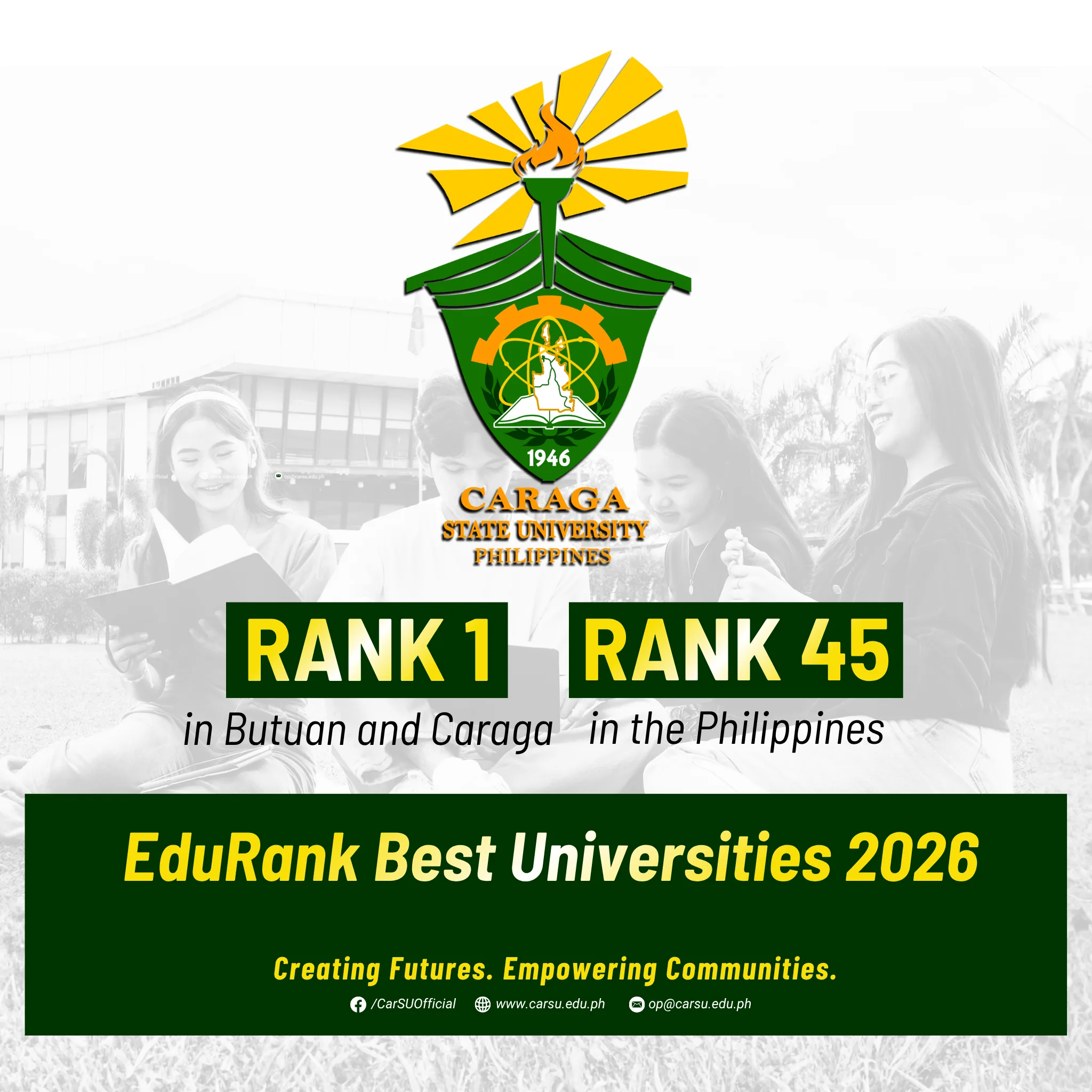
Caraga State University is still among the top-ranked Higher Education Institutions (HEIs) in the Philippines...
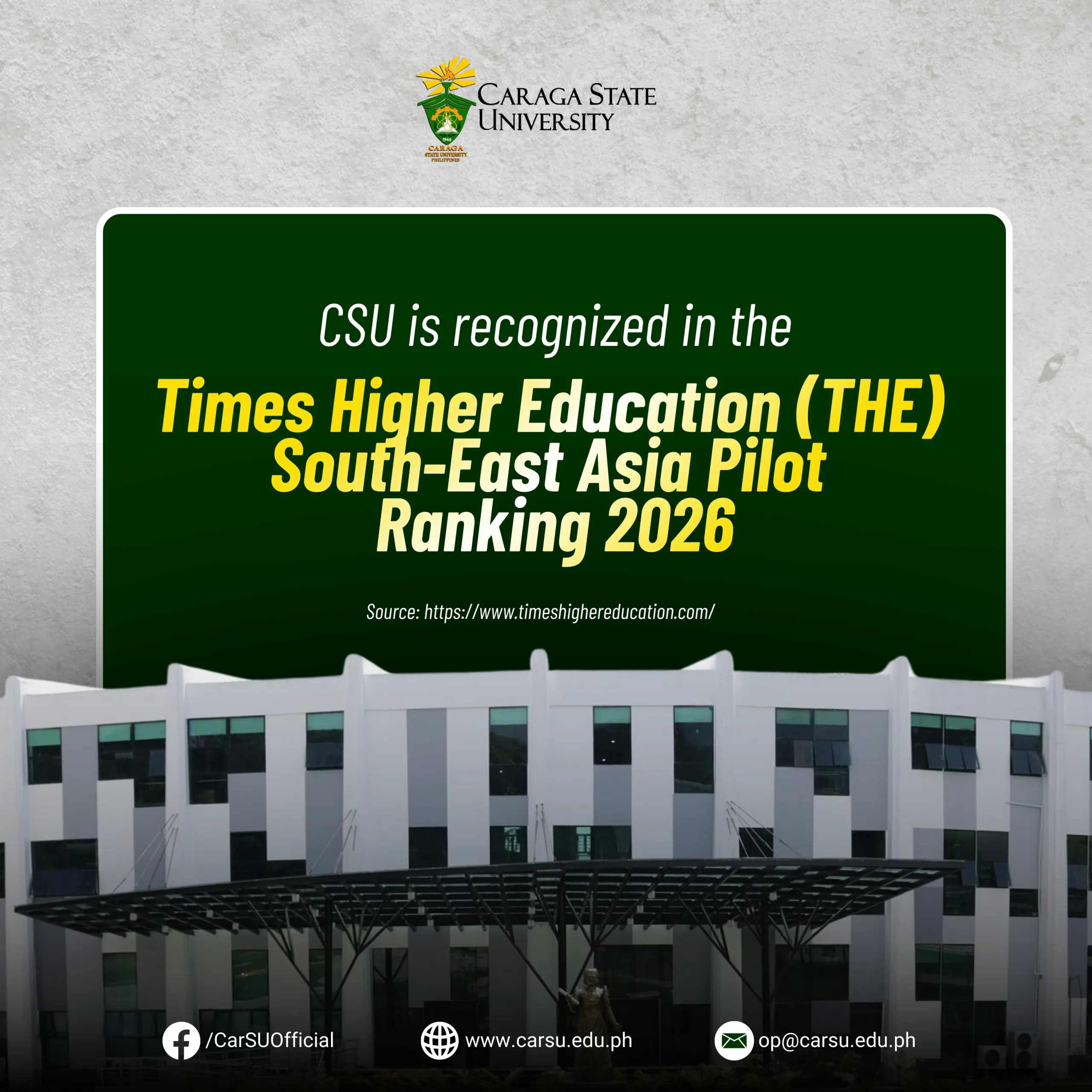
Caraga State University (CSU) has been recognized as part of the emerging higher education ecosystem...



For concerns and Inquiry about the website please visit
Public Information and Communication Office
or email us at pico.csu@carsu.edu.ph