
#ShapedbyCSU: A social worker’s journey on reimagining purpose in shared responsibility
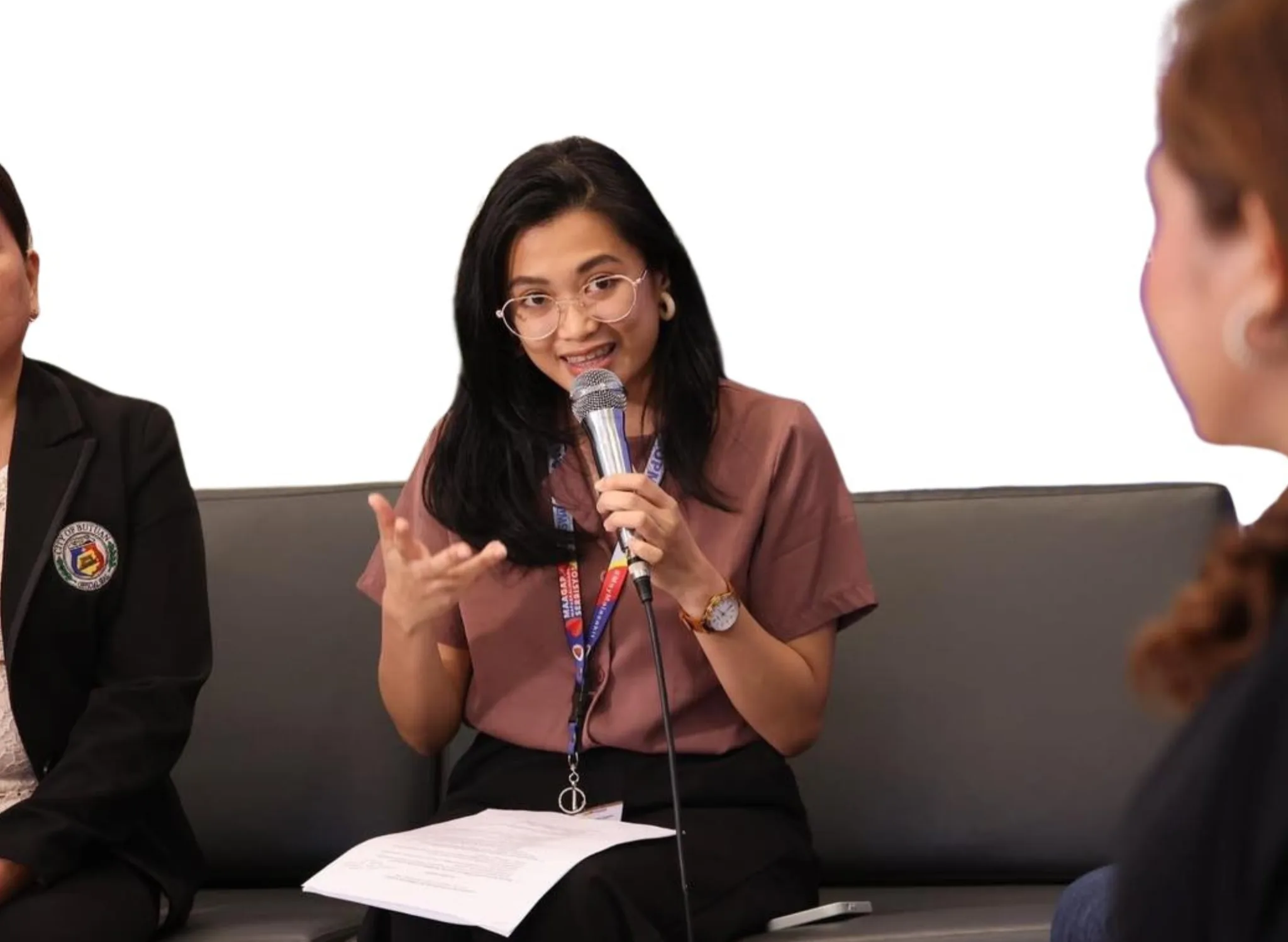
Social workers may be known as agents of change, but they were never meant to carry it alone—everyone has a role in the transformative work.
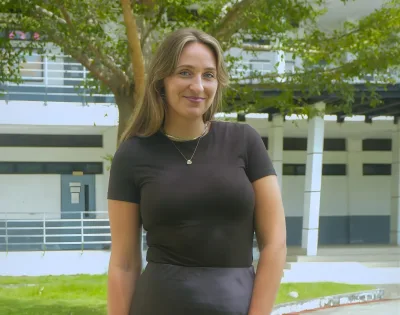
Moriah Palero Tambura, RSW, a woman of God, honor, and excellence, is a celebrated pride of Caraga State University. Ranking 2nd in the August 2021 Social Work Licensure Examination and graduated as Cum Laude in her batch, Moriah consistently exemplifies the university’s values. Embodying competence and uprightness, she continues to wholeheartedly serve with, for, and by the people.
Known today for her accomplishments in the field, Moriah actually navigated various paths before finding her purpose in social work. Bachelor of Science in Social Work had not been part of her childhood dreams—her heart simply longed for a home built with stability, a space shaped more by peace than by ambition.
Looking back, it took two years for the seed of service to take root. What began as a program chosen out of familiarity (her mother and titas are social workers) eventually flourished into her avenue for impact. Now, she changes the community one step at a time.
After graduation, Moriah began her career at the DSWD Caraga Protective Services Division, where she initially worked in sectoral services. Her efforts involved working closely with vulnerable groups, including people with disabilities (PWDs), senior citizens, and women. She now serves as a Project Development Officer II under the Pantawid Pamilyang Pilipino Program (4Ps), where she continues integrating Gender and Development principles across the program.
When asked about her work ethic, Moriah’s belief is evident in the idea that one should grow wherever life places them. She believes that her experiences have equipped her well enough to work with competence and confidence. At the same time, she attributes much of her professional grounding to her education at CSU. According to Moriah, the core values were not only taught in the four corners of the classrooms but also exercised throughout her time in university. The school, she noted, paved the way for students to actively practice these values in real-life settings, creating socially responsible graduates who became torchbearers of positive change.
Diving deeper into her CSUan journey, Moriah shared how it helped shape her life perspectives—that your calendar is not the same as everyone else’s. She knows how common it is to feel pressured when you are not able to finish your degree within four years, as if everyone else is already ahead. But for her, comparing timelines never made sense. “Your season might be different from everybody else’s,” she said; it was a reminder she applies to herself as well.
On a personal note, Moriah is grateful for parents who fostered her values and provided a support system that never pressured her to conform to specific expectations. That kind of support system, she believes, makes a huge difference—but even when it does not exist, Moriah says that anyone can learn to be the support system they need for themselves.
Returning to her passion and purpose, Moriah also discussed the realities of the profession. Social workers frequently navigate misunderstanding from both stakeholders and communities, which can lead to expectations that do not align with the intended scope of their work. Even social workers themselves sometimes struggle to define the full complexity of the profession, so she understands why others might misinterpret it. Despite this, Moriah sees a small silver lining: recognition is not the ultimate goal, and gratitude is not the measure of success. What matters is that people gradually understand what social workers truly do. And if anyone is responsible for explaining the profession, she believes it must be the social workers themselves. At the end of the day, they are the ones who know the line by heart.
Additionally, in a field that moves lives yet is often misunderstood and underappreciated, Moriah recognizes that compassion fatigue is not new to these unsung heroes. Even the most committed workers experience moments where they need to step back, too. For her, taking a moment to pause is not a sign of weakness but a means of sustaining herself so that she can continue serving with clarity and sincerity.
This brings her message full circle: bearers of change must not constantly burden themselves with the task of restoring all forms of dysfunction in society. Although social workers are regarded as agents of change, they remain part of a larger system working toward transformation—believing otherwise could be one of the reasons why social workers experience burnout. Sometimes, they feel the need to exhaust all efforts to produce immediate, tangible results. While doing these acts is not inherently wrong, this energy can be misplaced when it is rooted in the belief that every solution must come directly from them. As Moriah emphasizes, change is shared across systems, institutions, and communities.
Aligned with this, she reminds aspiring social workers to be cautious of the phrase “lahi raman gihapon sa field.” [It is still different in the field.] For her, this mindset does not belong in academia because the knowledge gained in the curriculum does not stray far from what is found in practice. She believes that lessons learned today become the roots that the field later nurtures. Honoring one’s studies is not simply for oneself, but for the client systems and communities whose lives will someday be entrusted to them. Moriah is a testament to what it means to be a social worker—not only acting the part, but living it.