
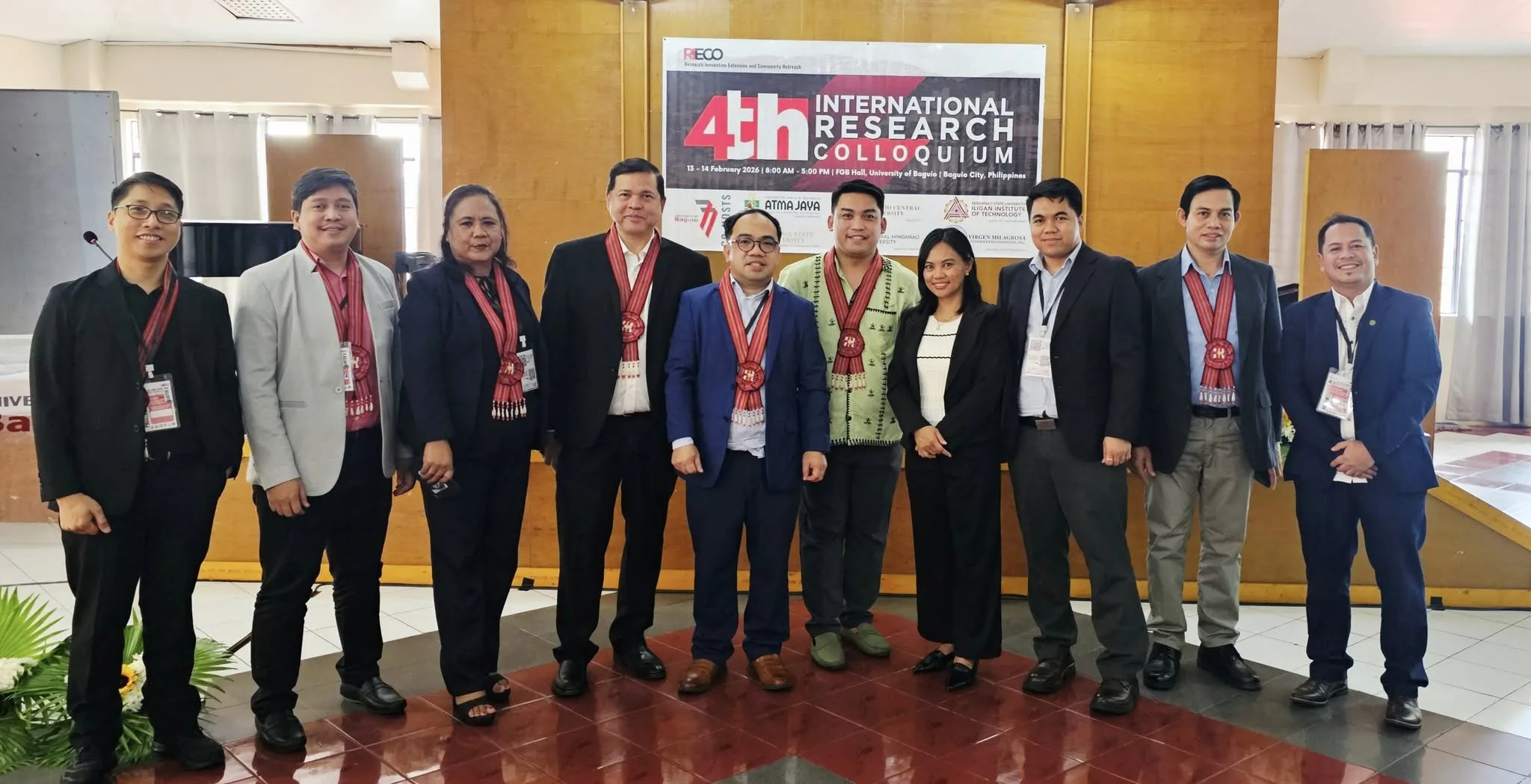
Baguio City — Caraga State University (CSU) joined leading Higher Education Institutions in co-hosting the 4th International Research Colloquium at the University of Baguio from February 13-14, 2026, an academic gathering focused on advancing the Sustainable Development Goals (SDGs) through researchers’ perspectives.
Organized by the University of Baguio through its Research, Innovation, Extension, and Community Outreach (RECO) unit, the colloquium carried the theme “Sustainable Development Goals through Researchers’ Lens”. It brought together university leaders, researchers, and practitioners to share good practices, research outputs, and institutional strategies for sustainability-driven development.
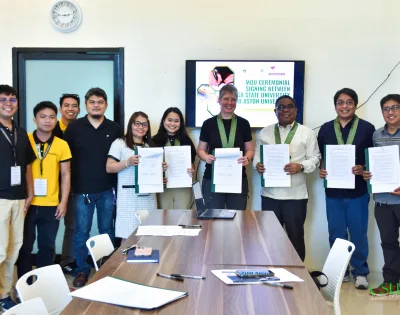
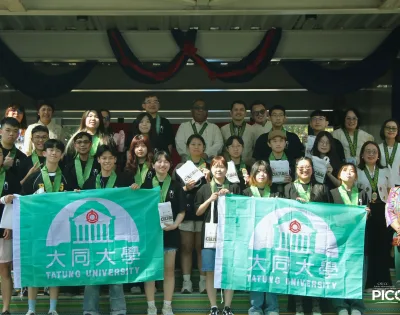
CSU participated as one of the official co-hosts alongside Universitas Katolik Indonesia Atma Jaya (Jakarta, Indonesia), Mindanao State University–Iligan Institute of Technology, Virgen Milagrosa University Foundation, Baguio Central University, and Central Mindanao University, underscoring the growing regional and international collaboration among higher education institutions in advancing the SDGs.
Representing CSU, Dr. Jeffrey T. Dellosa, Vice President for Research, Development, Innovation, and Extension, delivered a presentation during the SDG Good Practices session, where he shared the university’s experience in institutionalizing sustainability through research agenda setting, governance structures, and community-engaged innovation. Joining him was Dr. Temmy Vales, Director of the Research, Development, and Innovation Services Office (RDISO), who also represented the university and supported the sharing of CSU’s good practices in research and innovation management.
CSU’s participation in the colloquium builds on its strong and improving performance in the Times Higher Education (THE) Impact Rankings 2025, where the university demonstrated concrete gains across several priority SDGs. Notably, CSU ranked Top 1 in the Philippines and 44th globally for SDG 1: No Poverty, reflecting the strength of its community-engaged research and extension programs. The university also placed among the Top 3 in the Philippines for SDG 17 (Partnerships for the Goals) and SDG 4 (Quality Education), Top 5 for SDG 3 (Good Health and Well-being), and Top 6 for SDG 5 (Gender Equality), all within the 601–800 global band. These results underscore CSU’s strategic, systems-based approach to sustainability, led institutionally through its Sustainability (SDG) Committee, chaired by Dr. Dellosa.
University leaders and partners were formally acknowledged during the event, including Prof. Alizedney M. Ditucalan, JD, LLD, Chancellor of MSU-Iligan Institute of Technology; Dr. Rolyn C. Daguil, President of Caraga State University; Prof. Dr. Yuda Turana, Sp.S(K), Rector of Atma Jaya Catholic University; Dr. Margarita Cecilda B. Rillera, President of Baguio Central University; Dr. Rolito G. Eballe, President of Central Mindanao University; and Dr. Ma. Lilia Posadas-Juan, President of Virgen Milagrosa University Foundation, among others.
The program also featured presentations from research leaders of partner institutions, including Dr. Michael T. Sebullen of Baguio Central University, Dr. Ephirme B. Metillo of MSU-Iligan Institute of Technology, and Dr. Donnavila Marie Panday-Herbster of the University of Baguio, fostering dialogue on how universities can translate SDG commitments into concrete research and development outcomes.
CSU’s participation as co-host reflects the university’s continuing commitment to research excellence, innovation, and community engagement anchored on sustainability and regional development priorities. Through platforms such as the International Research Colloquium, CSU strengthens partnerships with national and international institutions while contributing to a shared agenda of evidence-based, impact-oriented higher education.
The 4th International Research Colloquium served not only as a venue for knowledge exchange but also as a reaffirmation of the critical role of universities in advancing the SDGs through collaborative research, innovation, and meaningful engagement with communities.