
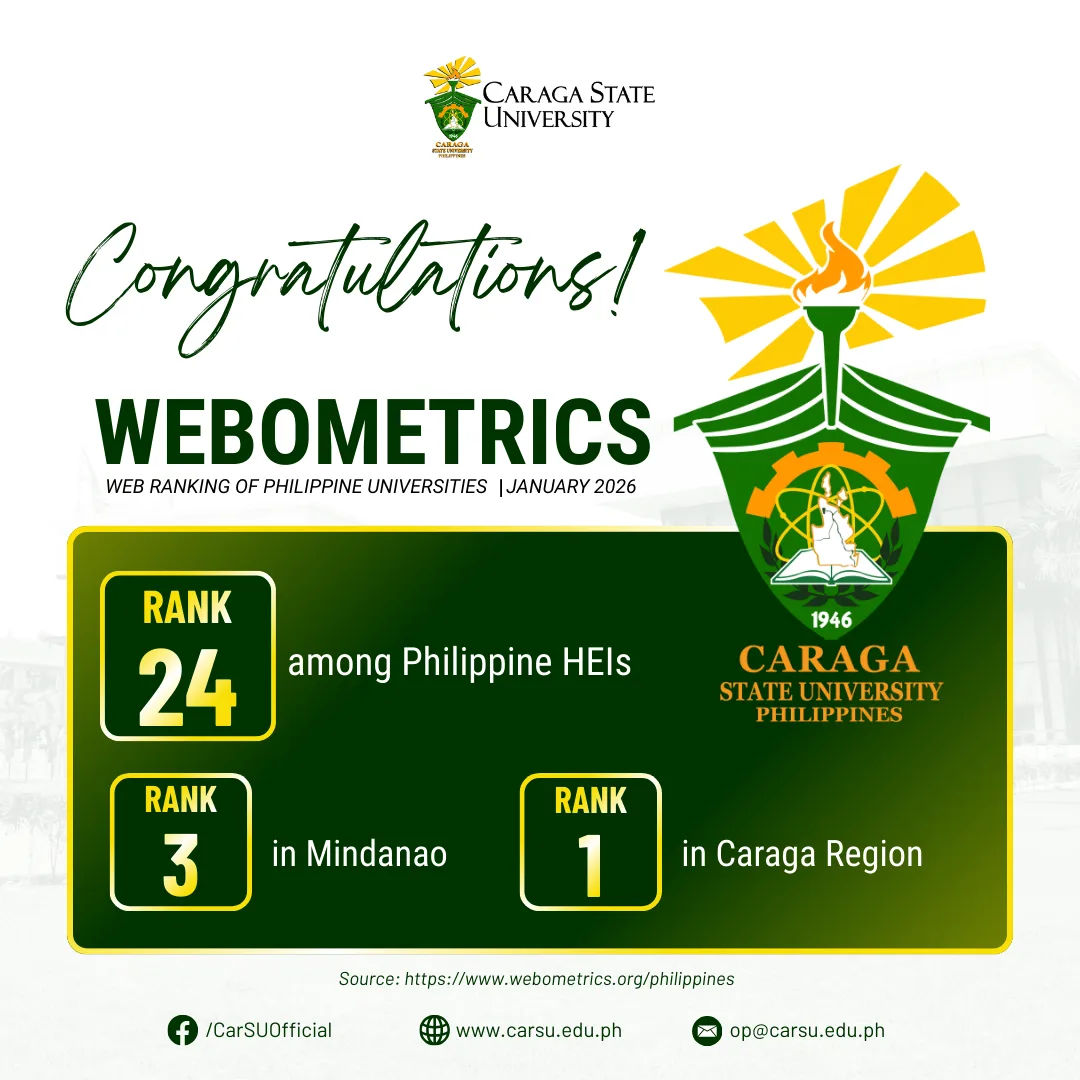
CSU ranks 24th in PH per Webometrics, retains leadership in Caraga
The Caraga State University is now ranked 24th among Philippine Higher Education Institutions (HEIs) in...

CSU prioritizes walkability, green open spaces, inclusive access to academic and service facilities, and housing support for students, especially those coming from remote areas across Caraga Region. The University collaborates with local and regional government units, sectoral organizations, and other academic institutions to advance sustainable land-use practices, participatory governance, and disaster-resilient infrastructure development.
This report demonstrates CSU’s ongoing progress across all major SDG 11 indicator categories: sustainable research, community partnerships, accessible infrastructure, mobility and transport planning, campus land-use management, and sustainable facility development. The University remains committed to strengthening data-driven planning and community-centered development, while continually enhancing environmental stewardship and urban resilience.
Sustainable Development Goal 11 encourages the development of human settlements that are socially inclusive, environmentally resilient, accessible, and well-planned. Higher education institutions have a central role in modeling sustainable campus urbanism, developing research that informs local government planning, and supporting community capacity-building for resilient development.
Caraga State University’s sustainability efforts are guided by three policy anchors:
CSU operationalizes these policy commitments through sustainable campus planning, environmentally responsive facility design, climate risk-sensitive development, and participatory engagement with community and government stakeholders across Caraga Region.
CSU’s Comprehensive Land Use Development and Infrastructure Plan (LUDIP) outlines a systematic roadmap for campus development covering:
The LUDIP ensures that campus expansion is aligned with sustainable growth principles, supports academic excellence, and improves quality of campus life.
Indicator Description
This indicator examines CSU’s research contributions to sustainable urban development, environmental management, inclusive community planning, climate adaptation, and related areas aligned with SDG 11. Research outputs include faculty-led projects, student theses, institutional research programs, externally funded research, and collaborative studies with government and private partners.
Narrative
Caraga State University integrates sustainability themes into its institutional research framework through its research centers and academic units. Research initiatives support evidence-based planning, environmental governance, urban mobility design, resettlement and housing planning, and climate-resilient development across Caraga Region.
Research findings are applied through:
These engagements demonstrate CSU’s role as both a knowledge generator and development partner in sustainable regional growth.
Representative Research Outputs Aligned with SDG 11
|
Title of Study / Publication |
Author(s) |
Year |
Key Theme |
Relevance to SDG 11 |
|
Sustainable Land-Use Assessment for Urban Expansion in Northern Mindanao |
CSU Faculty Research Team |
2023 |
GIS & Urban Planning |
Supports evidence-based spatial development planning |
|
Community-Based Waste Management Strategies in Barangay Settlements |
Extension and Research Faculty |
2022 |
Community Governance & Waste Reduction |
Strengthens sustainable community-level environmental systems |
|
Assessing Pedestrian Prioritization in CSU Core Campus |
Campus Planning Research Group |
2024 |
Mobility & Walkability |
Informs pedestrian-first campus design under Indicator 11.4.6 |
|
Climate Adaptation and Risk Management for Coastal Communities in Caraga |
Applied Science Researchers |
2021 |
Climate Resilience & DRRM |
Supports risk-informed planning for vulnerable settlements |
|
Sustainable Housing Design for Local Government Resettlement Sites |
Engineering & Architecture Faculty |
2022 |
Low-Cost Housing & Urban Inclusion |
Enhances access to safe and affordable shelter solutions |
Note: Evidence files will be listed and referenced in the Annex and References section.
Challenges and Recommendations
Indicator Description
This indicator evaluates how CSU partners with communities, LGUs, agencies, and civil society to support sustainable settlements through training, technical assistance, community organizing, and development planning.
Narrative
CSU’s extension programs are community-centered and responsive to regional development needs. The University works closely with barangays, municipal planning offices, local DRRM councils, and regional government agencies to strengthen environmental governance, resilience planning, and sustainable settlement management.
Programs are guided by:
These initiatives demonstrate CSU’s commitment to translating academic knowledge into practical, community-benefiting solutions.
Representative Community Partnerships Related to SDG 11
|
Program / Initiative |
Partner Community / Agency |
Year(s) |
Focus Area |
Support Provided |
|
Barangay-Level Solid Waste Management Capacity Building |
Barangays in Butuan and Agusan Areas |
2022–2024 |
Waste Reduction & Governance |
Training, IEC materials, planning support |
|
GIS-Based Land Use and Zoning Support Program |
Provincial and City Planning Offices |
2023 |
Urban Planning & GIS |
Technical mapping assistance and planning workshops |
|
Community DRRM and Climate Adaptation Seminar Series |
LGUs & DRRM Offices across Caraga |
2021–2024 |
Resilience & Hazard Preparedness |
Hazard mapping, drills, risk awareness training |
|
Sustainable Housing and Community Layout Design Project |
Selected Caraga LGUs |
2022 |
Housing & Socialized Settlement |
Technical review and architectural planning input |
|
Pedestrian Safety and Walkability Advocacy Campaign |
CSU Campus Community & Adjacent Barangays |
2023–2024 |
Urban Safety & Low-Carbon Mobility |
Guidelines, signage planning, pedestrian consultations |
Challenges and Recommendations
Indicator Description
This indicator measures the extent to which CSU ensures equitable access to campus spaces and services, particularly for persons with disabilities (PWDs), senior citizens, and individuals with mobility limitations.
Narrative
Caraga State University adopts an inclusive infrastructure development policy aligned with:
Campus upgrades are planned and implemented through the LUDIP to promote safe, barrier-free movement. These improvements support universal access to academic, administrative, residential, and recreational facilities.
Accessibility Features Implemented
|
Building / Facility |
Accessibility Features |
Compliance Reference |
Year Updated |
|
Main Library and Learning Commons |
Entry ramp, elevator, PWD comfort room, tactile flooring |
BP 344 / LUDIP |
2023 |
|
Academic Building Complex |
Elevator access, wide corridors, ramp systems |
National Building Code |
2022–2024 |
|
Administration Building |
Wheelchair ramp & signage |
BP 344 |
2021 |
|
Student Services Center |
Step-free entrance, accessible counters |
CHED Infrastructure Guidelines |
2023 |
|
Core Campus Walkways |
Non-slip paving, gentle slope gradients, handrails |
CSU LUDIP Mobility Plan |
Ongoing |
Challenges and Recommendations
Indicator Description
This indicator evaluates CSU’s planning for low-carbon mobility, reduced vehicle reliance, and safe campus movement.
Narrative
CSU’s LUDIP integrates mobility planning that supports:
Reduced internal campus vehicular traffic
Clear pedestrian-first circulation priority
Encouragement of walking and non-motorized mobility modes
Safe interface with public transportation systems outside campus
The campus remains accessible to public jeepney and tricycle routes, allowing students and staff to commute affordably and sustainably.
Narrative
The University prioritizes walkability as a primary movement system, which supports safety, physical wellness, social interaction, and carbon-reduction goals.
Improvements include:
Shaded walkway corridors
Assigned pedestrian-only zones in academic centers
Safe crossing points and directional signage
Lighting enhancements for evening safety
Pedestrian Improvements
|
Location |
Enhancement |
Status |
Year |
|
Academic Belt Walkway |
Shaded pedestrian corridor |
Completed |
2023 |
|
Library-to-Student Center Path |
Gradual slope paving and accessibility railings |
Completed |
2022 |
|
Western Campus Green Walk Spine |
Green-buffer walkway system |
Ongoing |
2024 |
Narrative
CSU maintains coordinated access routes linking the campus with local city transport systems. Partnerships with local transport groups and LGUs ensure regulated, safe, and affordable access for students and staff.
Measures include:
Defined loading and unloading areas
Campus boundary traffic flow controls
Crossing safety signage
Coordination with barangay and city traffic offices
Challenges and Recommendations
Establish shuttle transport options for students from remote barangays.
Expand shaded waiting areas at campus transport nodes.
Indicator Description
This indicator evaluates how CSU plans and manages campus development to ensure sustainable, climate-resilient, and inclusive use of space.
Narrative
Caraga State University implements a long-term and data-informed campus spatial development strategy through its Comprehensive Land Use Development and Infrastructure Plan (LUDIP). The LUDIP provides a detailed framework for:
Zoning and spatial allocation of academic, residential, administrative, and recreational spaces
Preservation and enhancement of green and open spaces
Pedestrian-first mobility corridors and reduced car-dependent layout
Hazard-sensitive site planning, guided by geospatial and DRRM assessments
Phased development across both main and satellite campuses
The plan aligns with:
United Nations SDG 11 (Sustainable Cities and Communities)
Philippine Development Plan (2023–2028) goals on sustainable and resilient settlements
CHED CMO No. 1, s. 2022 requiring higher education institutions to integrate sustainability into infrastructure and land-use planning
This institutional planning ensures that CSU grows sustainably, safely, and strategically, while supporting learning, research, housing, and community functions.
|
Planning Component |
Purpose / Sustainability Function |
Evidence Source |
|
Campus Zoning and Building Distribution Plan |
Prevents congestion and ensures functional clustering |
LUDIP Masterplan Sheets |
|
Green and Open Space Network |
Supports ecological balance and student wellness |
Campus Landscaping Plan |
|
Pedestrian and Mobility Circulation Plan |
Promotes walkability and a low-carbon campus |
LUDIP Mobility and Access Section |
|
Hazard and Risk Overlay Map |
Guides development away from flood or hazard-prone zones |
DRRM Hazard Mapping Reports |
|
Multi-Campus Development Phasing |
Ensures long-term scalable growth |
LUDIP Development Phasing Section |
Challenges and Recommendations
Indicator Description
This indicator evaluates how CSU engages stakeholders such as LGUs, community leaders, planners, faculty, and students in campus and local development planning efforts.
Narrative
CSU applies a participatory governance model in campus planning and community development. Stakeholders are engaged through consultations, planning workshops, public forums, and development reviews. These engagements ensure that physical development respects both institutional priorities and community needs.
Stakeholder participation enables:
Inclusive discussion of land-use and circulation improvements
Coordination with city and barangay development plans
Joint climate resilience planning
Integration of campus design with community accessibility
Representative Participation Activities
|
Stakeholder Group |
Activity Conducted |
Year(s) |
Purpose |
|
LGU Planning and Development Office |
Campus planning coordination workshop |
2022–2023 |
Align CSU development with city zoning and mobility plans |
|
Barangay Local Government Units |
Consultations on boundary zones and pedestrian movement |
2023 |
Ensure safe public access and community integration |
|
CSU Student Organizations |
Campus walkability and safety feedback sessions |
2022–2024 |
Incorporate student experience into mobility design |
|
Regional DRRM & ENRO Offices |
Hazard risk assessment workshops |
2021–2024 |
Integrate climate risk overlays into development decisions |
Challenges and Recommendations
Indicator Description
This indicator assesses the availability and quality of safe, secure, and affordable housing for students, especially those coming from geographically remote or economically disadvantaged backgrounds.
Narrative
Caraga State University recognizes that access to suitable and secure housing contributes directly to student success and well-being. The University provides on-campus dormitories as affordable residential options to support students who require proximity to academic and support services. Housing development is integrated within the CSU LUDIP, ensuring that new and existing residential facilities align with campus zoning, mobility planning, and climate-resilient building standards.
Ongoing renovation and expansion projects have strengthened:
Security systems (controlled access, monitoring, lighting)
Ventilation and natural lighting enhancements
Gender-sensitive residential allocations
Accessible pathways and entry points
Study lounges and shared social areas for community-building
Representative Student Housing Facilities
|
Facility |
Capacity / Use |
Key Features |
Status |
|
CSU Ladies’ Dormitory |
Female residents |
Study rooms, shared kitchen, 24/7 security |
Operational |
|
CSU Gentlemen’s Dormitory |
Male residents |
Common lounge, multi-room layouts, security access |
Operational / undergoing gradual improvement works |
|
Proposed Student Housing Expansion (LUDIP Phase 2) |
Planned increase in residential capacity |
Integrated into campus green and mobility corridors |
In development |
Figure Placeholders (Insert Images Directly Under Section in Final Docx)
Figure 1. CSU Ladies’ Dormitory Exterior.
Figure 2. CSU Gentlemen’s Dormitory Main Entrance.
Challenges and Recommendations
Increase bed capacity to meet growing enrolment.
Expand access to shared study and wellness spaces.
Continue phased renovation for uniform accessibility standards.
This indicator evaluates CSU’s commitment to continuous facility improvement to ensure safe, inclusive, and learning-conducive environments.
CSU conducts sustainability-oriented facility upgrades, prioritizing:
These improvements ensure that the campus environment remains functional, inclusive, and adaptive to student and academic needs.
Challenges and Recommendations
Narrative
CSU maintains open green spaces integrated into the academic core, student life areas, and campus pedestrian networks. These public spaces support:
The University continues to enhance green corridors linking academic buildings, enabling walkable and environmentally restorative campus experiences.
The University provides student centers, lounges, shaded outdoor seating areas, and multipurpose assembly spacesthat support student wellness and social engagement. These areas contribute to a vibrant, inclusive, and supportive campus culture.
Inclusive campus development ensures:
These facilities strengthen the social and emotional well-being dimensions of campus sustainability.
Indicator Description
This indicator measures prioritization of safe, accessible, pedestrian-oriented circulation in campus planning and development.
Narrative
CSU promotes a pedestrian-first campus environment, reducing vehicular congestion and prioritizing safe, shaded walkways that connect key learning, housing, and service facilities.
Infrastructure enhancements include:
Walkability Enhancements
|
Campus Location |
Walkway or Corridor Enhancement |
Status |
Year |
|
Academic Core Spine |
Shaded pedestrian-only walkway |
Completed |
2023 |
|
Library–Student Center Link |
Slope regrading + handrails |
Completed |
2022 |
|
Western Green Spine |
Tree-buffer walkway system |
Ongoing |
2024 |
Figure Placeholders (Insert images directly below in Word)
Figure 3. Shaded pedestrian corridor along academic buildings.
Figure 4. Walkway safety railings and non-slip paving.
Figure 5. Landscape walkway buffer zones.
Challenges and Recommendations
Caraga State University demonstrates strong and sustained commitment to Sustainable Development Goal 11: Sustainable Cities and Communities through strategic campus planning, inclusive infrastructure development, sustainability-oriented research, and community-engaged extension programs. The University’s Comprehensive Land Use Development and Infrastructure Plan (LUDIP) provides a clear and future-focused framework for guiding campus growth, integrating climate resilience, enhancing accessibility, and promoting livable learning environments.
Institutional investments in walkability, public spaces, student housing, environmental governance, and community partnership programs reflect CSU’s recognition that sustainable cities and communities are shaped both by physical development and by participatory, inclusive decision-making. CSU continues to position itself not only as an educational institution, but also as a regional partner in cultivating equitable, resilient, and sustainable human settlements.
Ongoing and planned efforts show that CSU is progressing toward becoming a model sustainable university campus in Mindanao — one that balances academic advancement with community responsibility, urban systems thinking, and environmental stewardship.
To strengthen long-term alignment with SDG 11 and enhance CSU’s performance in national and international sustainability assessments (including THE Impact Rankings), the following recommendations are proposed:
1. Strengthen Monitoring and Evaluation Systems
Develop standardized monitoring frameworks to track:
Indicator performance metrics
Campus infrastructure accessibility compliance
Walkability and mobility improvements
Community engagement outcomes
2. Increase Opportunities for Sustainable Campus Living
Expand student housing capacity, prioritizing affordability and accessibility.
Enhance shared study and wellness facilities in dormitories.
3. Expand Green and Open Spaces
Increase shaded pedestrian corridors and tree-buffer walkways.
Convert select paved spaces into permeable green zones.
4. Enhance Integration of Sustainability in Academic Programs
Strengthen curriculum modules on sustainable urbanism, climate resilience, and community planning.
Encourage interdisciplinary and student-led sustainability research.
5. Institutionalize Participatory Development Mechanisms
Establish a Campus Planning Advisory Committee with student, faculty, staff, and community representation.
Conduct annual campus mobility and accessibility engagement forums.
6. Strengthen Regional and Local Government Partnerships
Increase collaborative work with LGUs on land-use planning, disaster risk reduction, and sustainable settlement development.
Expand technical services and research-based advisory support.
By continuing to build upon these strategic priorities, CSU can further embed sustainability into its governance culture, pedagogical innovation, campus development, and community engagement — shaping future-proof, inclusive, and resilient learning environments for the region.
The Caraga State University is now ranked 24th among Philippine Higher Education Institutions (HEIs) in...
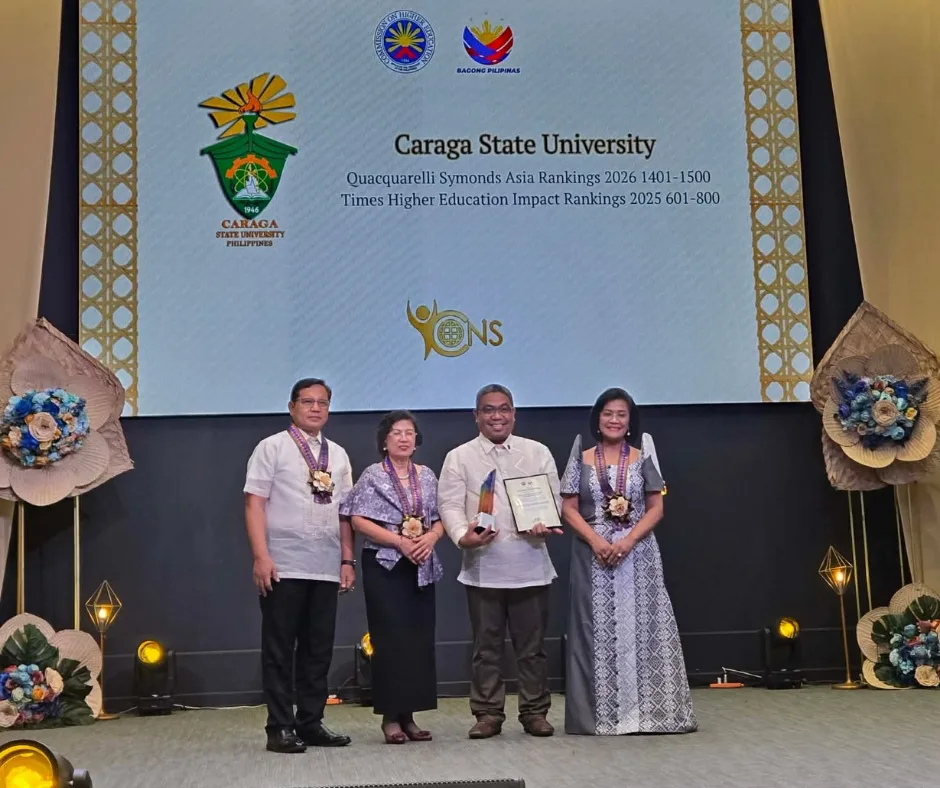
Caraga State University is among the awardees of the Commission on Higher Education’s (CHED) Internationalization...
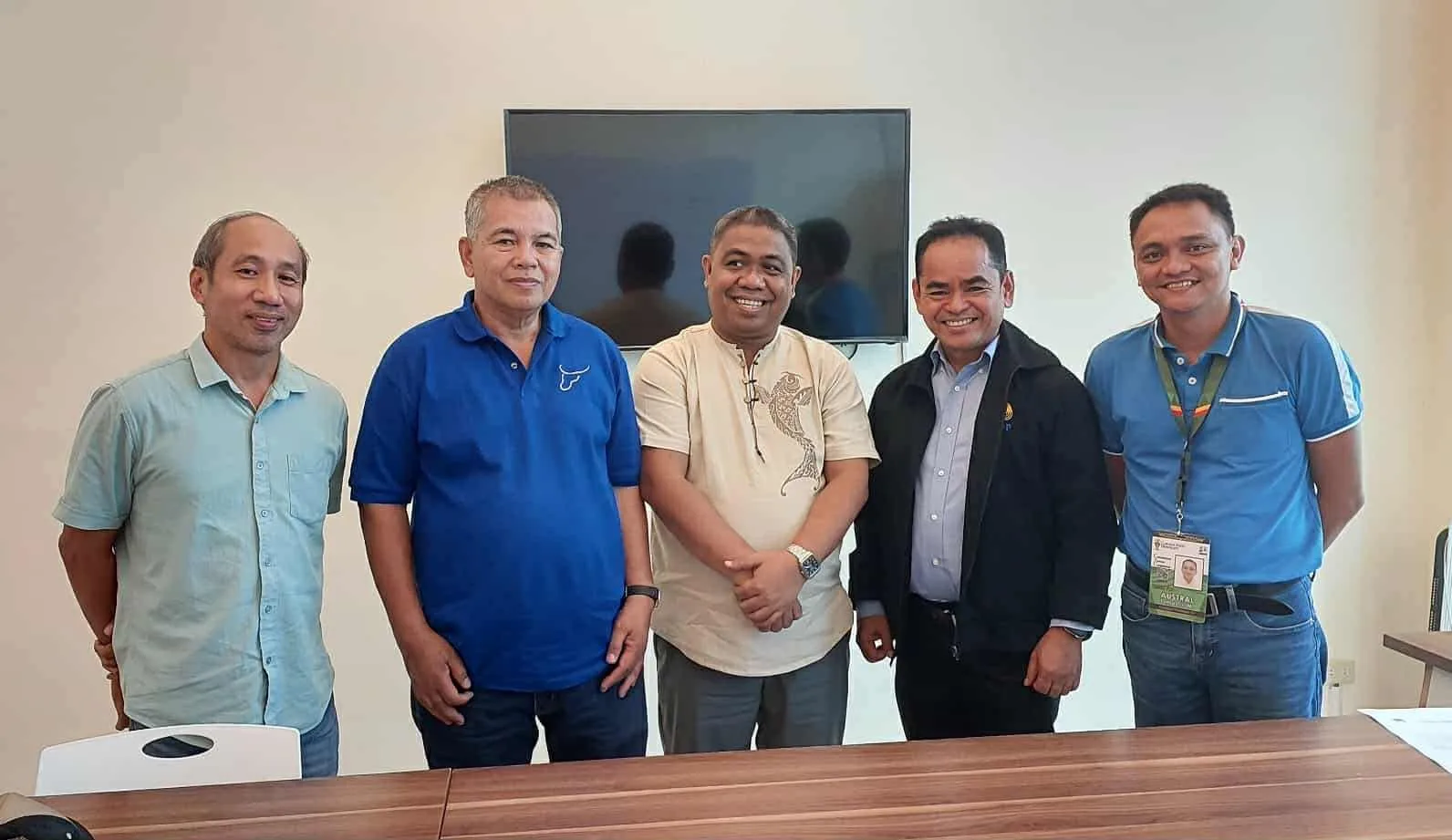
The Caraga State University (CSU or CarSU) is now part of the regional Research and...





For concerns and Inquiry about the website please visit
Public Information and Communication Office
or email us at pico.csu@carsu.edu.ph