

Where The Trees Bend
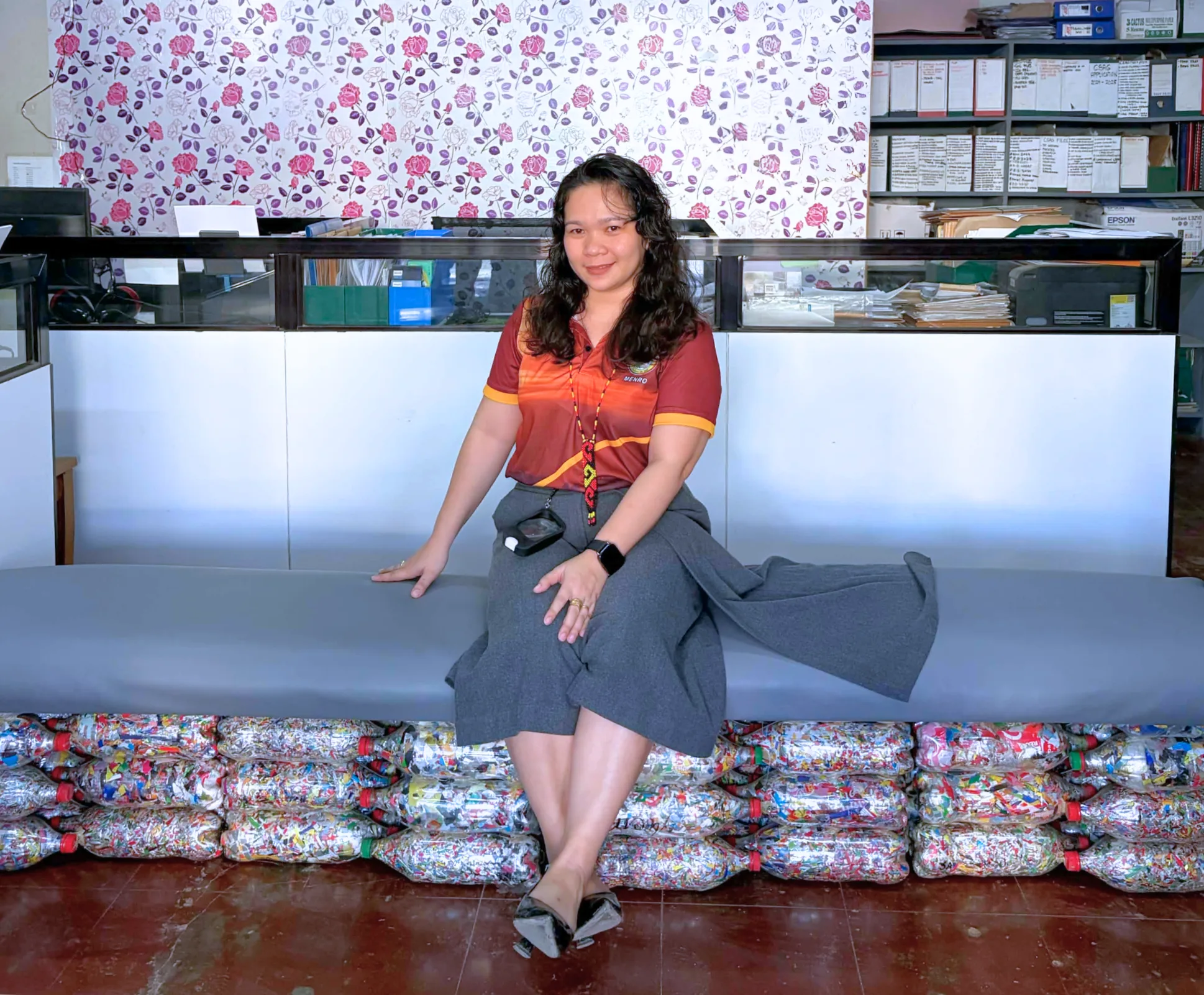
For. Ervine M. Ibardolaza-Agosila did not begin with a clear map of where she was going. Somewhere between an uncertain decision, difficult years, and a profession she never initially chose, she found a path worth growing into.
There are trees that grow straight toward the sky.
And there are those that grow around whatever stands in their way.
A rock beneath the soil. A branch blocking the light. A storm strong enough to force them sideways. They bend, sometimes break, and yet, somehow, continue reaching.
For. Ervine M. Ibardolaza-Agosila’s story grew much the same way.
She did not enter college with a carefully drawn blueprint for the future. Higher education, by her own admission, “was not really one of my priorities at that time.” Forestry, too, was not her first choice.
Yet today, at 30, she serves as the Officer-in-Charge of the Municipal Environment and Natural Resources Office (MENRO) of the Local Government Unit of San Francisco, Agusan del Sur. Her work centers on protecting forests, managing natural resources, implementing environmental policies, overseeing solid waste management, and leading initiatives for environmental conservation and sustainable development.
There was no carefully drawn line from the beginning to where she stands now.
There was only a decision to begin.
Taking Roots
Perhaps that is what makes a tree remarkable: it does not need a straight path to keep growing. Some of its strongest branches are shaped by resistance—the places where the light was scarce, the ground was difficult, or something stood in the way.
Ervine’s path was shaped in much the same manner.
She initially had little inclination toward higher education. But with encouragement from her family and the accessibility and quality she saw in Caraga State University, she decided to give it a chance. Looking back, she considers that decision “one of the turning points in my life,” one that would eventually shape both her career and her personal growth.
She enrolled in the Bachelor of Science in Forestry program and graduated in 2017. At the time, however, there was no guarantee that Forestry would become a profession she would eventually embrace. “Forestry was not my first choice,” she said. But through field activities and exposure to environmental concerns, she gradually came to understand the importance of conservation—and, along the way, learned to love the profession.
What began as something she had not originally intended to pursue slowly became something she could see herself serving through.
And like a tree whose direction becomes clearer only as it grows, the path that once seemed uncertain began to take shape.
Roots in Uncertainty
Growth, however, was never effortless.
Her years at CSU were challenging, rewarding, and memorable, marked not only by academic experiences but also by moments when the path seemed less than certain.
There were failing grades. Dropped subjects. Incompletes. They were setbacks that could have easily become reasons to stop. Instead, they became lessons in resilience and perseverance.
For Ervine, failure did not mean that the road had ended. It meant that something still needed to be learned. “CSU taught me that failure is not the end of the journey,” she shared. “It is okay to fail as long as you learn from it, improve, and keep moving forward.” The sentiment is simple, but it carries the weight of experience. Because her college years were not defined solely by the difficulties.
There were field activities that brought her lessons beyond the classroom. There were student activities and friendships that became part of the memories she carried with her. There were even the ordinary details that, years later, became worth remembering—the taste of pili nut and the long walks from the College of Agriculture and Natural Resources, now College of Forestry and Environmental Science, to Annex A. These seemingly small moments became part of the landscape of her college life.
Perhaps growth often happens that way: not through one dramatic transformation, but through countless ordinary days that slowly change the person living them.
Calling in the Canopy
Forestry may not have been the destination she first imagined, but CSU gave her enough exposure to see beyond the course itself. Through practical experiences and encounters with environmental issues, she began to appreciate what conservation demanded—not merely as an academic subject, but as work with consequences for communities and generations that would come after them.
Today, her responsibilities stretch across several areas of environmental management. As OIC-MENRO, she works in environmental management, natural resource conservation, solid waste management, forest protection, environmental planning, and policy implementation. Her role requires her to balance the protection of natural resources with the needs of the community.
The work is larger than the title suggests. It is about forests that need protection, waste that needs proper management, resources that need sustainable use, and communities that need to be considered in decisions concerning the environment.
For Ervine, the motivation is ultimately rooted in service. She wants to protect and sustain the environment not only for those who benefit from it today, but also for future generations. In that sense, her profession has come to reflect something deeper than the course she once happened to take.
It reflects a responsibility she chose to grow into.
Holding the Ground
There is a particular kind of strength in work that does not always produce immediate results.
Environmental work can demand patience. Solutions may take time. Problems can be complex, and the needs of communities do not always fit neatly into policies or plans. The answer is not to expect every difficulty to disappear quickly. “I firmly believe that every challenge has a solution,” she said. Her approach is grounded in integrity, accountability, commitment, professionalism, patience, perseverance, continuous learning, and collaboration. Rather than viewing difficulties as barriers alone, he considers them opportunities to learn, adapt, and find better solutions. It is a principle that echoes the lessons she learned as a student.
The setbacks did not disappear. She simply learned how to move through them. That same work ethic now follows her into public service. Her responsibilities may have changed since her days as a Forestry student, but the underlying lesson remains: challenges are not necessarily signs that a path is wrong.
Sometimes, they are simply part of growing into it.
Three Values, One Direction
The values of CSU—Competence, Service, and Uprightness—also find their way into the way Ervine understands her profession.
For her, competence means continually improving her knowledge and skills. Service means remembering that her work ultimately exists to help people while protecting the environment. Uprightness means carrying out those responsibilities with integrity, honesty, and accountability. These values do not remain confined to an institutional statement. They become practical expectations in a profession where decisions can affect both people and the natural resources around them.
In Ervine’s case, CSU’s influence is not measured only by the degree she earned. She believes the university transforms students by helping them discover their potential. Her own transformation is proof of that: she entered without much enthusiasm for studying and eventually became a professional who values learning and service. The university, she says, stands out through quality education, practical experience, and mentors who help students recognize what they are capable of becoming.
And perhaps that is one of the most important things an institution can offer—not a predetermined future, but the conditions in which a student can discover one.
Lessons in Dead Branches
When Ervine looks back at the person she was in college, the failures remain part of the story. But they no longer carry the same meaning.
What once looked like academic shortcomings became experiences that taught her resilience, adaptability, and resourcefulness. Those qualities, she believes, are among the reasons CSU graduates are able to compete in the professional world. Knowledge matters, but so does knowing what to do when knowledge alone does not solve the problem. Practical experience matters. So does the ability to adapt when circumstances change. And sometimes, so does the willingness to fail, learn, and try again.
For Ervine, the lesson was never to avoid failure altogether. It was to refuse to let failure become a definition. She tells students facing their own setbacks not to let failure, self-doubt, or difficult circumstances determine what they believe they can become. Instead, she encourages them to learn from those experiences, use them as motivation, trust the process, and continue moving forward. Her advice comes not from a place of having avoided difficulty, but from having lived through it. “Don’t let a bad chapter convince you that your story is over. Keep showing up. One day, you’ll realize that the challenges you overcome became the reason for your success.”
A Turn Worth Taking
There is an irony in Ervine’s story.
The things she did not initially plan for became some of the things that shaped her most.
Higher education was not originally a priority.
Forestry was not her first choice.
The academic years were not free from failure.
Yet the unexpected choices, difficult seasons, and uncertain turns eventually brought her to work that aligns with what she now considers meaningful: serving her community and protecting the environment. It is why she encourages students to consider CSU even if they do not yet know exactly what they want from college.
She entered without having her future figured out. Through the university, he found direction, developed skills, and formed values that prepared her for professional and real-life challenges. “You don’t have to have everything figured out before you begin,” she said. “Sometimes, all it takes is one opportunity, one decision, and one step forward to change your life.”
There is something fitting about that lesson coming from someone whose profession is rooted in forests.
Trees do not grow by knowing the entire shape of their future.
They respond to what is around them.
They bend toward light.
They strengthen where the ground demands it.
They continue.
And still, she grows
Today, Ervine stands in a role she could not have predicted when she first entered CSU.
As OIC-MENRO, she continues working toward environmental sustainability and community development while seeking to deepen her expertise in environmental management. Her plans are not simply about professional advancement, but about continuing to serve with purpose and passion. She hopes, too, that her story can remind others that beginnings do not have to be perfect for futures to become meaningful. Success, in her view, is not determined by how a person starts. It is shaped by the willingness to learn, grow, and keep moving forward.
And perhaps that is where the metaphor comes full circle.
A tree that bends is not necessarily a tree that has failed to grow straight.
It is a tree that grew according to what it encountered.
For. Ervine’s path has bent in much the same way—around uncertainty, failure, unexpected choices, and circumstances she could not have predicted. But each turn brought her closer to a life of service, a profession she learned to love, and a purpose she could not have seen at the beginning.
She once stepped into CSU with no clear picture of the tree she would become. Today, she stands on the other side of those uncertain years, rooted in a profession built around protecting the very forests that taught her how to grow.
The storms did not straighten her branches. The difficult ground did not stop her roots. They became part of her—proof that sometimes, the most remarkable growth is not found in the trees that grow straight, but in those that learn how to bend without breaking.